
I’ve said it before, I’ll say it again, and I’ll gladly say it until I’m in the grave:
Windows XP is still my favorite Windows of all time, period. It’s not even close.
But upon thinking about it again, I started to realize something about that period of my life, which I will touch back upon by the end of this post.
That said, I was also thinking about abandoned Linux distros. Most of us know that the biggest distros that usually get forked these days are Ubuntu, Fedora, and Arch, sure, but what about the distros we’ve seen abandoned over the years?
I know I could easily sit here and write a mindless list describing a few discontinued distros with short blurbs and call it a day, but that’s really not my style. I started wondering what kind of distros came and went over the past couple of years, or even further back in the 2000s.
I stumbled across distros that were abandoned more recently like Sabayon Linux, and then there was Antergos a little further back. Rewinding even further, there were other notable distros from the late 1990s and early 2000s like Mandrake, LindowsOS, Caldera, Red Hat Linux (not to be confused with Red Hat Enterprise Linux), and a good handful of other distros.
But upon searching through a few of these, one distro in particular really caught my eye from its screenshot.
Enter Xandros
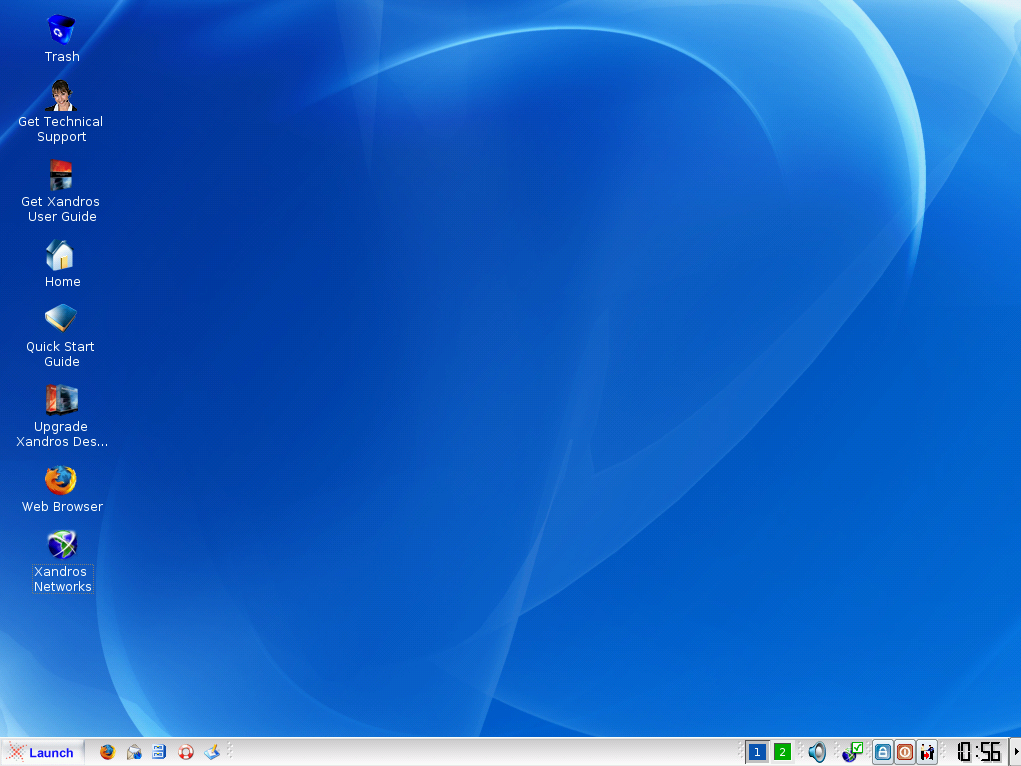
Color me intrigued. This was supposed to be Linux?
Why was it so beautiful?
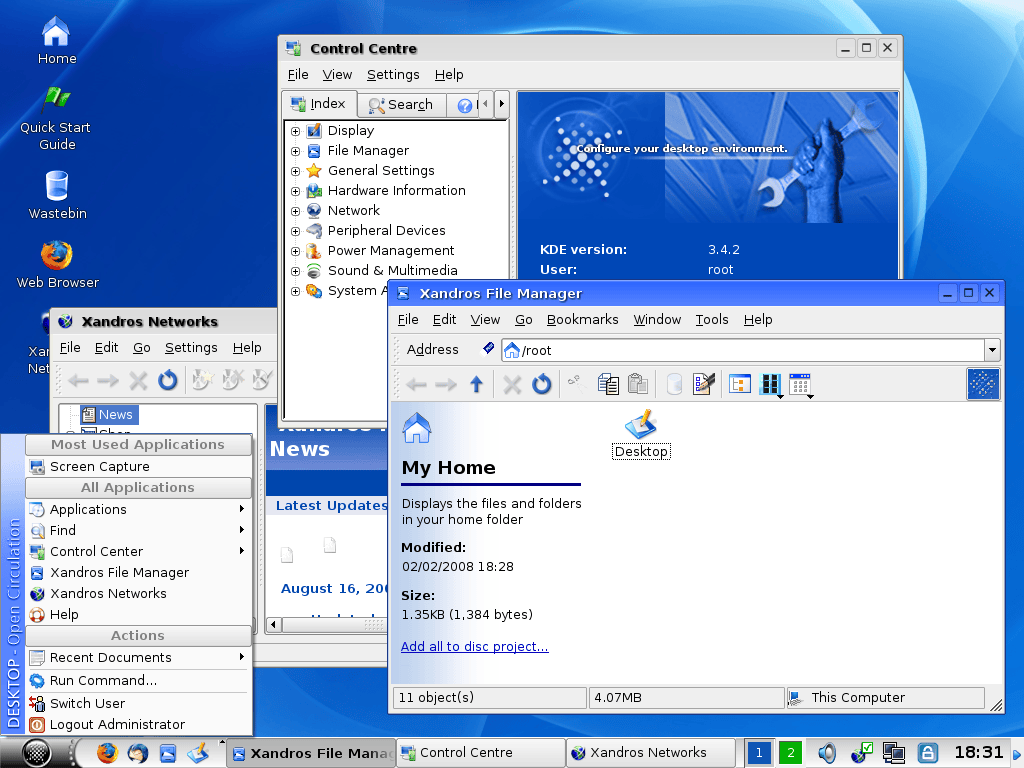
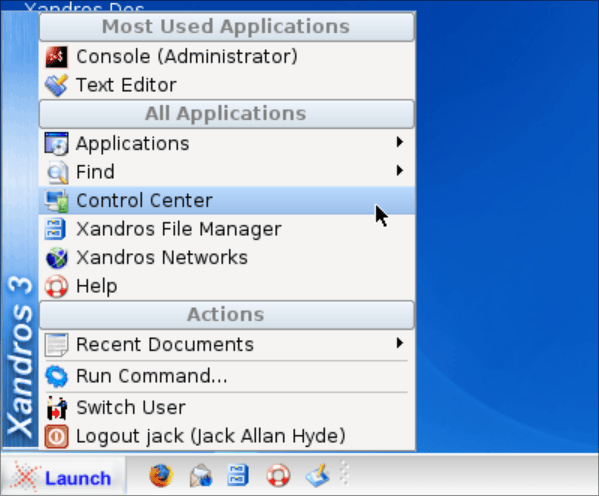
Just looking at it reminded me of Windows XP in all of the best ways. The wallpaper looks unashamed of its skeuomorphism, the window decorations and silver/white gradients reminded me of one of the many Windows XP visual styles I was always trying to run back in the day, and the icons looked lovely.
The UI clearly took queues from Windows XP, that’s for sure. That’s because this is Xandros Linux, a distro that descended from the also-discontinued Corel Linux.
Xandros Linux is very much a product of its time as well, and I’m not talking about simply its appearance. Back in the 90s and throughout the 2000s for a good while, there did exist a series of commercial Linux releases that were physically released in stores. Xandros was one of these distros.
People could walk into places like Best Buy, CompUSA, Staples, or even Walmart to find a commercial copy of Linux, usually sold as low as $20 and as high as $90 depending on the distro. These distros were somewhat common because average download speeds were a lot slower, so it made more sense to buy a copy of Linux than spend a few days downloading it on dial-up.
Of course, since these specific versions of Linux were competing with Windows, they would typically add a lot user-friendly design language and overall polish to try and compete with a commercial product like Windows, hence why Xandros looks the way it did, to make the experience much more comfortable for Windows users looking to switch.
Thus, shoppers could find Xandros for $50 for standard versions, or they could spend $90 for a “Deluxe” edition that featured extensive, user-friendly documentation alongside CrossOver Office.
Still, despite everything, I can’t get over how nice it looks. There was just something about Xandros in the mid-2000s in particular that drew a lot of my attention compared to the other distros I was doing research on. That’s when I decided I owed it to myself to give it a spin in a VM and see it for myself.
Running Xandros in VirtualBox
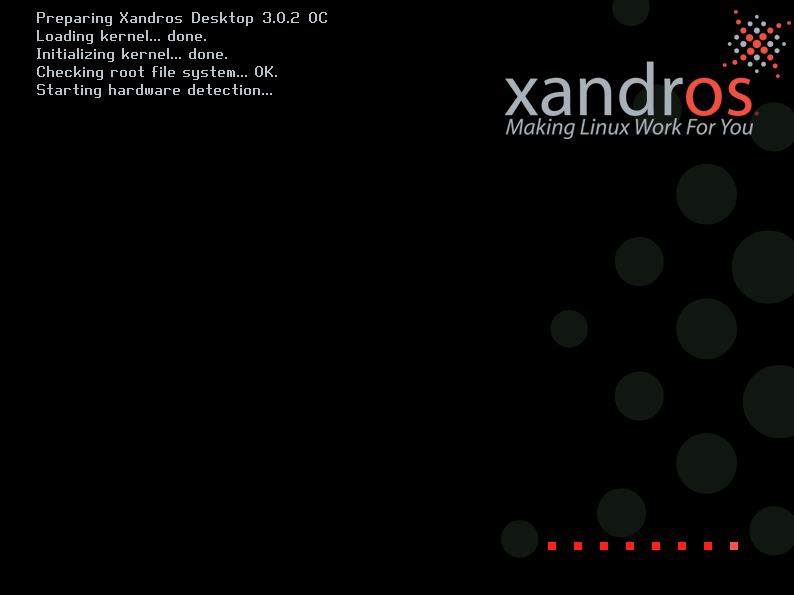
Setting up Xandros 3 (a version I was able to find easily) in a VM, thankfully, was not difficult. It only needed a few modest settings before I was up and running.
After scaling up everything 125% for my modern display, it was definitely ready to go.
Now, my only real complaint during my time running the VM was Xandros’ obvious lack of Colemak. (Yeah, I don’t do QWERTY.) To be completely fair, my Xandros ISO was from the middle of June in 2005, and Colemak was officially released about six months later in early 2006. It wasn’t an oversight on the Xandros team’s part simply because Colemak didn’t exist yet. Still, that didn’t make my process of typing anything in the VM any less annoying.
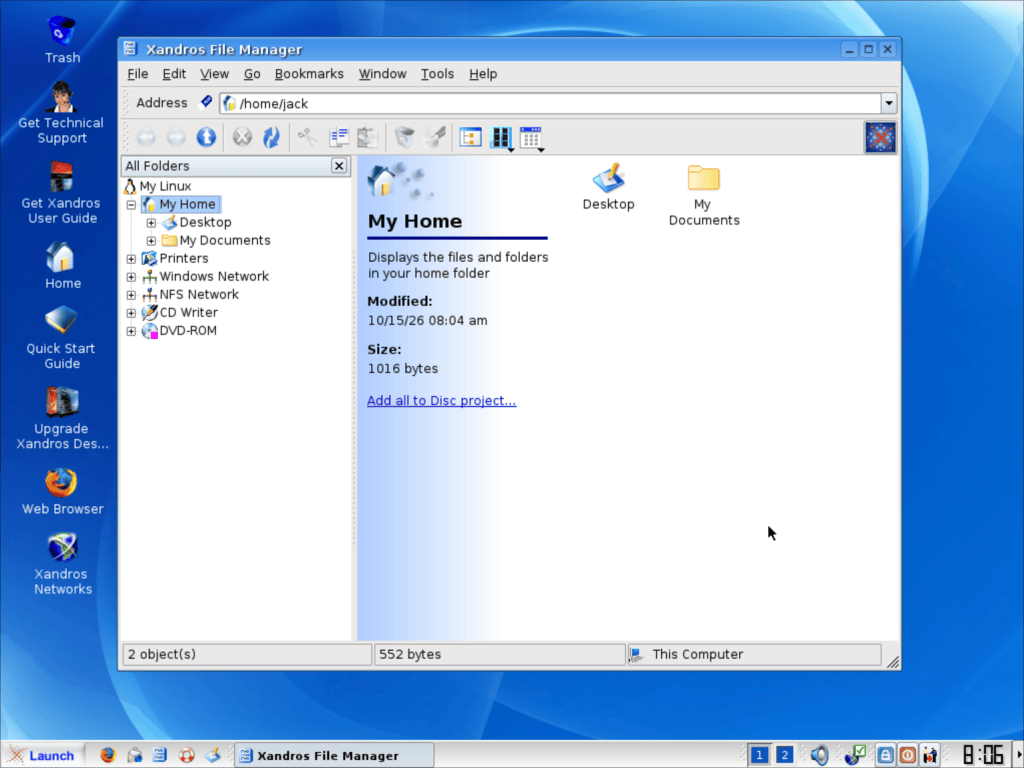
Outside of that, using this distro was fun in a way that I didn’t expect at all. The more I used the distro, the more I got Windows XP vibes in all the right places, especially as someone who was there in the mid-2000s and saw a lot of people trying to make skeumorphic, shiny, crystal-like themes for Windows XP with lovely blues, silvers, and whites all over the place. This felt like a beautiful time capsule of the time in terms of design language, all in one easy-to-enjoy package for a skeuomorphism enjoyer such as myself.
I Never Expected This Feeling
Using Xandros for a bit gave me a feeling I didn’t know was actually much of a thing. I thought I was just weird until I looked it up and discovered it’s called anemoia.
In short, anemoia is a type of nostalgia for not what one did experience, but rather, what one could have experienced. I’m specifically talking about Xandros Desktop 3 and what it represented upon release in the summer of 2005, when Mr. Hyde was still a teenager.
If I had ever used Xandros that year when it was still new and supported, I could say with complete certainty that my younger self would have adored it. I would have been captivated by how it looked and stayed almost instantly because of how much it was like Windows XP.
Unfortunately, even if I had learned about Xandros in 2005, I was still living in a time when we had a family computer at home in a specific computer room. A teen version of me trying to convince my parents that it was a great idea to buy me a copy of Xandros Linux wasn’t going to get me very far. Even if I convinced them, I didn’t know anything about partitioning a drive without accidentally blanking our copy of Windows XP Media Center Edition.
Consequently, I would not get my first personal laptop until just a couple of years later, and I would not experience my first taste of Linux until Ubuntu until Hardy Heron was the latest and greatest. But by then, Xandros was still around, but it was condemned mostly to low-performance netbooks while those were still a thing. Unfortunately, this is how most people actually ever experienced Xandros back in the day, on under-powered hardware that failed to impress.
Actually Using Xandros in the VM
I’ve gushed over how it looks, I’ve delved into some history, but I haven’t really talked about the experience using it. What was it like to use Xandros Desktop back in 2005?
Unfortunately, I can’t paint the most accurate and complete picture for a few reasons. For starters, the Xandros servers as we knew them are completely gone, so even the simple task of running an update in the terminal is impossible.
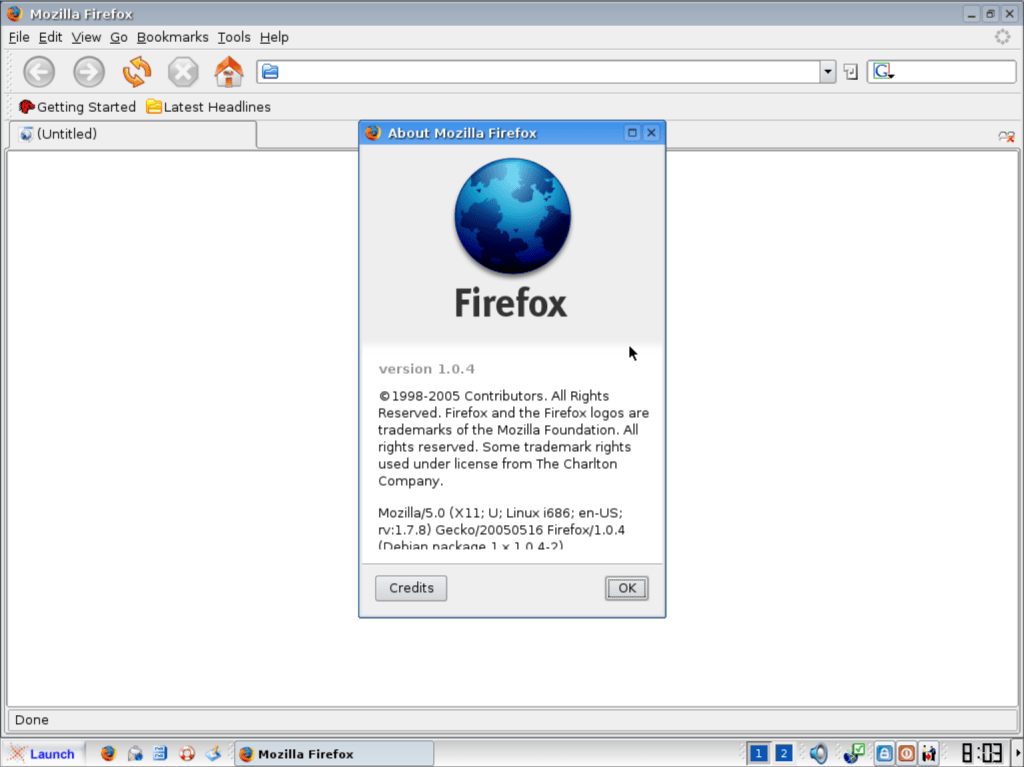
Additionally, it came with Firefox. That alone would have had teenage me hyped over a good browser being included by default instead of Internet Explorer 6. This was back in those days, when IE 6 was the most widely-used browser in the world while lacking basic features we now take for granted like tabbed browsing.
The caveat here, of course, is that it’s a woefully outdated version of Firefox, at only version 1.0.4. Still, seeing the skeuomorphic UI almost takes me back, although Firefox 1.5 is the version that I likely find the most nostalgic if I had to really point at a specific version. Still, neither version of Firefox is, unfortunately, suited to actually use the modern internet anymore. Even trying to access something like Frogfind was useless, which gave me little confidence in what I could still realistically do with such an old version of Firefox.
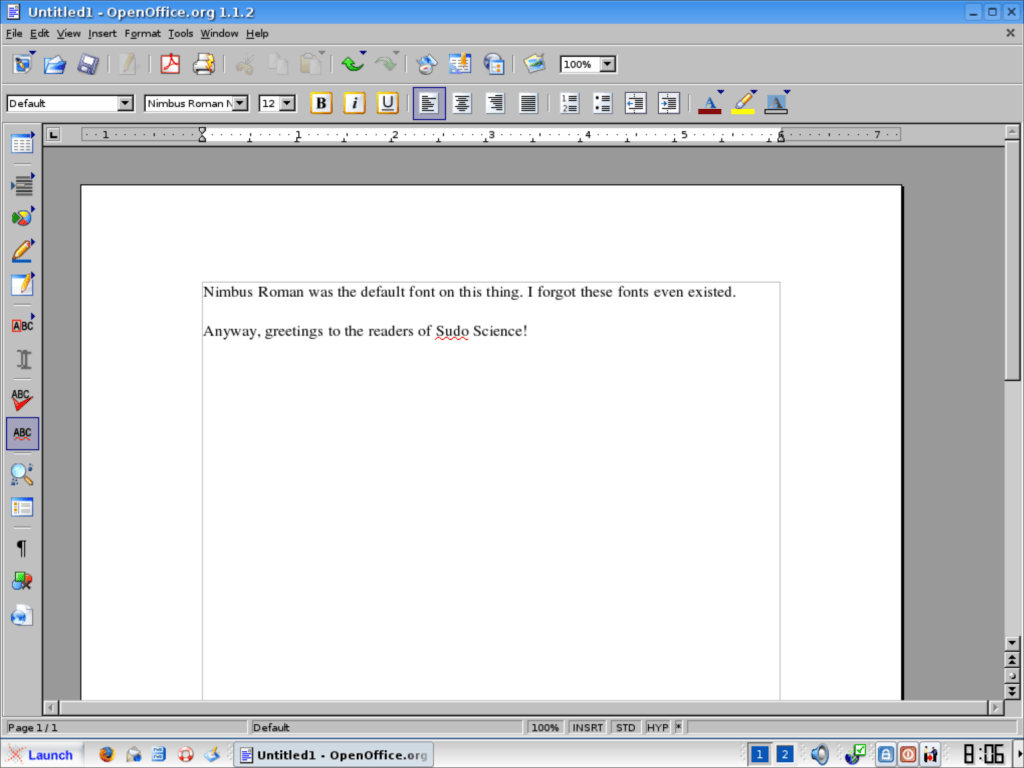
I next launched OpenOffice, which really takes me back to my days on Hardy Heron as well, when I would turn in college papers with it. For the uninitiated, today’s LibreOffice started several years ago as a fork of OpenOffice. That was before LibreOffice became seen as the de facto Linux default. Still, it was mildly amusing to be reminded that the Nimbus Roman fonts were the defaults, just like I remembered on Hardy Heron, too.
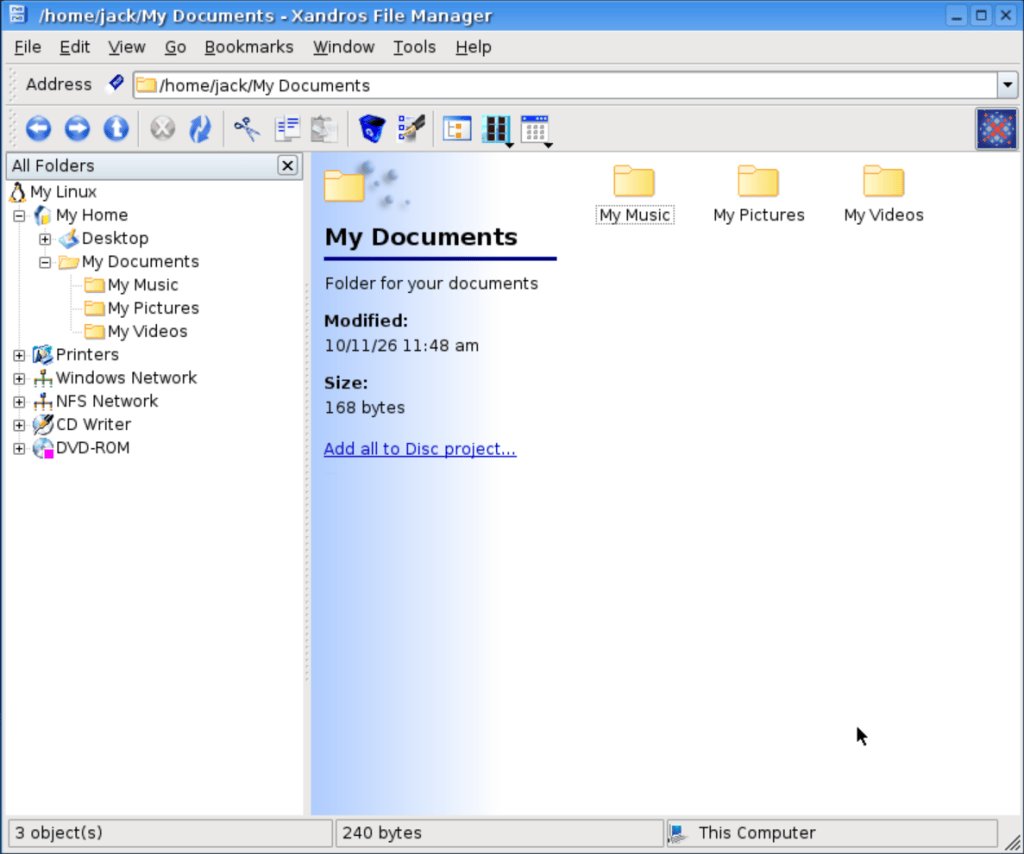
I tried out the file manager again as well, and I still can’t get over how Windows XP-esque it appears. If I had the option to run this file browser on XP back in the day, I would have jumped at the chance, crystalline buttons and all. Other than that, it was the file manager I completely expected in terms of functionality.
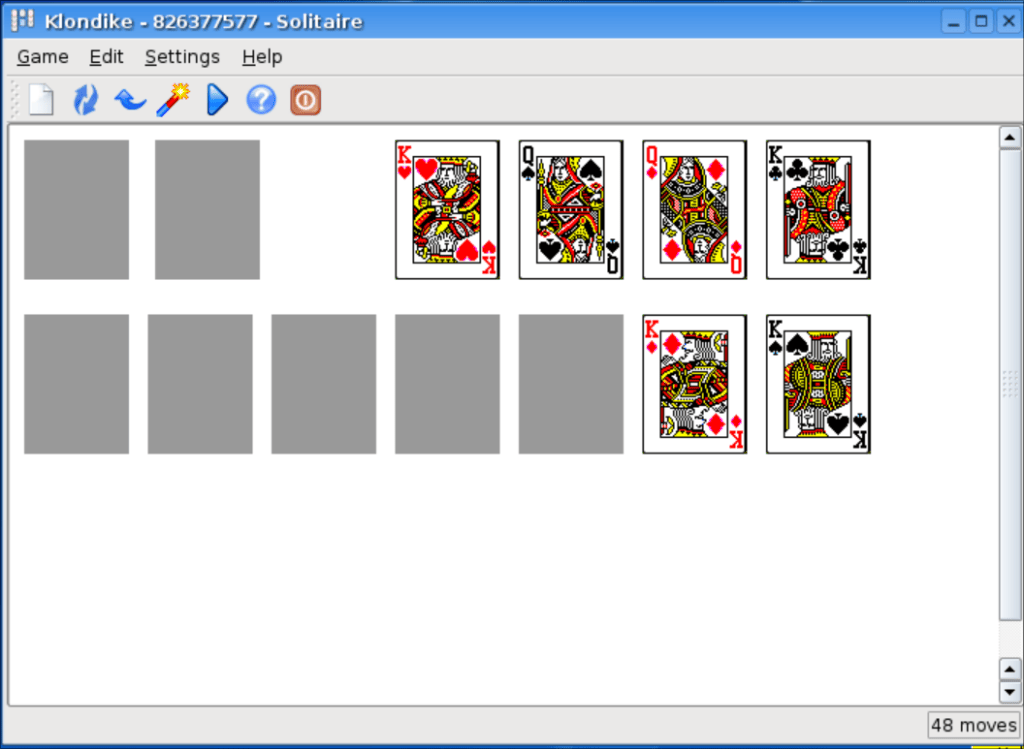
Afterwards, I browsed around for any other programs I wanted to try out, and just for fun, I went through the games folder and remembered that Linux usually came with more built-in, simple card games compared to the likes of Windows. (This was the case when I first used Hardy Heron, too.) Still, I opted to launch solitaire and enjoy it for a few minutes.
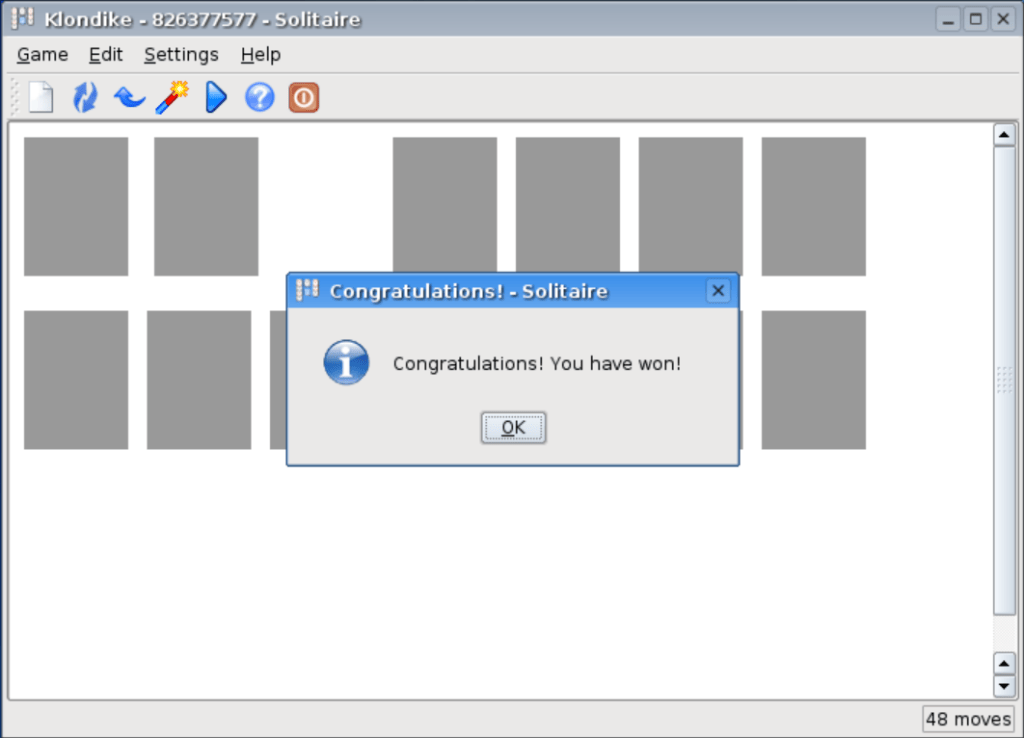
It was such a pleasant surprise to open a solitaire game on any OS and actually win on my first go, by the way, but it was a perfectly competent game of solitaire and a fun way to kill fifteen minutes.
Lastly, I actually had to remind myself that I was still using Linux, not some sort of custom operating system. It’s incredible what KDE 3 was capable of back in the mid-2000s, much like it’s incredible what KDE Plasma is able to accomplish now. Still, remembering I was on Linux was when I decided to run the included terminal for a bit.
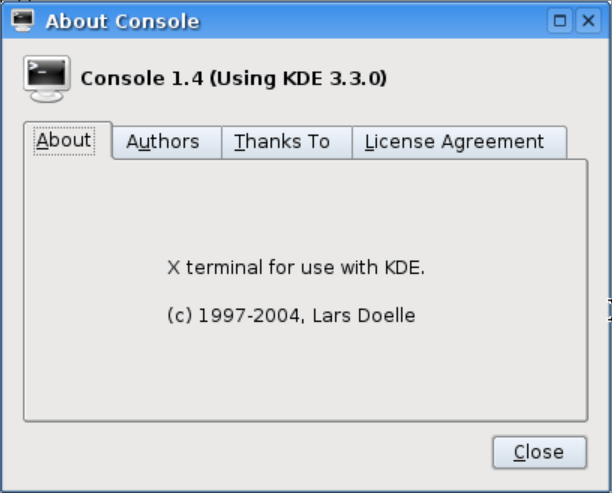
Unfortunately, I didn’t actually want to type much of anything because, again, no Colemak support. What I did find funny is that this was far back enough, apparently, that it wasn’t called Konsole. Unless this is some minor change by the Xandros team, this is a neat bit of KDE history.
Goodbye, Xandros?
By the end of the 2000s, the team released Xandros Desktop 4.2, which was considered the final commercial release of Xandros before it effectively disappeared from public consciousness.
The original company changed their name by the end of the 2010s and effectively went out of business. That would normally be the end of that, but here’s where things took an unexpected turn.
The people behind Lindows, PC/OpenSystems, acquired the Xandros name in the late 2010s. Then, in the summer of 2023, PC/OpenSystems released Xandros Community Edition to effectively zero acclaim.
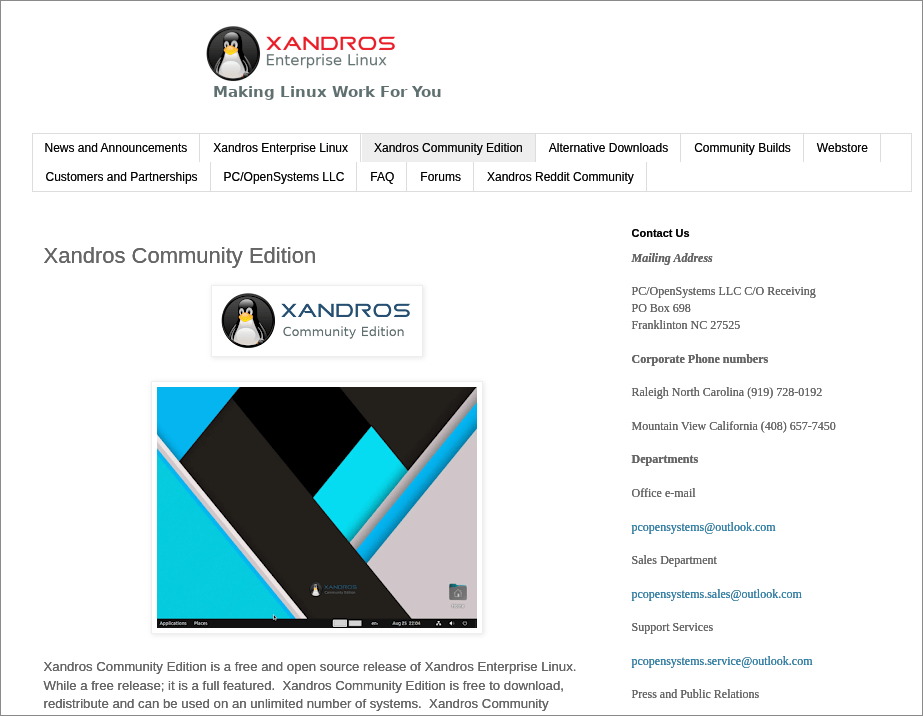
And I’m not saying that to be mean; I truly don’t see or hear anybody talking about it, at all. Visiting the forums (link pictured above) shows a section dedicated to Xandros Community Edition with zero posts in it. Hell, even clicking that “Xandros Reddit Community” link on the page goes to a ghost town with three posts from a few years ago.
Since I was already deep in this Xandros Linux iceberg of my own making, I decided to give this a spin just for the sake of it. After a particularly slow download, I started the VM, wondering how it would compare to the original Xandros, if at all.
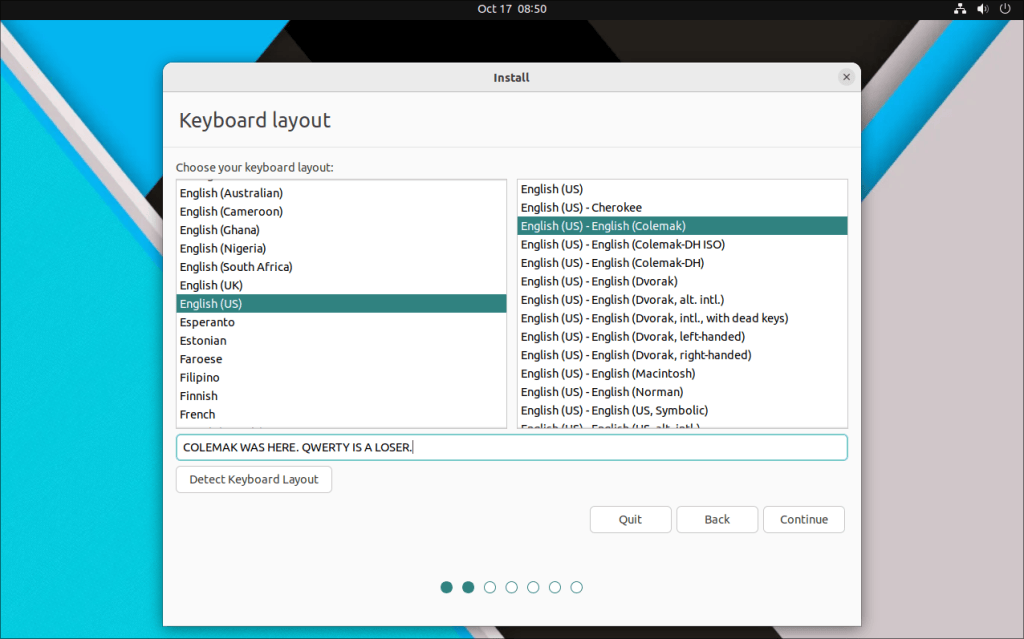
After booting it up and installing it minimally, I discovered it wasn’t really anything all that special, especially in today’s Linux ecosystem. Turns out that Xandros Community Edition is another Ubuntu derivative, which means apt commands all work as expected for package management. It also comes with a customized GNOME desktop, meaning that a few extensions are already preinstalled and configured. It also comes with the rather unappealing Yaru Prussian Green, which I gladly changed soon to a more pleasing choice after.
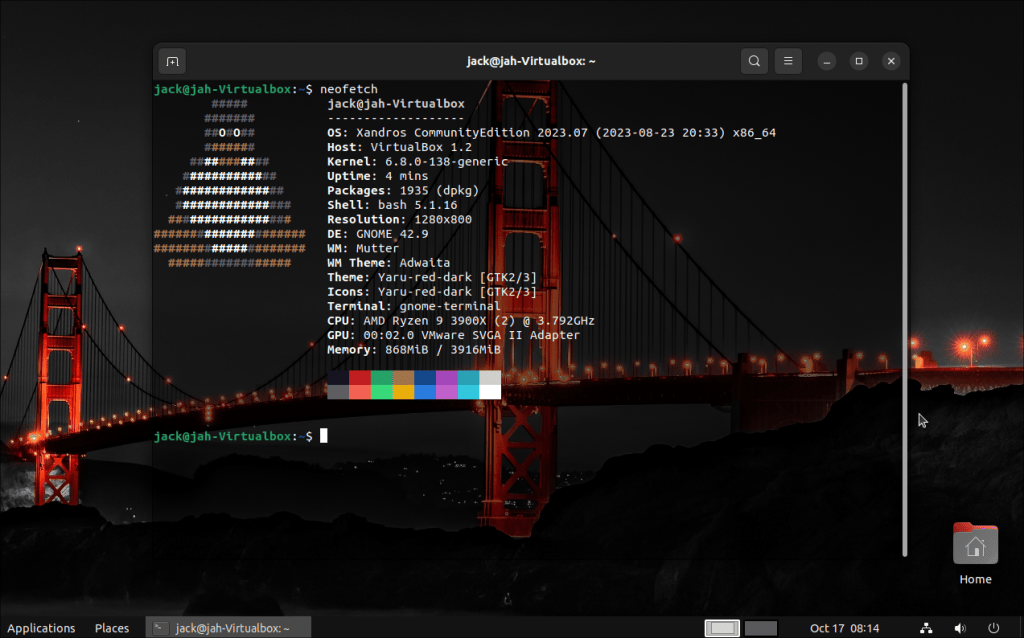
Other than a few interesting choices like how Brave is the default browser and how KornShell was installed in the Applications menu, there really wasn’t much to write about here. It’s a fully-functional desktop, sure, but I can’t think of any compelling reason I’d want to actually use Xandros Community Edition as a daily driver when I have so many other choices now.
My Final Thoughts
It’s so strange to be here now and see that Xandros Community Edition even exists now. I was writing this whole thing, ready to speculate on what it would have been like if Xandros had survived until now, but instead, it was revived years later in name only.
Xandros Desktop in the 2000s was special because it tried to help longtime Windows users understand that Linux didn’t have to be intimidating. It did this out of the box with beautiful aesthetics and a very familiar UI. It is so accessible for its time, I would argue, that it was extremely easy to forget I was running a Linux distro at all.
While it is somewhat nice that Xandros Community Edition even exists, it doesn’t come anywhere near capturing that same identity and purpose. I suppose the two-desktop setup in the bottom-right corner is the closest unique parallel to its old interface, but that’s such a small detail. In reality, it’s just modern GNOME with several extensions out of the box. Regardless, there really isn’t anything compelling about Xandros Community Edition that would make me choose it or recommend it over other Ubuntu derivatives, much less other distros.
While I didn’t get to use Xandros back in its heyday, it did help me appreciate a chapter of computing history that I never got to personally experience. The short time I did run it in the VM, I couldn’t help but wonder what could have been if I actually had used this as my daily driver in 2005. I did get a true sense of anemoia when exploring its UI and interface.
Conversely, Xandros Community Edition managed to give me the exact opposite feeling. While it’s functional, it inspires no real curiosity or excitement compared to its long-discontinued counterpart. While I’m sure there’s statistically a small percentage of people out there running it, the lack of engagement around it is undeniable. In fact, unless there’s some obscure YouTube video out there on the subject, this entire post might be the most anybody has bothered to explore and discuss Xandros Community Edition over the past couple years. (Of course, I could be wrong about that, and I’d love to see evidence to the contrary.)
Again, going back to Xandros Desktop from the 2000s, it finally made me understand something about myself. A big reason why I like Windows XP so much, beyond its features and overall feel, connects to the time period I actually used it. In other words, nostalgia for what I actually experienced. I associate Windows XP with my formative teen years, as it visually encapsulates a time in internet history that is now long gone. As XP looked a certain way, the rest of the web looked a specific way as well.
A lot of younger people these days are going on about what we now call “Frutiger Aero,” and the discussion around what counts as part of this aesthetic is beyond the scope of my post. However, there is something to be said about how tactile, bright, colorful, and occasionally glossy everything looked in those days. Windows XP captured a lot of the tactile and colorful aspects of that. Xandros did the same, albeit with its bright, crystalline appearance, the same kind that I kept trying to visually recreate on my own Windows XP system at the time with custom themes.
Fast forward to now, as I’m still daily driving my own Gentoo system. While my preferred setup has changed drastically over the past couple of decades, one thing has remained: my desire to tweak and customize to my desire. Just as I recently and quietly switched my system back from Dracula to Nord, I’ve always enjoyed making my desktop look and feel exactly as I want.
Did you ever hear about or use Xandros Desktop back in the day? Conversely, were you on a different distro at the time, or were you simply on Windows or OS X like most people back then? Additionally, and I also know this is a long shot, feel free to leave a comment letting me know if you are non-ironically using Xandros Community Edition as your daily driver! I want to know why you picked it as your distro despite the many options out there. Regardless, feel free to leave a comment in general; I’d love to know what you have to say.

