

I have not had the best month, and that’s an understatement. That said, when I had time to really sit down and reflect on my life as a whole, I eventually thought about technology, including how I remembered it over the years.
As a child, I only recalled ever seeing businessmen carrying cell phones, and people still used pagers and PDAs for a few years. I grew up with VHS tapes and film cameras as well!
Fast forward a few decades, and we’re in a completely different era altogether, one my childhood self would hardly recognize with so many things are are rather ubiquitous today.
It’s strange to think that, during that time, so many tech fads came and went. So many little trends or ideas came along that I simply took for granted or assumed would always be there. But now? So many of them are a distant memory or simply unexciting at most.
That’s when I decided to sit down and reminisce for a bit, trying to put everything together into a more coherent picture. Thus, this is me trying to do something a little different, similarly to my technology retrospectives on BlackBerry and the like.
Criteria and Info
I wanted to be upfront about this retrospective:
- This is not a ranking in any way. This is largely just me recalling when a different time period when I and many others thought that the tech industry was going in a different direction before the market largely rejected the idea or the novelty wore thin.
- I’m going to try my best to keep things roughly chronological. Some of these obviously overlap in terms of their timelines, but I’m doing my best here.
- This is far from exhaustive. Believe me, I could write a lot more, but I wanted to curate what I actually remembered and experienced over the years. As a result, you might think I forgot something, but it’s largely because I didn’t experience or remember it all that well personally.
Netbooks

I remember netbooks somewhat fondly from a time in the late 2000s when my best friend was trying to win one through a program at school. He was two grade levels below me, and I was a college freshman at the time. Apparently, he just needed to complete some series of long work packets as part of some sort of program to win the netbook.
He even described the idea of a netbook to me at the time, asking if I had ever heard of one. He told me they were tiny, cheap laptops that were roughly the perfect size to carry in a woman’s small purse with just enough keys on the keyboard to get by, a good enough display, and some dialed-back specs to help keep costs even lower. They also typically came with Windows XP, and he told me some of the average prices of them, which made them seem more appealing. I even recalled helping him with a few of his work packets because my curiosity was piqued. I wanted to know what a netbook looked and felt like up close.
What was not to like? In concept, netbooks really did seem like they filled a niche of extremely simple, portable computing devices that were good enough for maybe some light browsing, managing emails, and maybe word processing. The industry at the time, from what I recalled reading in tech news back then, was going crazy about netbooks as well. I remember so many different manufacturers trying to make their own netbooks to cash in on this new, emerging category.
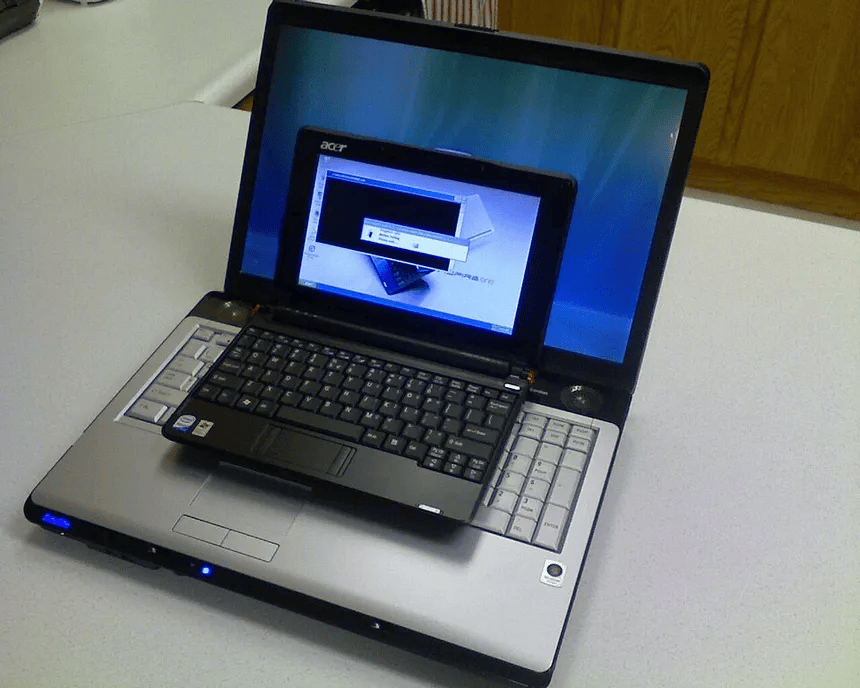
Fast forward a few months, and my friend finally got his netbook. I recalled him showing it to me with a sense of anticipation. We were going to finally see this new piece of hardware.
It didn’t take long for the novelty to wear thin. I don’t remember much about what he did with it in depth, but I do know my best friend had a dedicated HP laptop that he was using before then (I think it was from 2006). After using the netbook for a bit, it was a no-brainer for him to simply stick with his preexisting laptop. It was so much faster, it had more features, the battery was better, and we could hardly think of a reason why to actually bust out the netbook for much of anything outside of an occasional novelty or a bit of tweaking.
The netbook waned from public consciousness a few years later, although I generally credit the rise of the ultrabook for being the reason the it faded from our memories. When ultrabooks came along, they promised full-powered processors, battery efficiency, large displays, and very thin form factors that made them easier to carry compared to other models of laptops. The only place where ultrabooks couldn’t undercut netbooks was in price, but by that point, the market had spoken. By the mid-2010s, I scarcely ever heard about or saw a netbook again.
The 3D Fad

I’m obviously not talking about the red and blue glasses that were used for decades prior. I’m talking about the 3D trend that largely popped up in 2009 and chugged along until roughly before 2014.
Movies were being released in theaters around the time, but they usually offered either a 2D or a “RealD 3D” option. Opting for the 3D option meant getting a special pair of darkened, polarized glasses you would have to wear in the theater. Of course, going with the 3D option also meant paying more money than seeing the 2D equivalent.
When I’d take a seat in the 3D theater, I’d nearly forget about how annoying it was to try and finagle with putting the 3D glasses over my existing prescription glasses at the time. It seemed cool to see a few 3D effects, especially early on in the film. Unfortunately, I started to notice a clear pattern:
- I’d go into the theater for the 3D movie and deal with putting the 3D glasses over my actual glasses in a way that they won’t slide right off the tip of my nose.
- I’d wait a few minutes for the movie to start.
- The beginning of the movie would usually have some sort of 3D gimmick that made a few people in the theater ooh and ahh, myself included.
- By the middle of the film, I largely forgot I was watching a 3D movie, as films didn’t really do much with the effects afterward.
After a short while, I would purposely opt for the 2D film because it was cheaper, didn’t feel so gimmicky, and I’d still have the same good time regardless.
But it wasn’t limited to just the theaters. Oh no, I remember when tech companies largely saw 3D as a huge evolution of entertainment. TV manufacturers in particular started flooding the market with expensive, gimmicky 3D TVs that required special glasses to enjoy at home. The possible logistics of losing or breaking a pair of these glasses was enough to put me off from ever being interested enough to buy a 3D TV.
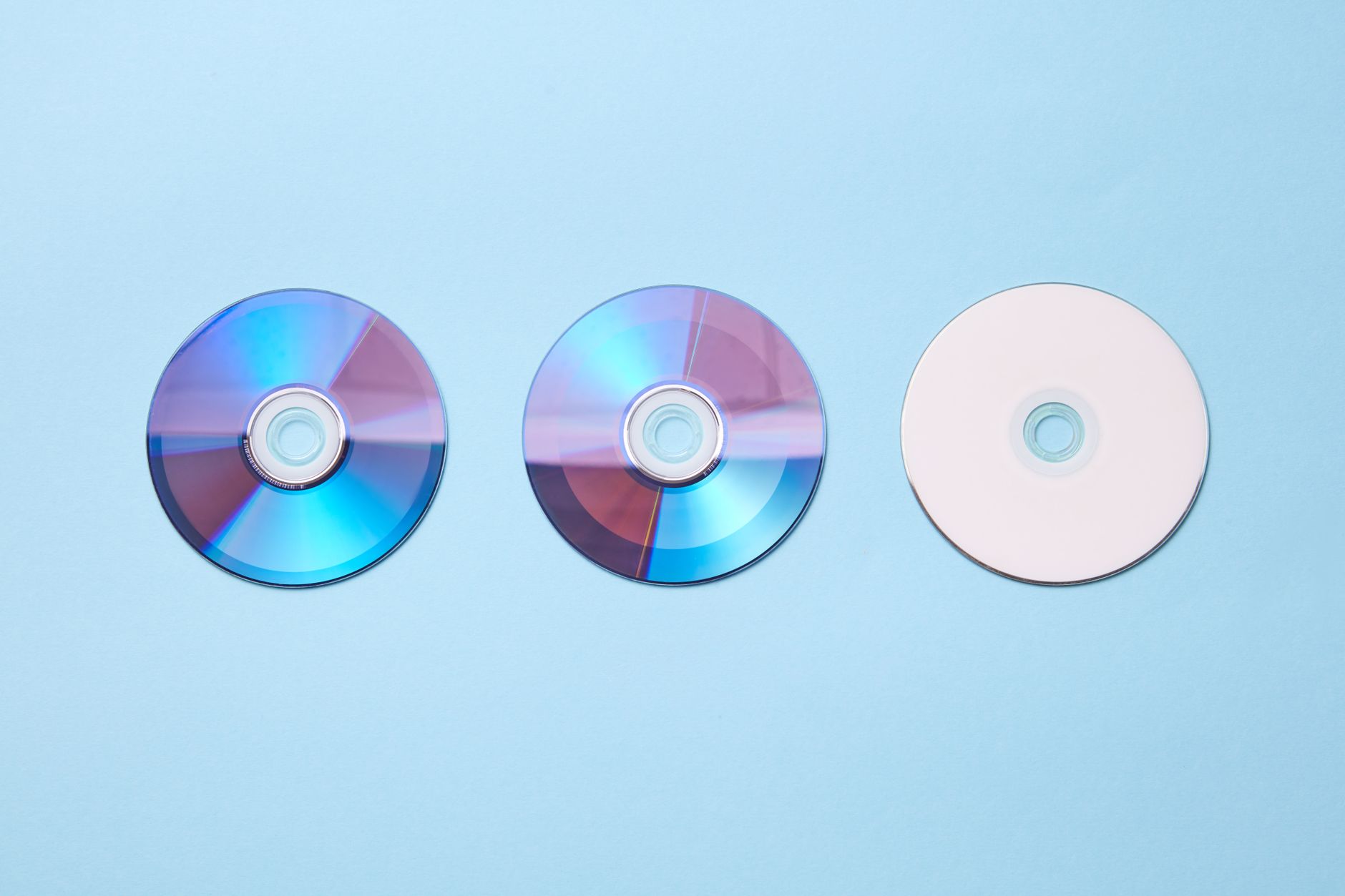
Blu-Ray releases were being advertised with special 3D versions that came with up to four pairs of foldable 3D glasses and were compatible with standard Blu-Ray players. I even specifically recall watching and rewatching Coraline with my younger sister this way when she was growing up. Even Nintendo was getting in on the action with the then-new 3DS in 2011, which initially blew minds for having 3D without glasses. Not to be outdone, Sony started selling a special 3D display designed for use with the PS3. In short, the entire market really was pushing 3D for a good few years.
There’s also that time Amazon launched the Fire Phone, their first and only foray into the smartphone market with a glasses-free 3D effect that users largely found gimmicky at best. Having it enabled also sapped away battery life compared to using a standard display, as it needed more power to use the face-tracking cameras to enable the 3D effect.
By 2014, it seemed like 3D wasn’t all that exciting anymore. People were still enjoying 2D displays and media in large numbers, and manufacturers started dialing back 3D products over time. It never really went away. Rather, the novelty was gone. RealD 3D films still get released in theaters, but it’s more of an afterthought compared to the fad’s popularity in the early 2010s. Nobody these days feels that the 3D is absolutely necessary for enjoying a film in theaters.
Video Game Motion Controls Post-Wii
I don’t think the Nintendo Wii needs any introduction. Judging by its sales numbers and cultural impact in the 2000s, chances are that nearly everybody knows what the Wii is.
Wii Sports lit the world on fire and got so many people interested in video games when, prior to that, they largely never would have touched a video game. Swinging the Wii remote was easy to understand, and it worked surprisingly well in the mid-aughts.
Motion controls did seem like the future around that time, although I do recall seeing common sentiment on forums and gaming communities by 2009 over how motion controls seemed gimmicky by that point. Instead, gamers were largely buying games they liked that just happened to be released on the Wii rather than buying games that had motion controls as a selling point.
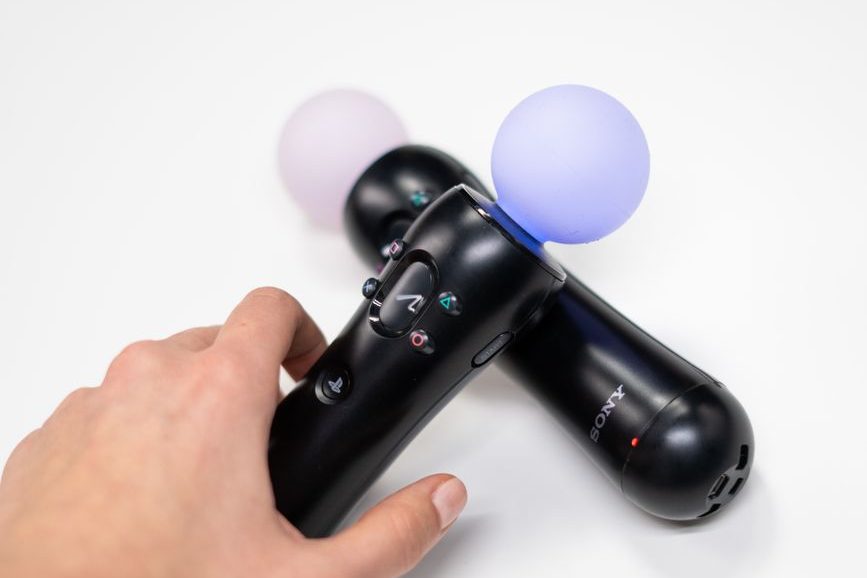
But Sony and Microsoft hadn’t quite gotten the memo. Sony created the PlayStation Move (pictured above) and really wanted it to be a thing. It looked like a dual set of wireless, black controllers, and one of the controllers had an opaque, white, glowing ball at the end. It also required a PlayStation Move camera hooked to the PS3 to work, detecting the movements from the glowing balls. I even recalled using it at my best friend’s house because his sister bought it to play some Just Dance games. I will admit that the Just Dance games were perfectly playable with the PlayStation Move, and they were a fun novelty as well.
Sony heavily marketed the Move, pushing a few motion control games that required it. They even created an gun-like accessory that seemed like the PlayStation 3’s answer to the Wii Zapper. Predictably, one could dock both Move controllers into it to play first-person shooters.
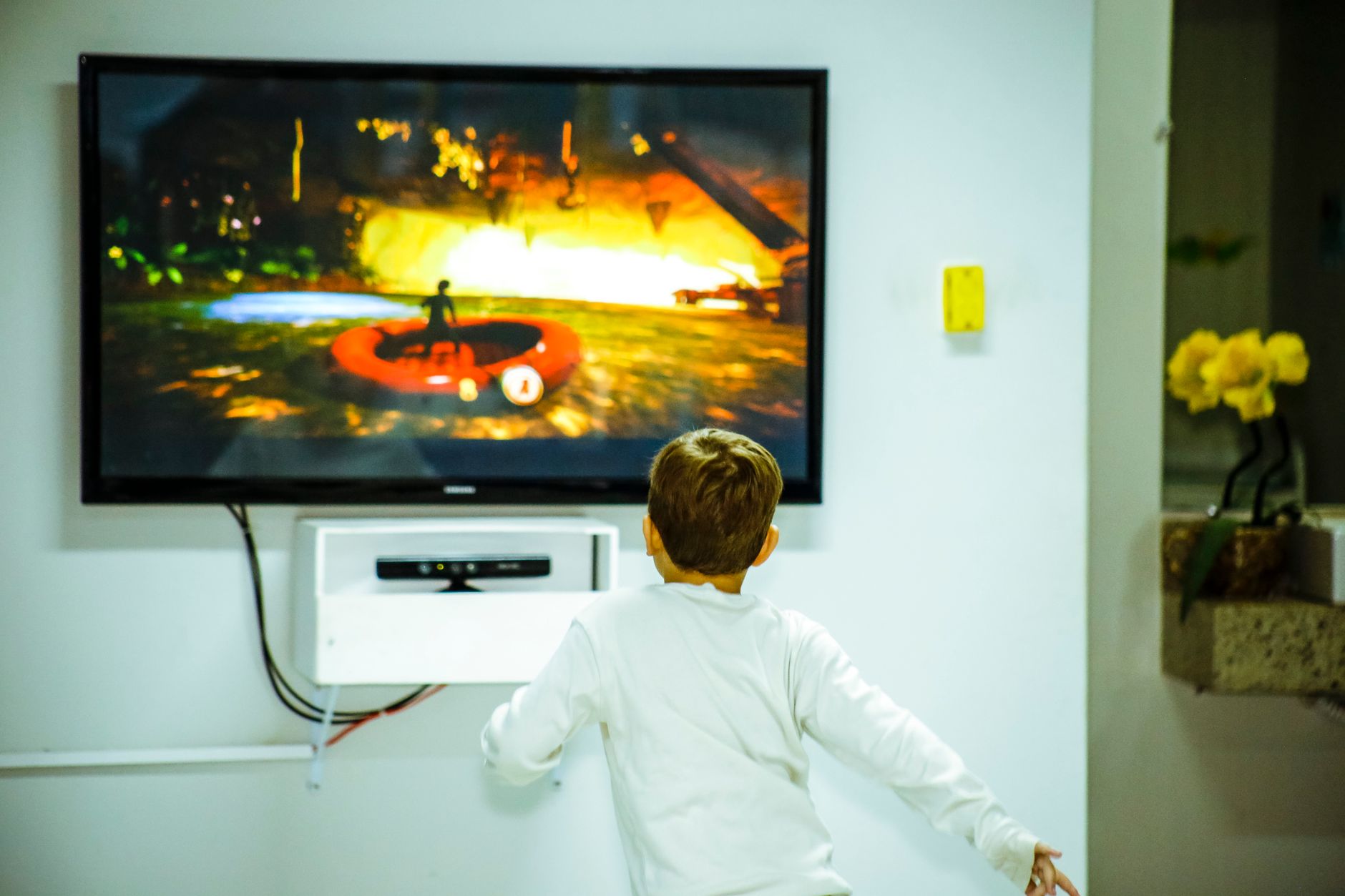
Microsoft, on the other hand, went even further, releasing the Kinect on the Xbox 360 to a somewhat positive (or debatably lukewarm) reception. Unlike the Wii remote or the PlayStation Move, the Kinect was a camera-like accessory that enabled motion controls. Microsoft wanted to look as cutting-edge and futuristic as possible by saying you wouldn’t need a controller, period.
The Kinect would attach to the 360 while propped in front of the TV, and it would detect body movements and readings. Some people did appreciate playing the likes of Just Dance with it, but outside of some unremarkable games that shoehorned in motion controls into everything, it was superfluous at best. By the time Microsoft announced that the original Xbox One would launch with mandatory Kinect, people were largely over the fad.
The Nintendo Switch did have those “Joycon” controllers with some degree of motion control since then, and VR headsets incorporate specialized controllers that feature some degree of motion control, but we are clearly past the era where it seemed like the future. The Wii U, the successor to the Wii, emphasized a multi-functional tablet over motion controls, and the Kinect was later discontinue due to a lack of consumer popularity. Many people are perfectly content using controllers to play video games.
The Failed Tablet Convergence
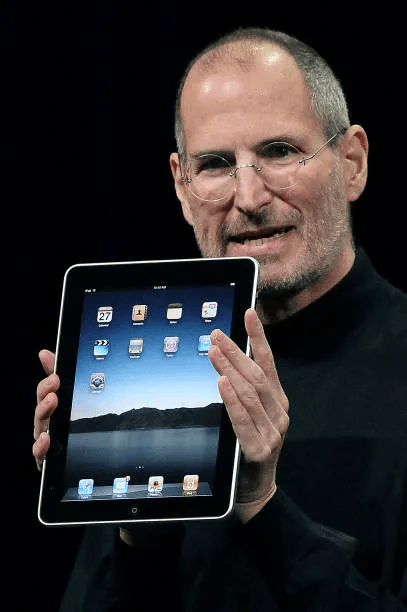
In early 2010, Apple released the first iPad, setting off an industry trend where tablets were the hot, new thing. Of course, we still have tablets to this day. Those haven’t gone away. What has gone away, however, was the entire idea that tablets would become everywhere in our lives.
Reputable tech outlets of the time speculated like crazy about the supposed death of the desktop computer as we knew it. They foresaw a future where nobody would use a standard PC or laptop anymore, that we’d all be using some variation of the same tablet or tablet-compatible platform. They started taking predictions on when Intel and AMD would stop making desktop processors as the market would simply shrink away and die due to a lack of demand for desktops.
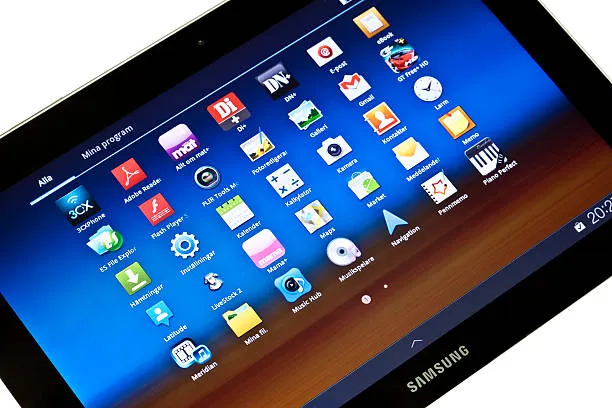
Android dabbled into this with mediocre results. I had purchased a Samsung Galaxy Tab 10.1 (pictured above) back in 2011 with a dockable keyboard that plugged right beneath it. I tried using it to take notes in college classes, although it didn’t take too long for me to realize the experience was garbage and that I had, with all certainty, wasted my hard-earned money.
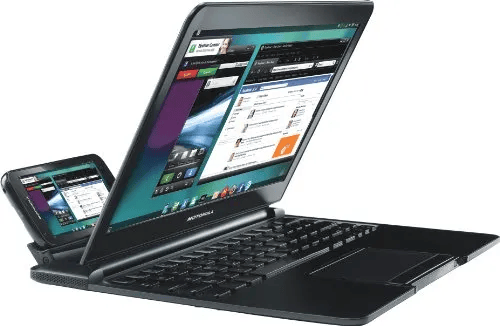
That didn’t stop other Android manufacturers from trying to really push this idea because it likely seemed intoxicating. What if, they thought, you could plug your phone into a dock or shell of some sort and have it transform into a full-blown desktop? That’s what the Motorola Atrix 4G gave us back in the day as well. I still remember how real the hype for it was, how reviewers in 2011 thought that this could be the next big thing, that we’d be carrying our smartphones everywhere, dock them somewhere, and we’d suddenly go from a phone to a full-on desktop interface.
Seemingly, nobody bought into this convergence idea harder than Microsoft. Windows 8 was maligned for the time, sure, although I recalled most people complaining because it dared to disturb the tried and true UI. Microsoft dared to alter the workflow of the ubiquitous Start menu for millions worldwide.
While I thought the Start menu thing wasn’t the biggest deal (there were several third-party apps that restored the Start menu both paid and free), I wasn’t a fan of how hard Windows 8 pushed the Metro UI. While I thought the UI and aesthetic were immaculate on the likes of Windows Phone 8, I could not say the same about Windows 8 on the desktop. I had no need for the live tiles when my keyboard and mouse were perfectly adequate. I also saw no real use for the “Charms Bar” because I was using a desktop, not a touchscreen.
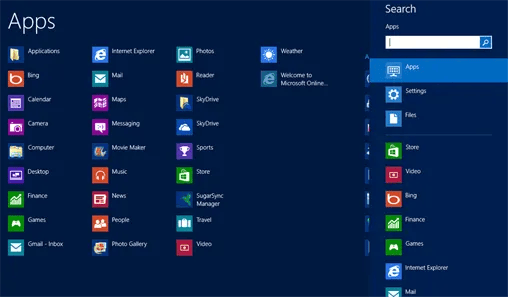
This was part of a push by Microsoft to have a convergence of platforms. What if, Microsoft likely thought, people could have the same apps, features, and UI on phones, tablets, and desktops?
This is the reason Windows 8 likely felt so off, why there were obnoxiously-designed apps that took over the entire screen when you would have likely preferred a windowed-version of the app the old-fashioned way. It was all part of an effort to blur the line between the tablet and desktop.
It’s part of why Microsoft even released a line of Surface tablets in the 2010s that had detachable keyboards, to let someone use the device as either a tablet or laptop depending on the need. (On that note, my cousin had an incredible Surface tablet that lasted a long time from what I recalled.) Windows 10 still pushed the idea just a few years longer with the Lumia 950 and Mobile Continuum, and Samsung later released DeX as an attempt to really bridge the gap by putting their own spin on what Motorola was doing with the Atrix.
Fast forward a good 15 years. Our desktops, our tried and true workstations, have not disappeared. Microsoft made a huge, bold bet that we’d be using the same operating system across all devices, and they were proven wrong.
That’s not to say that tablets aren’t capable; attaching a keyboard case and Apple Pencil to an iPad can make turn a passive consumption device into a capable productivity tool. A lot of people prefer to use an iPad Pro or other similar device in this way as well.
While many of us are still largely happy with desktops, especially those of us trying to run local AI models, the idea that a tablet can do more hasn’t completely died. To be perfectly fair, the recent announcement of the Googlebook marks how maybe, just maybe, this convergence dream isn’t completely dead.
Microconsoles
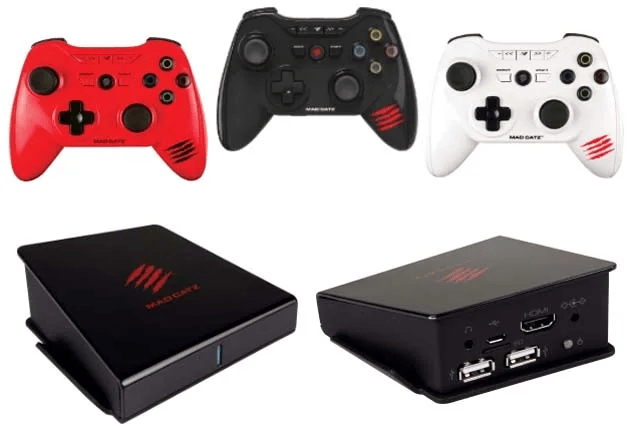
In 2012, I recalled seeing tech news about this big, new thing, a new video game console calling itself the OUYA. It launched a Kickstarter with a load of hype backing it.
The OUYA promised to be a new option in video games as mobile gaming was on the rise at the time. This was a low-power $99 “microconsole” that promised to shrink down the guts of an Android phone, be fully hackable, and let users play what would otherwise be mobile games on the big screen.
The funny thing was that I recalled seeing the news about this system and feeling rather indifferent. The idea of hooking up what was otherwise a glorified Android phone to my TV didn’t really appeal to me. Nothing about the system really appealed to me, so I just went along with my day.
Imagine how surprised I was to see that OUYA’s Kickstarter had been tremendously successful, raising a staggering amount of capital beyond my expectations. We’re talking over $8 million dollars when OUYA only asked for $950k of capital. Maybe this was what people really wanted? Maybe this was the future after all?
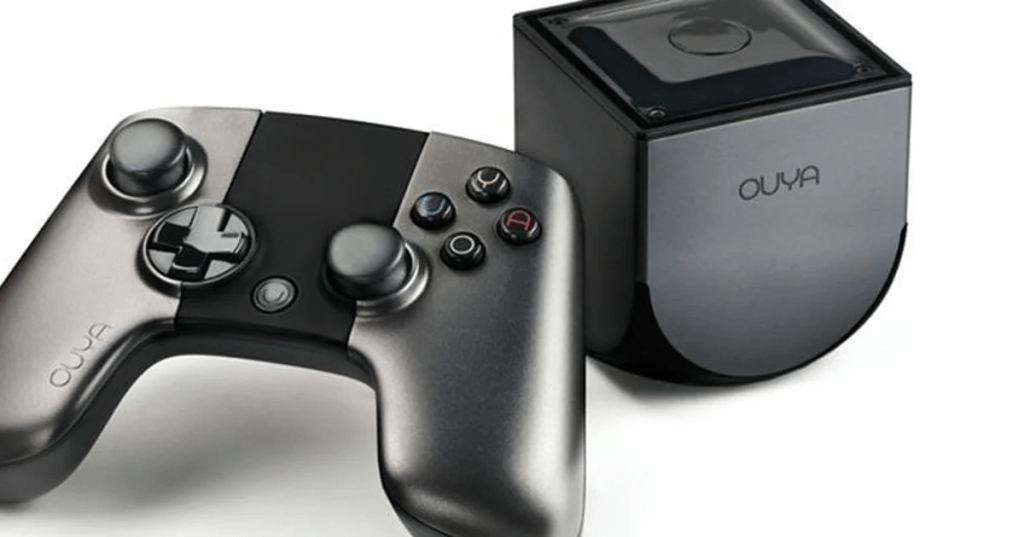
The OUYA went on to be an absolute clown show, fumbling and messing up at so many opportunities. I recalled seeing someone on a forum complaining, for example, that his OUYA controller wasn’t working and that he was going through OUYA’s support channels to get it fixed. He was told to use a Dualshock 3 controller in the meantime, that it was fully-compatible, but that led him to ask why he would want to do that if he bought the OUYA with its original controller in the first place.
Still, despite the OUYA’s many, many screw-ups, the amount of money they raised proved there was a very real consumer interest in Android-powered microconsoles. A few other products trying to fulfill a similar niche came and went like the Gamestick, Mad Catz M.O.J.O., Amazon Fire TV, and a few others. Even Sony threw their hat in the ring with the PlayStation TV. It was just a PlayStation Vita with no screen that connected to a Dualshock 3 controller.
An example that actually did stand out to me back in the day was the Nvidia Shield TV. It came along in 2015, generating hype with the Tegra X1 technology onboard. The Shield TV survived not because of its gaming capabilities alone, but because it had enough general utility with entertainment that people found it compelling for consuming media. It looked more like a streaming box, much like a Roku, that happened to play video game as an extra feature.
Speaking of which, that brings us to an era where Smart TVs are ubiquitous now more than ever. If you can run the apps on the TVs themselves, who needs a dedicated microconsole to take up a valuable HDMI port these days? Unless there’s some sort of example I’m missing here, this is a tech fad that really did fade away.
Curved Smartphone Displays
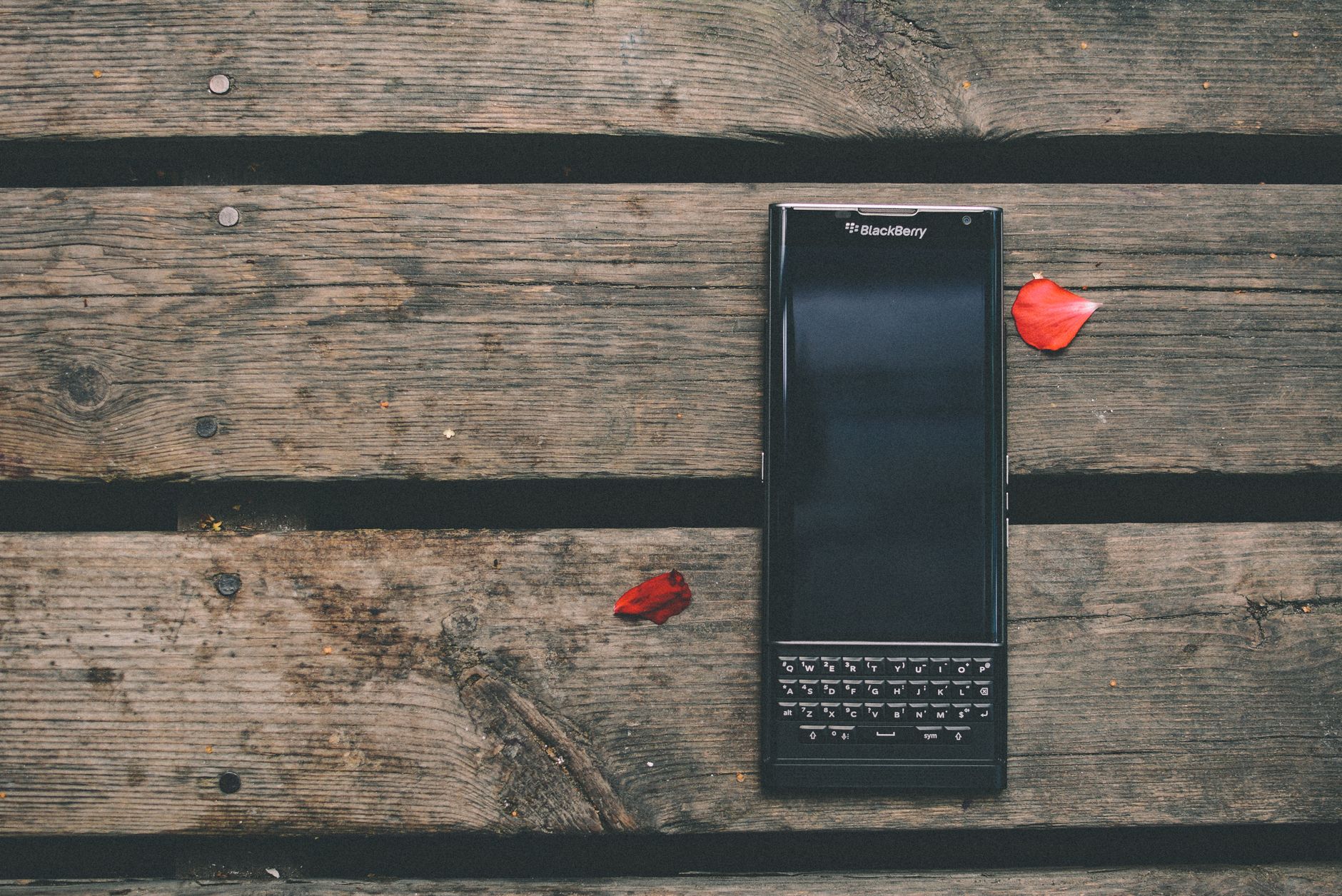
While I generally have been neutral towards the technologies I’ve mentioned thus far, I am going to end on the one I genuinely despise from this list.
I really don’t like curved smartphone screens. Like, at all.
This was a feature that, from what I recalled, was popularized by Samsung in the mid-2010s. Still, from the very beginning, I saw this for what it was. It was a needless gimmick, likely birthed from smartphone manufacturers and designers struggling to find something worth innovating to justify their paychecks.
Manufacturers had to invent, practically force, more uses just for the curve to justify its existence. Did you want to see your battery charge indicator on the edge of the screen? Me neither. Even if you did, why couldn’t we see that on the edge of a normal screen? Samsung was known for tacking edge widgets and gestures that made their smartphone UI look and feel more like the cluttered mess I remember it being in the early 2010s instead of a genuine necessity.
I could talk about accidental touches as well, but I didn’t really have those all that much from what I recalled. Oh no, the thing I hated most about curved smartphone screens was the lack of tempered glass screen protectors.
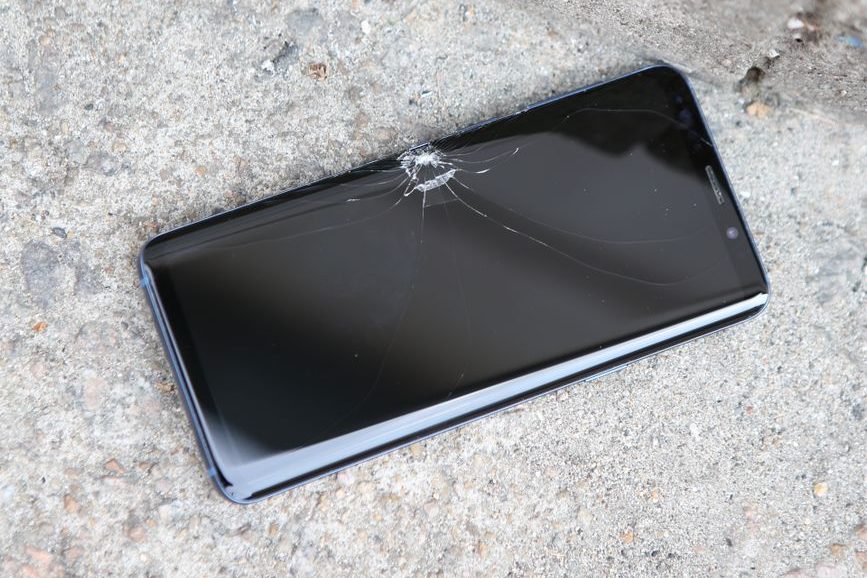
Before I briefly used a BlackBerry Priv, I became accustomed to keeping a tempered glass screen protector on any of my phones. It was the sole reason why my Sony Xperia Z5 in 2015 was saved from being completely shattered and destroyed the one time I dropped it and saw it land face-down on tile flooring. All I had to do was peel away the broken screen protector and apply another.
I recalled shopping around for a tempered glass protector for the Priv, but all I found was a junk one on Amazon that pretended to be a tempered glass protector. However, since the Prive had a curved screen, it was a compromised design. There was a clear adhesive around only the edges so that it could latch onto the sides of the curved display, resulting in a nasty gap under the actual screen. Tapping the device gave me the skin-crawling sensation of feeling the screen protector pressing down through a gap and making actual contact with the screen as well, which was when I decided I didn’t want to keep using it. I peeled off and threw away the protector, switching to a Zagg-like screen protector that peeled and stuck to my screen entirely. It made my phone’s screen feel like an orange peel, but at least it protected the screen.
Eventually, I started to notice less overall hype over curved smartphone screens, likely because people realized they were simply an aesthetic change at best. More than anything else on this list, the curved display always felt like a solution in search of a problem.
I haven’t had the misfortune of using a phone with a curved display since, thank the Lord Himself. The industry, at the time I write this, seems more enamored now than ever with foldable screens instead.
What’s Next For Us?
Now that we’re in God’s year of current year, what do you think the next big thing that won’t stick around is? Do you think AI really is the future, for example, or do you think it’s going to go the way of NFTs in a couple more years? What about other technologies like the recent resurgence of smartphones with physical keyboards?
Likewise, are there memories you’ve attached to any of these technologies or other tech fads I neglected to discuss on this list? If you had to make your own list like this, what would you add? Whatever it is, comments or questions, feel free to share your perspective below in the comments.

