

There’s this thing out there called “digital minimalism.” You may have heard of it. In short, it’s mostly the idea of digitally decluttering, using fewer apps and social media services on one’s phone or computer. In a perfect world, this leads to us being more productive with our technology overall because we have fewer things to distract us overall. Fewer notifications, redundant apps, or nagging reminders trying to claim our attention means more time writing, reading, or being productive with our technology through whatever means.
Before you roll your eyes and write this off as another Luddite whining about “the good ol’ days,” that’s not what my point is at all. I’m not here to tread the same tired ground about how modern smartphones are somehow the cause of society’s ails. I’m not going to try and convince everybody how we should all go back to the way things were in the 1990s or living in caves. I’ll even outright state that smartphones can be outrageously convenient for daily tasks and needs in today’s day and age. Feel free to call me a hypocrite for trying to switch to a dumbphone on multiple occasions, but hear me out on this.
See, I’m noticing something else about the idea of digital minimalism itself compared to your mundane, regular minimalism. It’s easy to assume that they’re both connected together, right? I mean, “digital minimalism” has the word “minimalism” in it. Surely, they’re the same thing or extremely close, right?
With that in mind, before I answer this rhetorical question, let’s unpack this idea with our concept of the modern smartphone.
Convergence Is Here
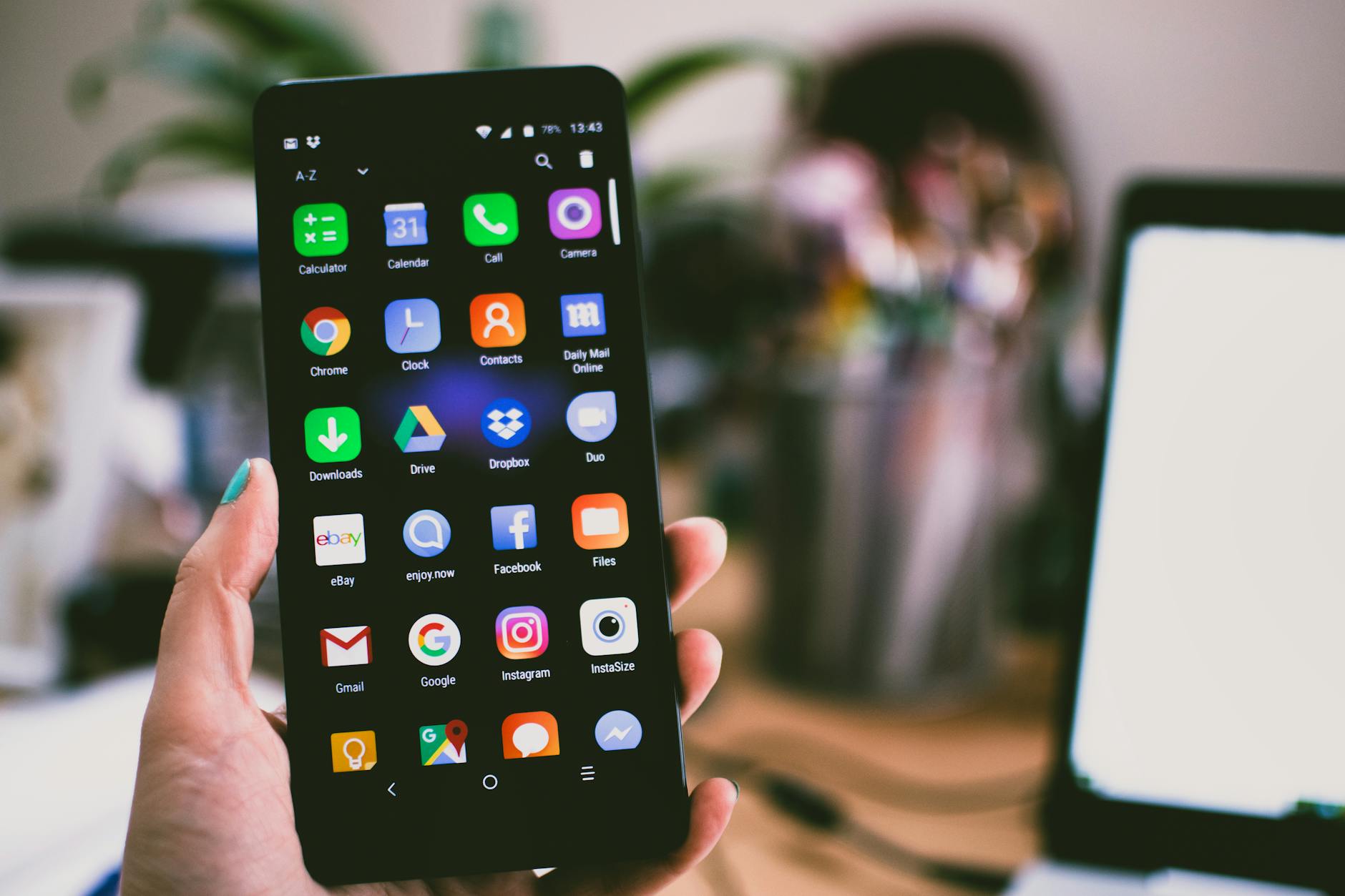
As digital minimalism is in vogue as a concept now (or at least it is with people who feel overwhelmed in today’s technological landscape, as evidenced by the “dumbphone” making a comeback), keep in mind there was a different idea that captivated tech enthusiasts back in the 2000s: digital convergence.
I grew up as a teen in the 2000s, and I recall people primarily carrying feature phones or flip phones, what we may primarily know today as “dumbphones.” We had an early, intoxicating glimpse of what the future held for us in the form of BlackBerry and Windows Mobile devices in those days, sure, but anything close to true convergence was a long ways off.
In short, digital convergence is the idea of carrying fewer devices or tools to do more. What if, instead of a phone only making phone calls, we could use it to take pictures, for instance? What if we could also use it to send text messages to be read later? What if it could do much more than its primary purpose of making phone calls? We’d have so much less to carry around in our pockets, bags, or backpacks, we thought.
Technology was exciting and promising during the 2000s because it was not just novel, but so experimental. It gave us a glimpse of what the future might look like. Aside from that, it seemed so practical to combine every use case into one or two devices at most.
The future was rapidly approaching once the iPhone 3G hit stores in the summer of 2008, introducing us to the App Store and showing us just what would be possible with modern touch screen devices. Fast forward to now, where the vast majority of modern phones are merely a variant of the iPhone’s archetypal design. When I write or say “phone,” the majority of people today instantly picture a glass slab with only a few hardware buttons that runs apps. Apple set the paradigm for the modern smartphone as we know it today.
Aside from that, the modern smartphone may be the greatest example of technological convergence that we have today.
Decompartmentalizing the Modern Smartphone
Let’s say that somebody is fed up with having to do everything with his phone. I’m sure everybody’s heard the same anecdote about him doing the following:
- He picks up his phone because he wants to get something done.
- Before he can, he gets distracted because there are notifications of other things calling for his attention.
- He starts to handle a few of those things. Worse yet, he might “doomscroll” and waste a good half hour of his time.
- He puts his phone back down and wonders why he picked up his phone in the first place, realizing that the task he actually wanted to handle is still not resolved.
It’s a classic story that has happened to almost anybody with a modern smartphone.
This is one of the biggest draws of digital minimalism that I’ve seen repeated countless times, whether it’s in YouTube videos or from the people I know in my daily life.
Advocates of digital minimalism typically try to have a smartphone do less or even switch to a dedicated dumbphone entirely. In theory, being as mindful and digitally minimal as possible with a smartphone can make the above story a thing of the past.
But if somebody has multiple use cases, how practical does it become to carry something else in addition to a phone? What if somebody has a dumbphone, but wants to start doing some of the things that his smartphone used to do?

Let’s start with the camera, which is one of the major features that I recall felt so new and novel back in the 2000s on flip phones. Sure, the photos may have looked like blurry, pixelated excrement, but it was novel that a phone was able to take pictures at all. People who don’t remember the 2000s don’t realize how cool the idea was back then, much less taking high-res, beautiful, clear images that our devices are capable of now.
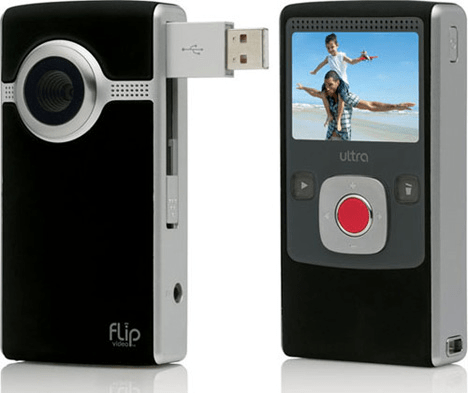
That said, what if I wanted to delegate this use case to a dedicated device? Instead of carrying around just a phone, I’d have to start carrying a phone and a digital camera. What if I wanted to shoot video I could easily manage later on a computer? I’d have to either make sure my digital camera supports shooting video or take myself back to the olden days when we had Flip Camcorders, dedicated video cameras that were known for their dedicated USB connector.
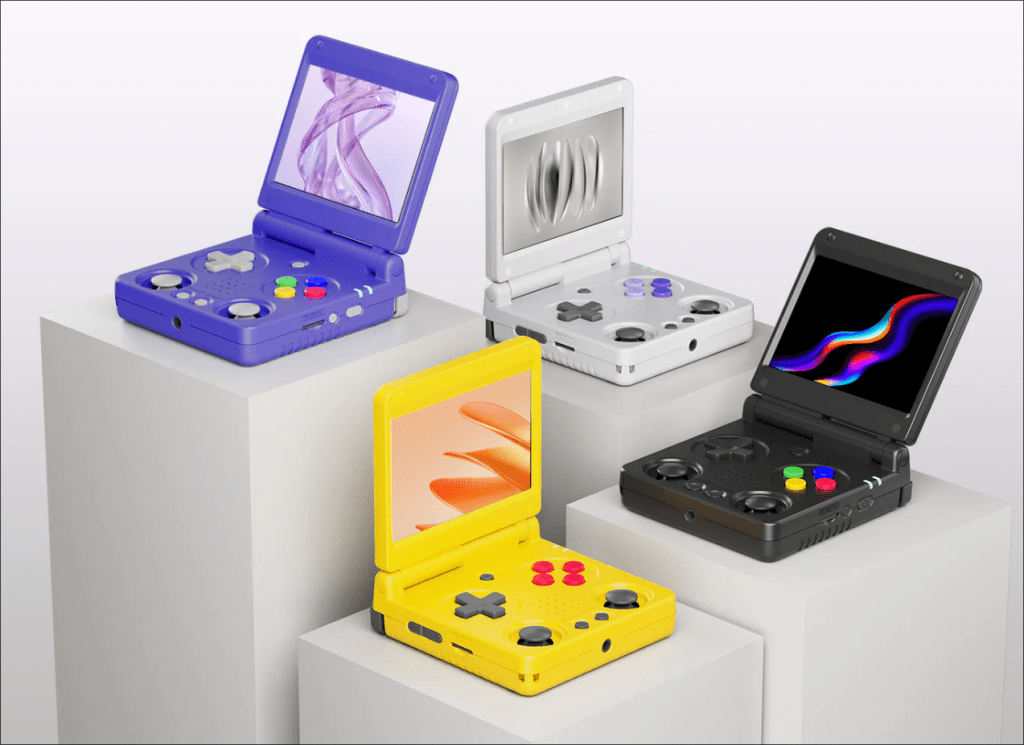
So with two or three devices, what if I wanted to delegate smartphone tasks to other use cases next? For instance, if I wanted to stay entertained for a few minutes somewhere, I could carry around any litany of portable gaming devices. There’s the 3DS, Vita, DS, PSP, any Ambernic devices, a Steam Deck, or even a Nintendo Switch for that. If I settle on just one (seems a little extreme to carry several different gaming handhelds), that means we’re carrying three to four devices now depending on whether our chosen camera can shoot both photos and video.
Many people look at their phones just to check the time or set timers for various purposes. If we delegate this, we’d likely need to start wearing a wristwatch, but the examples keep going from there.
- If we want to stop using our smartphone for notes, we’d likely have to carry pen and paper.
- If we want to organize our tasks and appointments, we’d have to carry an organizer (though turning the pen and paper into a bullet journal could alleviate some of that).
- If we want to listen to music, we’d have to start carrying around a separate MP3 player like the iPod.
- If we want to navigate somewhere, we’d have to get a dedicated GPS device or go back to printing directions from Mapquest.
- If we want to stop using our phones for tap-to-pay, we’d have to fill up our physical wallets with more cards again.
- If we want to look something up on the internet or send an instant message, we’d need a laptop.
I could go on with more aspects of our phones being delegated elsewhere, but the point is this: That’s a lot of extra stuff to carry. Considering minimalism centers around getting rid of clutter and simplifying, look how much more physical clutter I would create and carry if I wanted to satisfy more use cases listed above, which would theoretically be in the name of digital minimalism.
I know a few contrarians out there would readily say they don’t always need to take photos wherever they go, that they just remember things in their head instead of writing them down, that they can go without most, it not all, of the use cases I proposed. That’s not the point. The point is that digital minimalism, paradoxically, can result in the opposite of actual minimalism in the case of the smartphone. Imagine stuffing seven to eleven different gadgets, accessories, or other objects into your pockets just to meet those use cases. Even just three or four feels excessive.
One might argue that these use cases only started to become seen as “necessary” for many people after the rise of the modern smartphone, that we’ve had a taste of such convenience. One may argue that we, as a collective society, may have a difficult time picturing ourselves regressing to the days before we could instantly snap a picture, take a digital note, browse a website, look something up, and so much more.
A Glaring Omission?

I know a good chunk of the population is typically hooked on social media, which is part of why digital minimalism has become such a popular concept as well. Going back to the example of picking up a phone only to forget what we were trying to accomplish, social media is usually seen as the prime culprit. You were going to send an important text or look something up, and the next thing you know, you’re doomscrolling your feed for almost an hour.
However, I wanted to bring this up to point out that social media still existed in the 2000s. MySpace was still a big deal until circa 2010, and I even recall Helio, a phone manufacturer, selling handsets designed to compete with the T-Mobile Sidekick. Not to mention that the Sidekick itself was a social messaging powerhouse with its signature sliding display and keyboard. Helio’s ads featured people proclaiming that their devices had MySpace Mobile as a massive selling point back in the mid-2000s. By the end of the decade, the Helio Ocean 2, a feature phone by today’s standards, supported MySpace, Facebook, and Twitter.

The reason I bring this up is to illustrate that social media did exist, just not as we know it today. The aforementioned devices also released at a time when it didn’t feel like every service was designed to keep users actively engaged on phones at all times. To be fair, as a teen in the 2000s, it did seem like MySpace and the like were designed to keep users engaged on desktops in hopes of seeing notifications and new messages, a feeling of unpredictability that was usually rewarding.
In other words, the use case for social media existed, and people were able to use it on handsets. However, it wasn’t as big of a deal to check social media on the go compared to today, where it’s always within reach. Since it was the 2000s and our technology wasn’t there yet, there were limitations, which made it a lot less convenient to check on the go. In 2006, I recalled signing on to MSN Messenger on an old flip phone to chat with a friend from school. While the novelty factor of being able to sign into MSN Messenger was neat, it took so long just to send simple messages with the T9 keyboard. It got to the point that I thought to myself, “Why spend several minutes trying to hammer out one sentence when I could just call and say the same thing in less than ten seconds?” Consequently, I decided to call him and get it over with.
Now What?
If we’re trying to consciously practice digital minimalism, how do we stop ourselves from falling into the trap of having too much physical clutter? How do we avoid falling into this trap?
Thankfully, I believe the solution is quite simple. A little mindfulness goes a long way. For instance, I don’t have any social media at all, so I have significantly fewer distractions on my Pixel 9 than the average person does. I have made attempts to consciously delegate specific, productive tasks to my phone. The things I delegate away from the phone, I try to make sure I can accomplish with something that is relatively consolidated in and of itself.
For instance, here is what my EDC looks like right now:
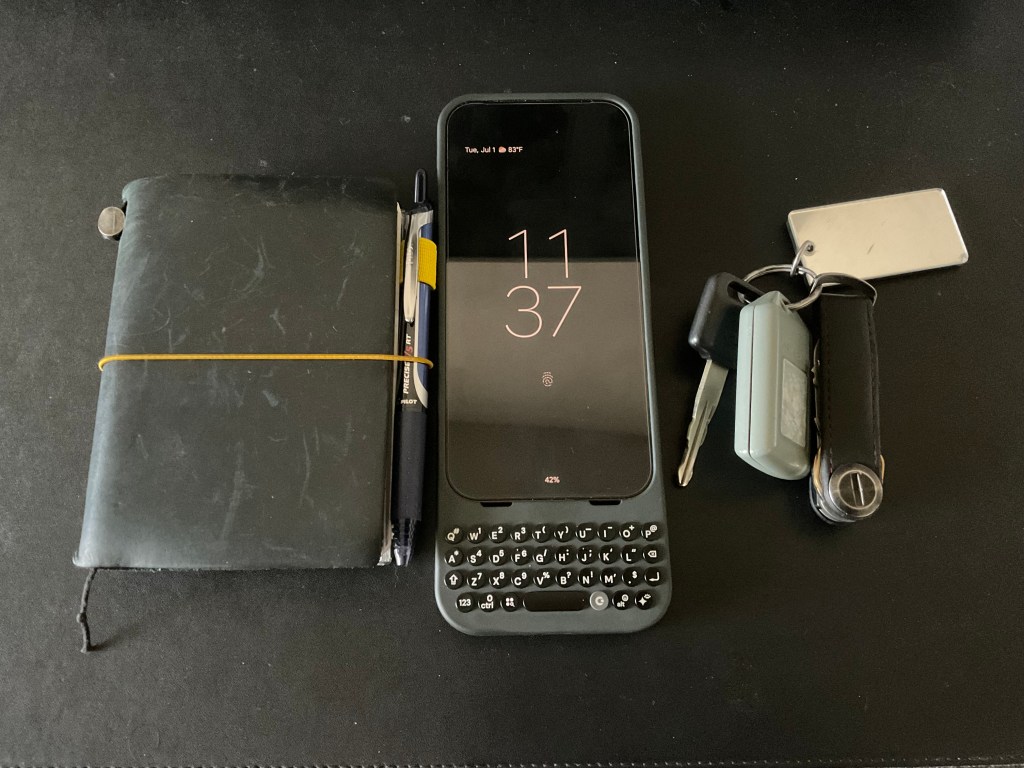
This is all I carry when I go anywhere: my Pixel 9 with Clicks, my Traveler’s Notebook Passport, and my keys.
My TN Passport serves as my wallet, letting me consolidate two things it can do. I like to have a notebook and my wallet on hand when I go places, so I thought it would make more sense to put them together. A pocket notebook is also capable of a lot more than people might realize, so I could make a “light” version of a bullet journal and always have it on hand.
As for my phone, it has a keyboard for accurate messaging, emailing, note-taking (in case I somehow can’t reach my notebook), and access to Obsidian. Even without the keyboard, I can access several tools on the go with my Pixel including:
- A camera
- A calendar app
- A GPS
- A music app
- An NFC wallet (which helps keep my physical wallet a bit thinner)
When it comes to keeping track of time, I rotate through several different analog wristwatches, which is why I didn’t bother to include a watch in the picture. Instead of pulling out my phone and risking distraction, I can glance at my left wrist and instantly know what time it is.
As for a few other use cases like games, I don’t really bother with any on my phone. If I have idle time to sit and wait somewhere, I tend to just take out my notebook and write whatever comes to mind. If I feel like playing any games, I can play retro ones at home with a much larger display. My Pixel and notebook have specific, mindful tasks I have thought about and assigned to them, and it’s part of that intention that can give us an advantage, allowing us to think clearly and stay productive, to focus on what really matters.
What do you normally carry on you when you go somewhere? Do you have an EDC to cover your use cases? What are some of your use cases for things you may need to do if you are out somewhere? Are there other aspects to this analysis that you thought weren’t considered at all? Whatever it is, feel free to share it in the comments below. I wouldn’t mind knowing what others think about this.
 Sudo Science
3 responses to “Digital Minimalism and Minimalism Can Contradict”
[…] just about any of the use cases I listed and more. We’ve even reached a point where people attempting to practice “digital minimalism” these days go against traditional min… by carrying around much more like it’s 2005 all over […]
LikeLike
[…] I’ll log any fleeting ideas, should they strike me, anywhere I am, whether it’s in my Second Brain or my pocket notebook in my wallet. […]
LikeLike
[…] took off, aiming to help people take back control of their attention from their smartphones. A lot of digital minimalism does involve delegating tasks you would otherwise use a phone for to a d…, sure, but the objective is to use one’s phone less. Oh, but modern smartphones do have some […]
LikeLike