

I’ve carried a pocket notebook everywhere since 2014. Over the past decade since, I’ve learned all sorts of little tricks, tried some hacks here and there, and kept what worked and dropped what didn’t. Eventually, I got to where I am now where I carry a pocket notebook everywhere despite having a main bullet journal and a second brain.
I’d like to explore some of my favorite tricks, tips, and tweaks that I’ve noted over time for carrying around a little notebook in my pocket.
Consider What You Want Your Notebook To Do
Seems pretty simple, but I can’t stress this one enough. If you want to have a notebook, carefully consider its use before starting one. Preferably, make a list (I’ll leave it up to you whether you want to make the list inside of your pocket notebook or on a sheet of paper) and see what you realistically want to use it for.
For example, these are just some of the things I expect from my pocket notebook:
- Always being quickly accessible
- Should let me store idle thoughts and other notes
- Ideally lets me migrate major tasks to my bullet journal
- Has a few blank pages dedicated to writing immediately and analyzing later
- Can let me track fast to-dos and work notes
- Lets me write reference notes I can easily transfer to my second brain
- Hosts a couple of go-to pages at the front such as a mini calendar and a quick page of inspirational quotes
In short, I’m taking a cue from Ryder Carroll’s idea of intentionality, to be as intentional with the notebook as possible. This way, you know exactly what you plan to do with your pocket-sized sidekick and how to start planning accordingly. You can come up with as much or as little as you like, although if you really want to push your notebook with as many purposes as possible, you may want to consider simply turning your pocket notebook into its own bullet journal altogether.
Consider Form Factor
This point matters immensely, but get a notebook in your ideal size. Preferably, if you want something portable, make sure it fits somewhere on you easily. An A5-sized journal is usually perfect for a full-on bullet journal, but not exactly portable. Unless you carry a backpack, briefcase, or purse wherever you go, you want something at A6 or smaller.
Even then, you’re still not done with just that. Consider more of the following:
- How many pages do you want your pocket notebook to have?
- What kind of cover do you want?
- What is your ideal notebook binding?
- Is the size comfortable enough to write in?
- Is it durable enough for my daily needs?
- What quality paper do you need?
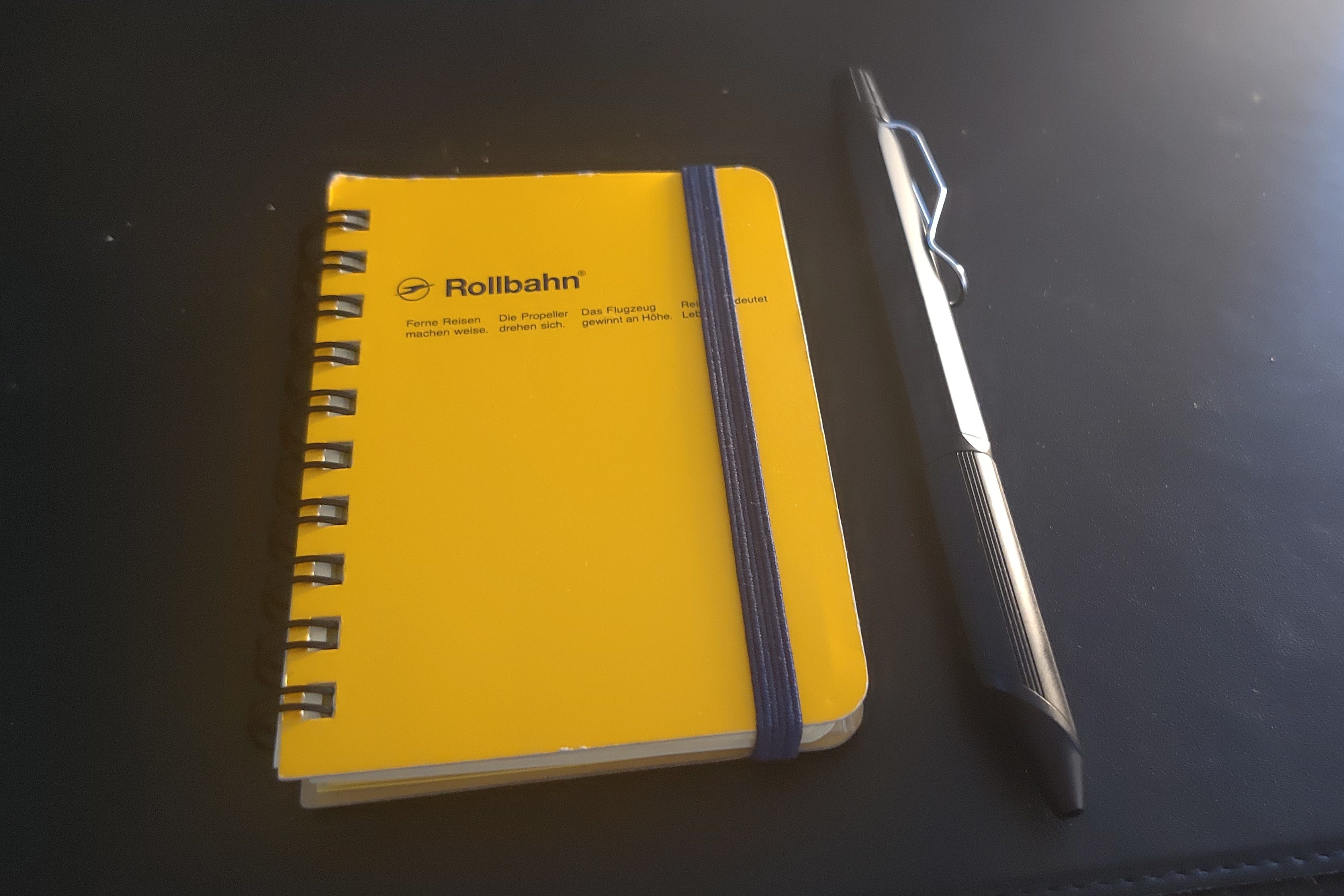
For instance, I carried a Rollbahn Mini for a short while several months back, and while I did like the paper quality and writing experience overall, I noticed that my larger hands had issues writing in it on occasion. Still, an unexpected plus from the Rollbahn was its ring-binding. I was able to easily flip the pages around to the other side and write more notes without a single issue, which was much nicer than I expected. Should I buy another Rollbahn, I’m going to try and find something closer to A6-sizing.
Durability is another factor to consider, especially if you want to easily throw your notebook in a pocket or bag. If you get something like a Field Notes, you’ll have a reasonably durable cover and some average paper quality without breaking the bank.

If you’re going to turn your pocket notebook into a full-on bujo, it might make the most sense to buy a pocket Leuchtturm1917 notebook. The faux leather hardcover, elastic band, pre-numbered pages, built-in index, higher page count, and other little features make it a compelling option for going this route instead. Plus, the paper quality is far nicer than using that of a comparable notebook from Moleskine (shudders).
Still, the main point is to consider the what and then the how. Once you know what you want to do with your pocket notebook, be sure you pick something that suits your needs best.
Always Have It Ready With You
Another straightforward point, but if you want your pocket notebook to be as useful as possible, be sure to always have it within your grasp. Nothing is worse than wanting to write something urgent down only to realize you left your pocket notebook on your work desk or at home.
Appropriately, you should always have something reliable to write with on hand as well. A notebook without something to write in it with is not ready to use. After all, who wants to deal with the additional step of taking out the notebook only to fumble around for something to write with?
For those who like pens, I’m personally a fan of the Uni Jetstream Edge 3 Color multipen, although I swapped out the default ink inside with Pilot Hi-Tec gel refills that are far smoother overall than the default refills, the latter of which do tend to skip constantly. The only drawback I’ve had with this pen is that I dropped it once and the middle of the body now comes undone too easily while writing, so I use washi tape to keep it from sliding apart.
Another pen to consider would be the Everyman Grafton pens, especially if you plan to be a little more rough with your daily carry notebook. I’ve had mine for years since the days when they only offered one choice of color (the clip finally fell off and got lost somewhere), so it has seen better days as well. Of course, if you feel fine with something disposable and easy to find in most stores, I know many swear by the Pilot G2, although I stopped carrying these after having the misfortune of one leaking in my pocket.
If you’re a fan of pencils, there are a ton of options, although I’m a little weary on smearing and smudging with the graphite, which is why I tend to carry a pen over a pencil in most cases. If you do decide you prefer pencils, I always liked Blackwings and their high-quality sharpeners, which do make points as long and sharp as possible.
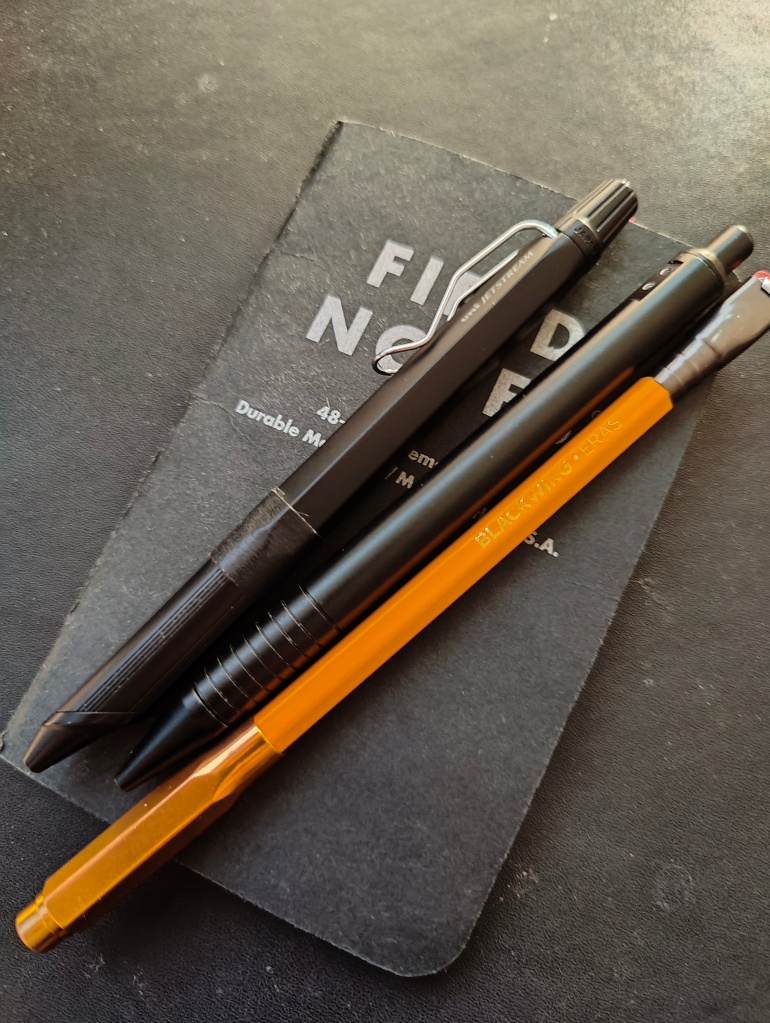
Once you have your go-to writing tool and notebook, make it a habit to always have them within reach when inspiration and fleeting ideas strike.
Borrow Some Ideas from Bullet Journaling
I swear this isn’t just turning your pocket notebook into a bullet journal! Rather, we want to borrow what we think will work best with our needs. If you don’t need something, don’t use it.
For instance, I love having numbered pages in my pocket notebooks, although I don’t always see this being practical, especially if somebody tends to have a very small notebook with only a handful of pages. If it has anywhere fewer than the standard 48 pages a Field Notes has, I personally don’t see much of a point in numbering pages.
Some things I always tend to have in my pocket notebooks include:
- A mini-index (detailed and shown here)
- Numbered pages
- Rapid logging (with my own special characters to make it faster and more compact)
There’s no need to turn a notebook with a low page count into a full-on bullet journal, especially if you write in a lot of pages daily, and starting an entire new journal a week or two later means you have to migrate everything and number pages all over again. Rather, take what works (with intentionality) from the bullet journaling system and use what you need for your purposes. That’s why it makes so much sense to start by asking ourselves what we want our pocket notebooks to do for us.
Page Flags and Paper Clips
I’ll be the first to admit that I never found sticky notes too useful in a pocket notebook. I’ve seen them recommended by others for use in pocket and full-sized notebooks, and I’ve carried some within previous pocket notebooks, yet I could never quite find a good use for them. I guess sticky notes were nice to have in case I needed them, but their implementation in my hands always felt nebulous at best.
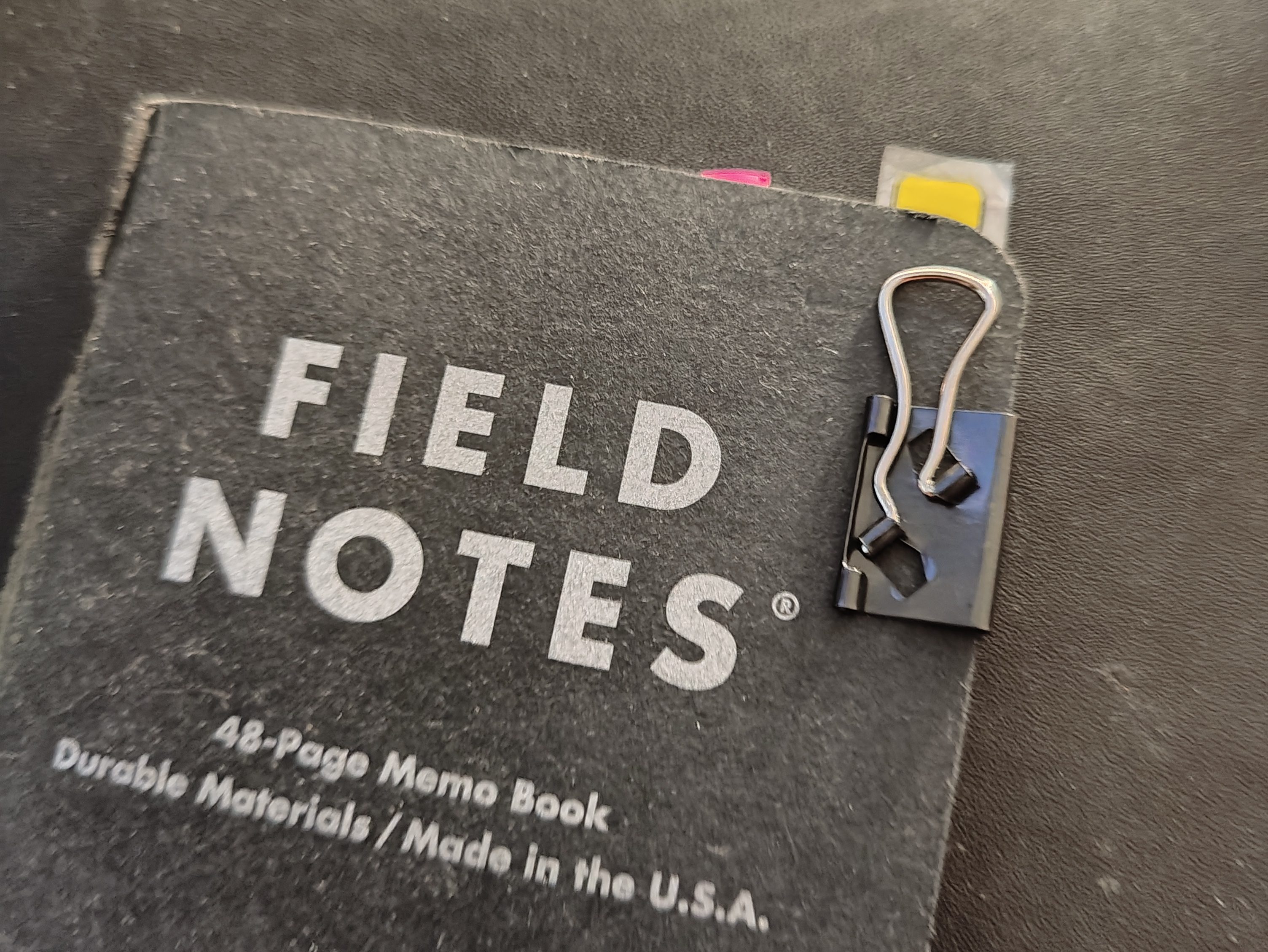
However, I can’t say the same about page flags and clips. These really make my notebook far more useful in less time. Page flags can easily be used to let you find any frequently-visited pages much faster, while a clip can let you hold onto other papers such as receipts or external notes in a pinch. Color-coordinating the page flags can really make them that much more usable if you stick to an intentional, simple system. As for the clips, I have always liked these Velos Binder Clips from Japan that stay out of the way when collapsed.
Any Other Ideas?
These are just a few possible ideas, I’m aware, although they are the ones I find the most useful for use in a pocket notebook. I’ve remained consistent with these tips and tricks in the months I’ve been maximizing my use of simple pocket notebooks.
Do you have any other ideas I could have tried? Do any of these tips or trick work for you particularly well? Feel free to leave a comment and have a great rest of your day wherever you are. Thanks for reading!
 Sudo Science
2 responses to “Ways to Maximize a Pocket Notebook”
[…] post on an IRC channel (they still exist), or a seriously fleeting thought on BlackBerry Notes if my pocket notebook and pen aren’t within immediate […]
LikeLike
[…] and my wallet on hand when I go places, so I thought it would make more sense to put them together. A pocket notebook is also capable of a lot more than people might realize, so I could make a “light” version of a bullet journal and always have it on […]
LikeLike