

I promised I would write about it after my Windows Phone retrospective, and now it’s here. You can consider this post centered around BlackBerry part two in this short series.
As stated prior, iOS and Android firmly established a dominance over the mobile market, leaving a vacuum for a third party platform. A third option seemed like a good idea, especially for those who were satisfied with neither Apple nor Google. I’ll delve further into the fight for third place as I take a look at how BlackBerry 10 did on the market compared to Windows Phone during the 2010s. Of course, I’ll also be sharing how my experience with BB 10 was back when I used it. Unlike my long-gone Lumia 920, however, I actually held on to my BlackBerry Passport Silver, so I’ll be able to take a closer look at the hardware as well.

Background on BlackBerry
BlackBerry started out as RIM, a Canadian company whose name stood for “Research In Motion” Only much later would they change their company name to “BlackBerry,” the product they were best known for. [NOTE: I’ll refer to the company as “BlackBerry” through the rest of this post for the sake of consistency.] They gained traction when releasing rudimentary mobile devices for messaging that would later blossom into the first smartphones, mobile devices capable of making phone calls while also managing emails and messages on the go.
As the 2000s went on and BlackBerry gained market share, the phones began to grow in popularity with people other than just business workers and executives who needed to be highly-organized and productive. More refined models started to come soon after, such as the first BlackBerry with a color screen, first with a trackball, and so on.
BlackBerry still developed a reputation as being that smartphone manufacturer with the definitive mobile keyboard experience. People used to adore their QWERTY keyboards for how easy they were to use as well as how efficiently people could type out messages compared to other contemporaries with their own physical keyboards.
The smartphone was still a very new thing in the 2000s as a whole, which gave rise to the term (and website of the same name) “CrackBerry,” used to refer to how addicting it felt to use a BlackBerry phone. Even Barack Obama, when he was still president in the late aughts, commented on how hard it was to pull himself away from his own BlackBerry. It wasn’t just Obama either; Justin Timberlake, Lindsey Lohan, and Katy Perry were among other famous people who sported BlackBerry phones back in the day.
Despite never completely conquering the mobile world (Windows Mobile was still a thing, and so were other platforms), BlackBerry commanded recognition from mainstream audiences around the world and sold a respectable number of units in their heyday. Nobody would argue that the company was doing well for itself at some point; it was merely a given.
Of course, in 2007, nobody suspected that Apple would come along to change the game with the release of the first iPhone.
Was BlackBerry in Trouble When the iPhone Came?
Honestly, no, BlackBerry was not in trouble at the time. It may be very tempting for me and many others to assume that Apple killed BlackBerry the instant the first iPhone was released, but that’s simply not the case.
We have to remember that as interesting as the first iPhone was, it was still quite limited in its capabilities overall. In fact, I would even go as far as calling the first iPhone an overpriced feature phone. Rather, I argue that the iPhone 3G, the successor released in 2008, was the real game-changer. It launched with the App Store and gave consumers an intoxicating taste of what a smartphone could truly do. Once users could easily find and download new apps at their fingertips in moments, the market truly evolved.
BlackBerry still had time to adjust their plan and come up with what to do in response to this new phenomenon, and this is where BlackBerry made mistakes.
Back then, Jim Balsillie and Mike Lazaridis, the founders of BlackBerry, dismissed the iPhone for not one, but a multitude of reasons:
- They initially thought the poor battery life and touchscreen keyboard would make the device limited in appeal. Who would, they likely thought, want to carry and use a phone with a battery that died in less than a day?
- They thought the full web browser loading websites would make data plans prohibitively expensive for consumers to pay their bills on.
- They even shrugged off who they thought the phone was marketed towards; an all-touch interface made iPhones seem like they targeted casual consumers while BlackBerrys were for business-types. BlackBerry assumed that their target audience would be in no rush to migrate their workforce to iPhones.
But while one could be tempted to argue that BlackBerry did nothing at all, that also isn’t true! That same year in 2007, Verizon wasn’t happy with the iPhone giving AT&T such an edge. (It’s easy to forget now, but back in those days, iPhone still had an exclusivity deal with AT&T, and people were even willing to switch carriers just to get an iPhone. There was even a cottage industry that formed around unlocking iPhones to use on T-Mobile.) In response to the iPhone, Verizon partnered up with BlackBerry to create their own take on a dedicated touchscreen device: the BlackBerry Storm.

As much as I would love to detail how it was for me to use a BlackBerry Storm back in the day, I actually never owned one. In fact, I never so much as saw anyone carrying it. It would have been interesting to see if the touchscreen in person and whether or not the hype was real at the time. Commercials claimed the touch screen managed to imitate the tactile feedback of actual buttons being pressed, which sounds appealing to me even to this day.
But despite how well the Storm initially sold, many units were returned and the phone was a flop. Unfortunately, it turned out the whole screen itself was one giant button, which was how the screen gave the illusion of tactile feedback when selecting options and typing. Many phones had touchscreen modules that malfunctioned or failed altogether, which was part of why there were so many returns on the device.
The reason I bring this up is not to give an overall history lesson on BlackBerry’s overall rise and fall (there are other places to read about that), but to prove a point: BlackBerry didn’t simply roll over and die after the iPhone was released. They made the attempt to play by Apple’s rules to compete with the iPhone. When the Storm failed, BlackBerry still didn’t give up; they revised the phone and released an updated Storm 2 model to try and fix complaints and shortcomings with the first Storm.
The Market Continued to Change
Despite iPhone gaining more traction while the first Android phones hit the market in 2009, BlackBerry didn’t seem to be in immediate danger around the turn of the decade. In fact, one could argue they were still thriving.

According to this chart on Statista (pictured above) detailing mobile market share from 2009 onward, BlackBerry didn’t completely slow down. In fact, BlackBerry phones gained ground going into 2011 as their market share peaked around the fourth fiscal quarter of 2010.
Of course, the key word is “peaked,” as in never going higher beyond that point. What goes up must come down. BlackBerry soon started to bleed out market share, albeit slowly rather than rapidly. Aside from the flop that was the BlackBerry Storm and the failed iPad competitor known as the PlayBook, BlackBerry needed to do something to adapt.
Instead, they played it safe. BlackBerry released more phones, but they seemed more like minor iterations of previous phones, such as the Curve, Bold, and Torch. By the end of 2011, Android’s market share had already surpassed that of BlackBerry’s.
Playing it safe, it turns out, only served to slow BlackBerry’s demise rather than reverse it. With the smartphone space changing, what could they do? They already tried appealing to iPhone users who wanted rectangular touchscreen devices with the BlackBerry Storm, and that was a disaster. Meanwhile, continuing to sell the same relatively conservative devices to business and enterprise users failed to create new customers. BlackBerry found themselves in a no-win situation.
Enter BlackBerry 10
Still, BlackBerry needed to do something to regain ground in the mobile space, which is when they finally released the Z10 in January 2013 and the Q10 in April that same year. What made them so unique, however, was the new QNX-based OS under the hood.
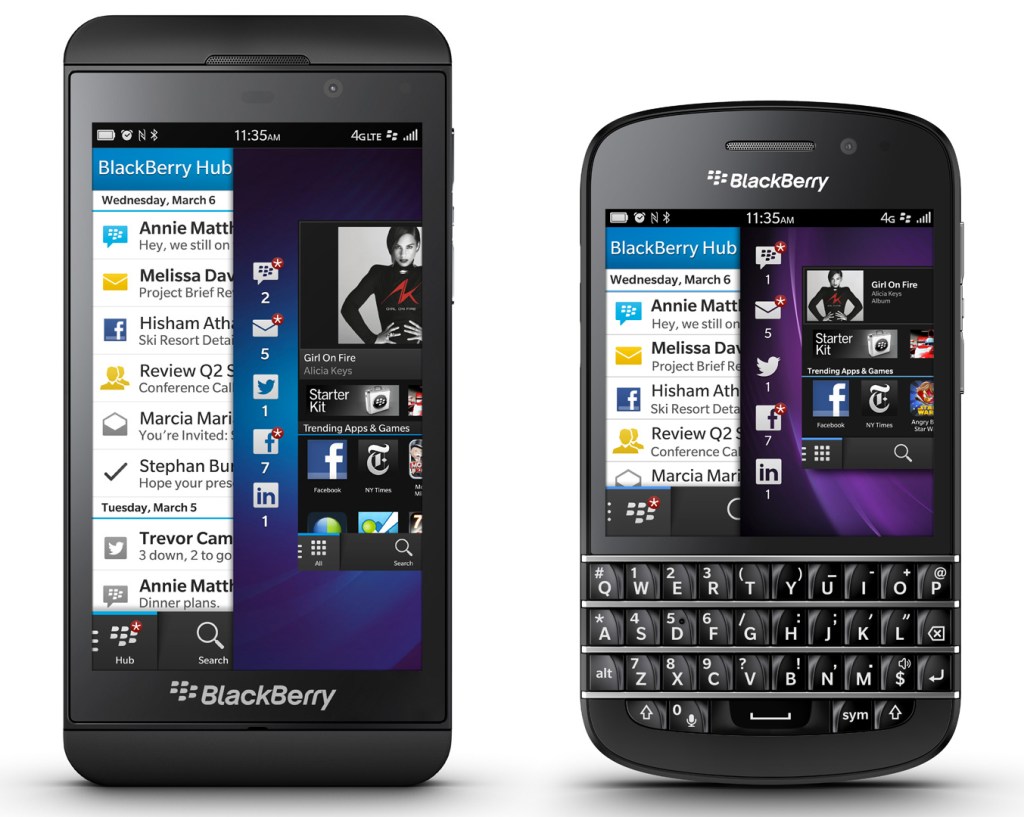
No more messing around! BlackBerry 10 was a true smartphone OS designed to compete with iOS and Android. It came with all sorts of excellent features that some modern phones today have either never implemented or outright stole and passed off as their own.
- Gesture-based navigation made BB 10 feel like it was years ahead of its time. Swipe up from the bottom of the screen to exit your app and go to your home screen. Swipe over to the right side to get to your app library, and swipe to your left to get to BlackBerry Hub.
- Speaking of that, BlackBerry Hub was ingenious. You could view your texts, BBMs, emails, and even social media messages all in one place. Filters were available to let you easily find what you wanted at any time. While BlackBerry released a similar Hub+ implementation on Android years later, it never compared to how seamless the original Hub was on BB 10.
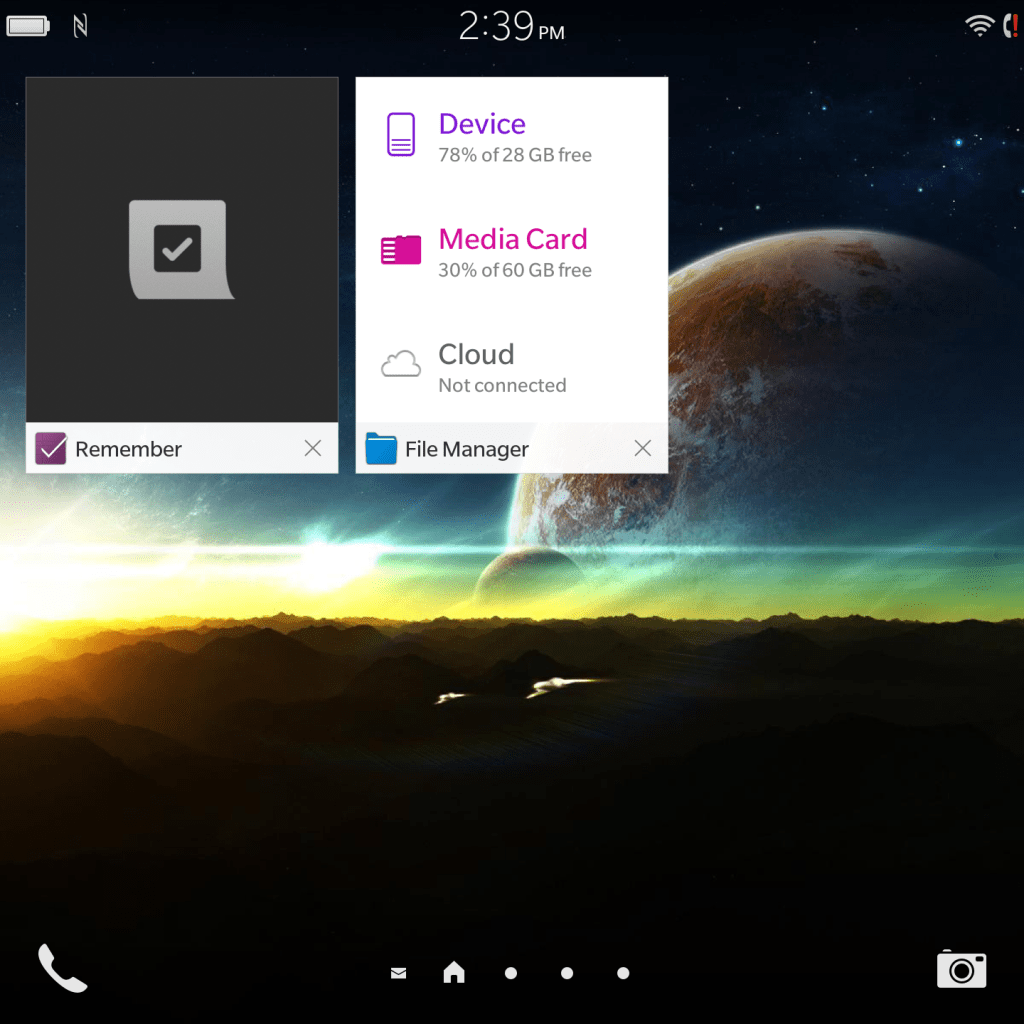
- BB 10 featured some of the best multitasking I have ever seen in a mobile device. Currently running apps appear in a dedicated place on your home screen inside of a box. You can click an “x” on the lower-right of each box to close the app completely.
- The OS was designed from the ground up to work well with a rectangular or square screen, as evidenced in the dual release of the Z10 and Q10. You could opt for a Z10 or Z30 if you wanted a comparable experience to Android or iOS with an all-touch rectangular screen, while you could get the Q10 or Classic if you wanted a square screen and a physical keyboard.
- BlackBerry has the best keyboards. Period. Even the touchscreen keyboards on the Z10 and Z30 were better than offerings on other platforms. I desperately wish I could use the very same keyboard on a modern Android device without having to jump through hoops or run old
.apkfiles that don’t work so well anymore.

It was time for BlackBerry to leverage their new OS to regain market share. This was it!
Fast forward to January 4, 2022, the official EOL date for BlackBerry 10. Servers and other online services that the devices depended on were no longer operational. What’s more poignant for BlackBerry is how the writing was on the wall in 2017, when they knew they were going to end support, but they still extended everything until 2022 as “an expression of thanks” for their most loyal users. They really didn’t have to, but they chose to anyway as a gesture of kindness for diehards who really wanted to hold on just a bit longer.
What Exactly Went Wrong Then?
Despite how promising BB 10 was, it (sadly) failed to turn the ship around. While the company saw a slight jump in users around the time the Z10 released, the rise was short and even began slumping again by the end of 2014. In fact, by the end of 2014, Windows Phone surpassed BlackBerry in market share!
So despite all the great things BlackBerry did, what did they do wrong?
I’ll start with the most obvious option.
The App Selection on BB 10
If you were a masochist like me and actually ran a Windows Phone 8.1 device back in 2013, you likely thought that the Microsoft Store was seriously lacking in apps compared to iOS and Android. However, once I used a BlackBerry 10 device for the first time, I rethought that stance. In fact, after experiencing the complete dearth of apps on BlackBerry World at the time, I would go as far as saying Windows Phone had a great selection in comparison.
BlackBerry was aware of this, and they had a somewhat controversial stance on how to fix the app scarcity: create a developer incentive program to encourage Android developers to quickly and easily port their apps over to BlackBerry. Devs who took BlackBerry up on the offer received money for their efforts, so it should have worked to bring some much-needed and popular apps to the storefront, right?
Many developers who participated were opportunists who threw a low-effort app onto BlackBerry World, collected their money, and ran. As a result, many users developed the perception that the storefront was full of “janky” apps that barely worked. Apps converted from Android even had a persistent telltale bar at the bottom of the screen to host a “back” button, which took up screen real estate and didn’t look very good. While it wasn’t the worst on a Z10 or Z30, it looked horrible if you had the Q10, Classic, or Passport with their square screens.
Despite the poor result of this program, BlackBerry soon responded by allowing developers, enthusiasts, and users alike to access to the Android Jellybean runtime on their BB 10 devices. Soon enough, enthusiasts were able to get Google Play installed on BB 10 phones to install apps straight from Google instead of going through BlackBerry World, although there were caveats to this, and this was something only power users bothered with. For most casual users, it seemed easier to just get apps from the Amazon Appstore. Speaking of which…
Amazon’s Appstore Went Nowhere Fast

The Passport released in the fall of 2014 with the Amazon Appstore onboard, letting users get apps in a then-promising Amazon ecosystem. BlackBerry made this move while betting on Amazon’s Fire Phone (released earlier that summer) becoming successful. If the Fire Phone caught had on, the Amazon App store could have grown in size and popularity, and with it the app selection of BB 10 users.
Unfortunately, BlackBerry bet wrong. The Fire Phone fizzled out, and around September 2015, Amazon had a fire sale on remaining stock before bowing out of the phone market entirely. Now the Passport was bundled with a second app store that felt like slim pickings on top of an already sparse BlackBerry World.
Android developers were dumping sloppy apps on either BlackBerry World or the Amazon Appstore, and native BB 10 apps, while usually excellent, were few and far between. There wasn’t enough incentive for developers to make native apps, which was a shame.
What About the PlayBook?
Oh, right, I also bought a PlayBook back in the day! In my defense, I got mine at a very steep discount on Amazon. Plus, I recalled the rumors going around in 2013 that BB 10 would soon make its way to the tablet.
Despite hearing about how the OS was working on it AND seeing a preview video demoing everything, BB 10 never came to the PlayBook.
BlackBerry canceled their efforts to make it work on the PlayBook due to concerns over the user experience and smoothness. While this feels more like a strike against the PlayBook, it would have been nice to run BB 10 apps on the increasingly-useless tablet in the middle of the decade.
Good Decisions at Bad Times
This may be the most speculative and debatable part of my entire post, but another reason BB 10 was doomed to falter dealt with how BlackBerry did everything with poor timing.
To recap: BlackBerry released the Storm to compete with the iPhone when it was still a fresh new device, a novelty at best. Many users in the late aughts and early 2010s actually still preferred hardware keys over touchscreens. Consequently, many BlackBerry faithful were perplexed by seeing what they perceived as a gimmick instead of what they already knew and loved: physical keyboards and squarish screens.
Because of the failed Storm experiment, BlackBerry was burned on stepping out of their comfort zone, so they stuck to what they knew best by releasing incremental revisions of older phones. As BlackBerry did so, Apple and Google established a firm dominance of the market in the following years. By January 2013 when the Z10 first dropped with BB 10, a modern OS designed to seriously compete with the likes of iOS and Android, it seemed BlackBerry was a few years late to the party.
That said, what if these events were different? What if, instead of releasing the Storm in 2007, BlackBerry got straight to work developing BB 10 to release the OS much sooner? If this did happen and BB 10 came along in 2009 (optimistically), who’s to say BlackBerry World would have had such a lack of apps with such an early presence? If BlackBerry got themselves into the modern smartphone race much sooner, one could assume they would have more apps available to compete with the growing iPhone and, thus, no famine of apps on BlackBerry World. If that happened, there would have been no need to encourage Android developers to bring apps over and fill up the marketplace with junk.
It’s similar to the same timing problem I observed with Windows Phone coming out in 2010. Had it reached the market sooner, everything may have played out very differently. Who’s to say that people wouldn’t be carrying Windows 11 Mobile or BB 11 or 12 devices right at this moment?
Of course, I know this is a lot of speculation, and speculating is easy. Plus, there are so many variables to keep in mind if events did unfold differently. Alas, it’s difficult at best and impossible at worst to factor for them all. If we chose to speculate on how differently things had been if these events unfolded differently, what would BlackBerry need to have done in order to stay on top? What kind of pricing would they need? What kind of apps would they have to draw people over? What kind of marketing would they need? Would all their phones have ideal build quality? Ideal value for the price? It’s too easy to think of more possible variables and not have any satisfactory answers on this. Perhaps this is just me trying to reason why else BB 10 failed the way it did despite everything it did so well.
My Personal Experience with BlackBerry 10
Why do I write about any of this? Because in the mid-2010s on a given Amazon Prime Day, I spotted a BlackBerry Passport Silver Edition at an unbeatable price, and I decided I wanted to snag one.
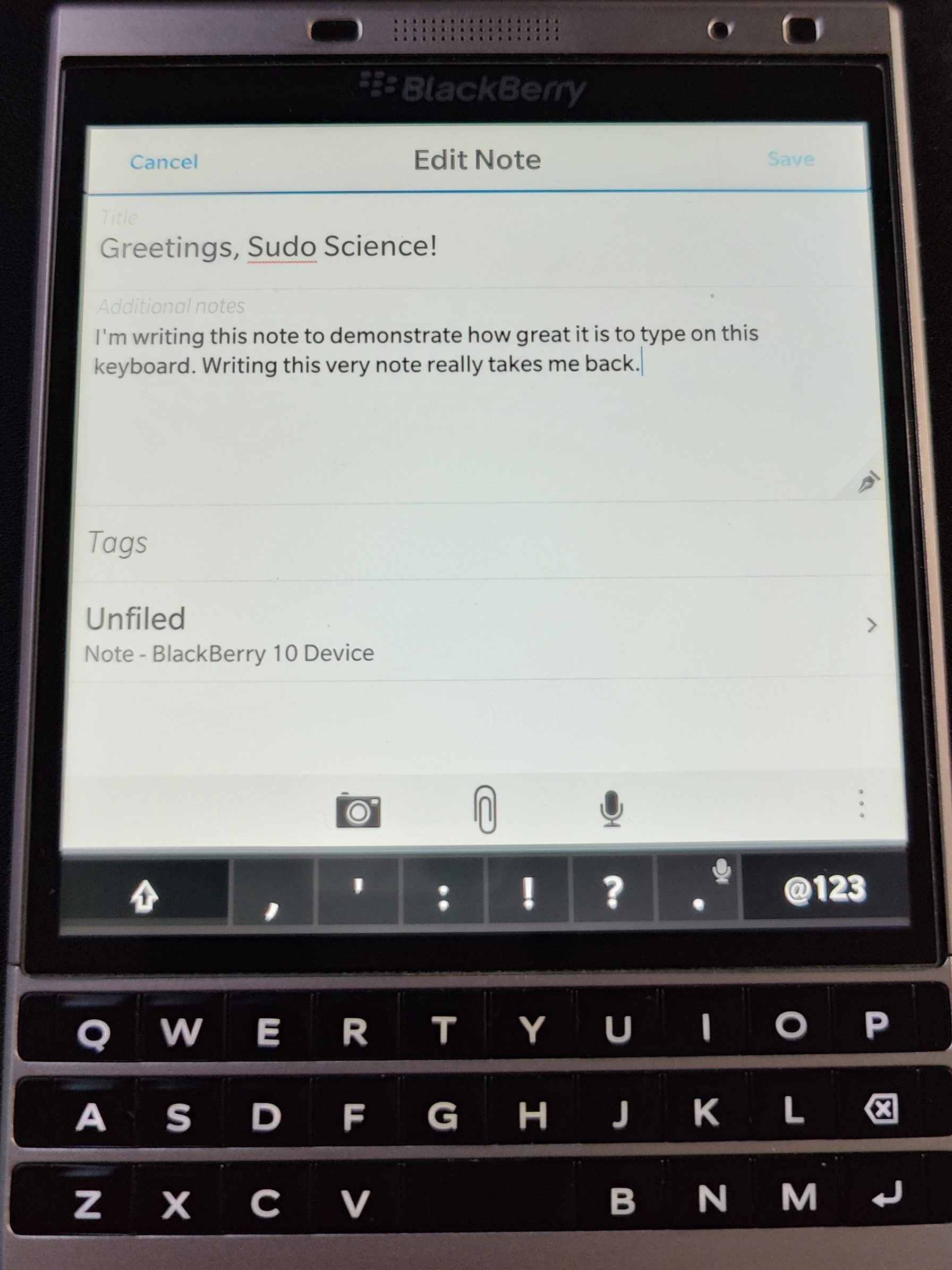
The form factor always looked so quirky and strange, but that made it all the more appealing. After reading up on how I could get most of the apps I relied on through the Android runtime, I decided to take the risk on the phone.
I can recall just how impressed I was with the Passport when I first unboxed it, too. I recalled lifting the top of the box (how I wish I saved the box for it) and finding the build quality of the phone incredible. I had the same feeling when I bought a PlayBook back in 2013, and I definitely had the same delightful experience when I tried a demo unit of a BlackBerry Classic at a mall kiosk in 2014. If there was anything I could always give BlackBerry credit for in those days, it was making their hardware feel so premium and next-level… that is until they released the BlackBerry Priv in 2016 (but more on that later).

After getting the phone, I tried to live in BB 10 for a good while. The result was unexpected. Despite the lack of native apps, I was enamored with the Passport. The quirky nature of the phone also proved to be an entertaining conversation starter as well, and replying to texts quickly became something I looked forward to doing. I had even used the device for several months as my primary to-do list because the Notes app that came with the Passport was great and I just loved typing on it.
I mentioned that I had issues getting by with Windows Phone 8.1 due to a lack of certain Android apps I needed, and that was also the case with BlackBerry. However, due to the availability of the Android runtime, I was able to get Google Play installed and get apps working just fine on my device for the most part. Even my banking app at the time worked perfectly! It always required workarounds to get Google Services to work with them, and not every app worked, but it was much easier for me to carry my Passport around as a daily phone than my Lumia 920.
There were some minor caveats here and there, like the Pebble I still had not working so well with BB 10, but I had already fallen out of love with smartwatches by that time, so that was a nonissue. As time went on, however, some apps started to play a little less nicely with my hardware as well.
The biggest offender I can still recall was Audible. It worked perfectly in 2015, 2016, and even 2017, but by 2018, the app had been updated on Google Play enough that it ran agonizingly slow. Aside from the specs aging, the Android Jellybean runtime was growing longer in the tooth as time went on.
But What’s It Like to Use in 2023 and Beyond?
This might be a bit of a pressing question, but it’s really not much to write home about now. While it didn’t really feel like I was able to do a whole lot with it in 2018, it only got worse over time.
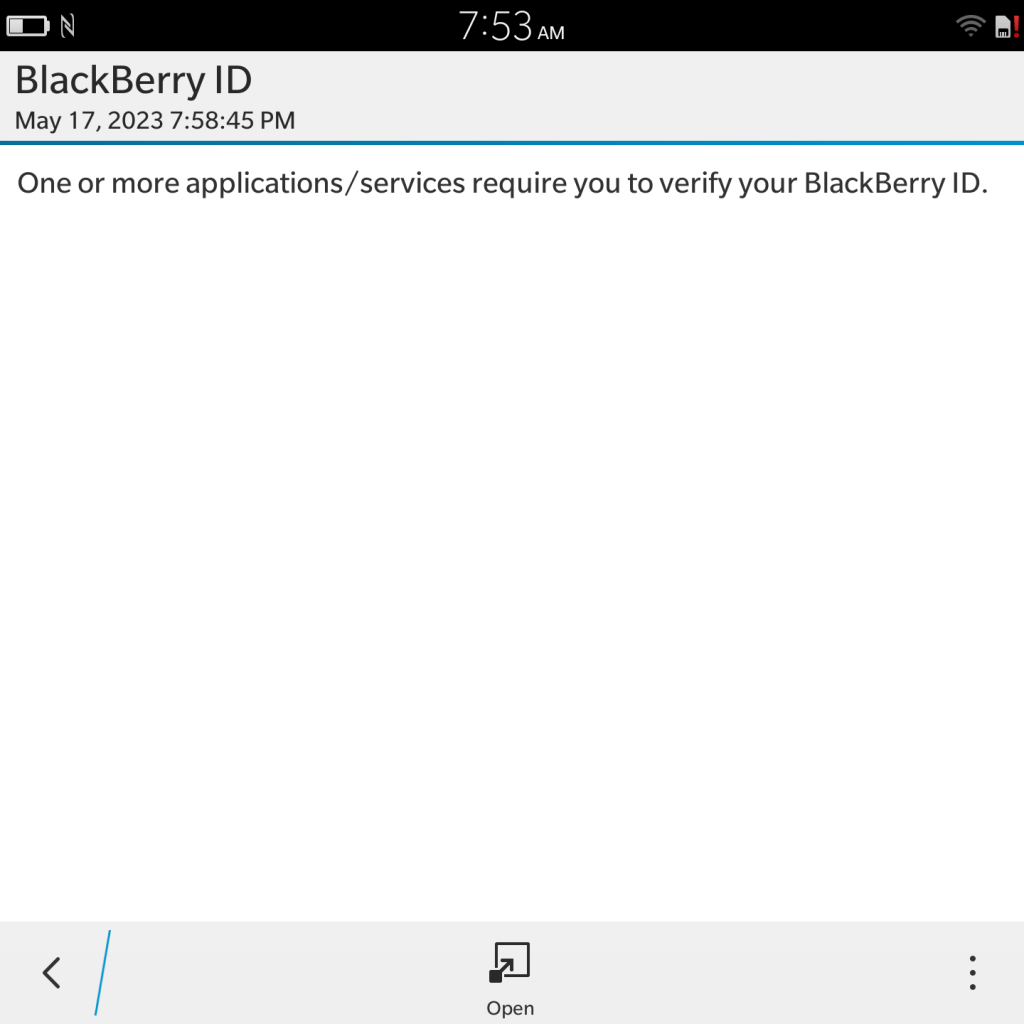
The obvious thing I can point out is how the BlackBerry World store is gone for good, as are the rest of BlackBerry’s services. Trying to open the app results in an error that I need to sign in to connect to the store, but the servers are gone, so there’s not much point in trying.
I still have Google Play on the phone, but it’s worse than one might think. While I still can open Google’s primary app store, a paltry amount of apps are available for me. I assume this is because Google Play only shows me what is compatible with my device based on Android Jellybean, and seeing as Jellybean is outrageously old now, very few apps are still compatible. The handful that show up are not particularly interesting either.
The last app store I haven’t tried was Amazon’s, as it required me to sign in again. But honestly, after seeing how everything’s been with Google Play, I don’t really feel the need to bother. I apologize to anybody who was curious, but I don’t think it’s worth signing in just to check.
That just leaves what I was able to install that doesn’t rely on external services in some way. Basic things like the Notes and Weather apps still work perfectly fine, but a few apps I paid for stopped working entirely. BeMaps Pro, a native BB 10 app, let me navigate with Google Maps back in the day, but the services no longer connect or have access to Google Maps in the first place.
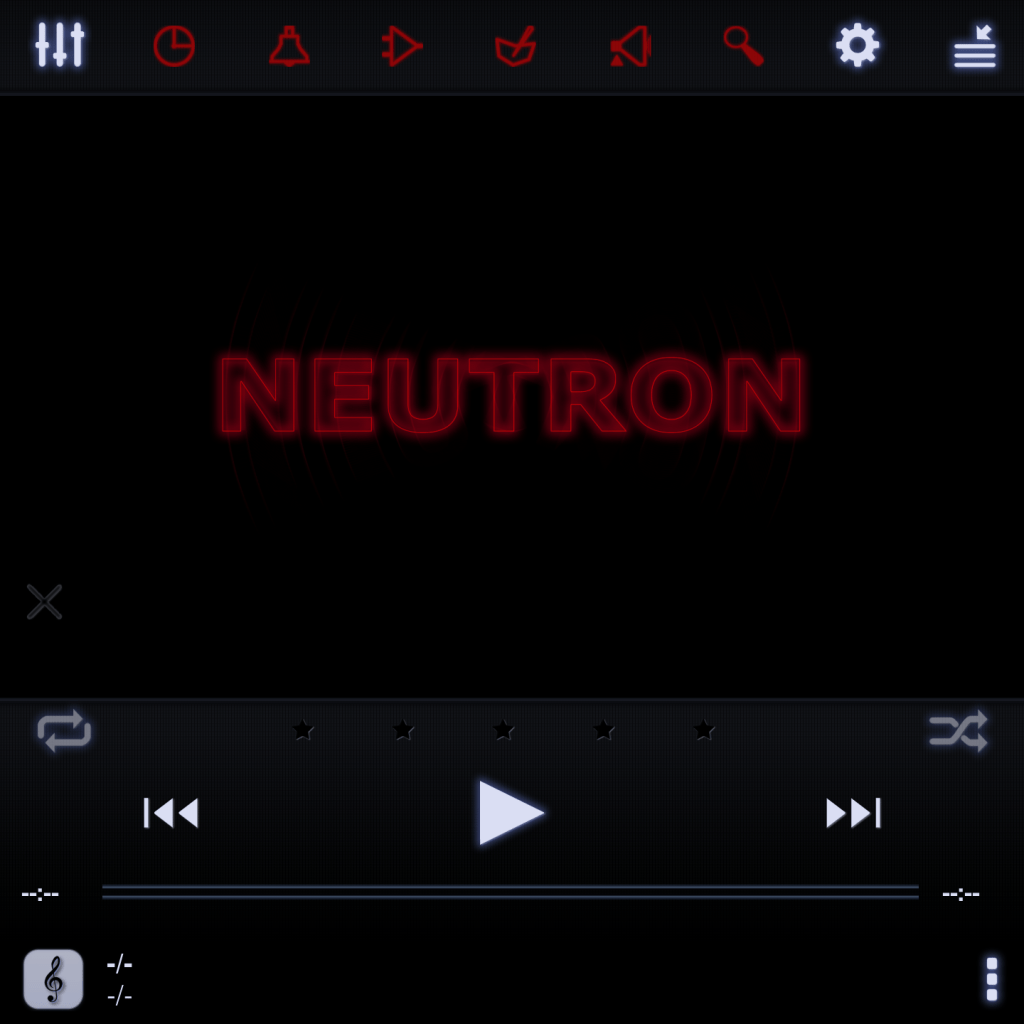
Another app I always liked that had a native version available was good ol’ Neutron Music Player (pictured above). This was a solid music app that always gave me PowerAmp vibes from using Android back in the early 2010s. It boasts so many nice features including equalizer controls I could barely begin to understand. Neutron also still sees support on both iOS and Android as well, so there’s always that!

BlackBerry Hub was also neutered after the servers were shuttered, although signs of this happening were foreshadowed a few years prior. For instance, I recalled a few of my email addresses suddenly not working with Hub after a certain date, and troubleshooting them made no difference on my end.
While I was able to use an Android version of Hub (rebranded as “BlackBerry Hub+ Inbox”) for a few years on other devices afterward, BlackBerry eventually started charging for it. While I understand that BlackBerry needs to make some money somehow, it feels strange to pay money for an implementation of Hub that wasn’t quite as good as the free Hub that BB 10 had. Still, I understand why Hub wouldn’t be as effective on Android; BB 10 was designed with Hub in mind from the ground up, but on Android, it’s just another app.
You Mentioned Owning a Priv?
Oh, right, I forgot to go into detail on this one.
I remember buying a Priv direct from BlackBerry around a year or two after it came out. I was worried that my Passport would be losing support sooner rather than later due to BB 10’s status at the time, and the Priv ran Android. It seemed like the best of both worlds to me. Plus, BlackBerry was always so good with build quality and making devices feel like they were worth more than what you paid for once you got your hands on them. The Priv was sure to be another winner, I thought.
I returned it in less than a week once I had an idea how hollow and “plasticky” the screen felt along with how the keys felt soft and spongy. Combine that with how slow the phone was and how easily it overheated, and I went back to my Passport. It didn’t make sense to me at the time how the Passport, which came out earlier than the Priv, had a keyboard that felt a thousand times more pleasant to type on. It was one of the biggest draws I had in getting a BlackBerry device in the first place, but when the keys lacked tactility and the on-screen keyboard, as nice as the software was, felt a little nasty due to how cheap and creaky the screen mechanism was, I knew I had to return it.
If anything, my brief time with the Priv made me appreciate the Passport all the more, and I used the device just a bit longer as a result.
Moving On
Sadly, I started to want more features, the workarounds to get Android apps became less feasible, and the EOL date started approaching. By the end of 2018, it was high time to move on. I had moved to a OnePlus phone, but I still recall my time using the Passport and running BB 10 with fondness.
BlackBerry pivoted away from BB 10 with the release of the Priv, their very first Android phone, but they soon started to license out their name to TCL to manufacture their own QWERTY-equipped Android phones like the KeyOne and KeyTwo. The latter remains the last BlackBerry-branded phone released since then, though we’ve thankfully had Unihertz to continue the legacy of making quirky phones with physical keyboards.
Did you ever use a BB 10 device? Or did you use older versions of BB OS? What was the experience like? How did you compare it to other mobile operating systems such as Android or iOS? Were you like me and check to see what it was like to use a Windows Phone as well? What do you think could have changed things for BlackBerry if they made decisions differently? Feel free to comment. I’d love to know what you think.
Further Reading
An Android User Switched to His First iPhone for a Year
The Fight for 3rd Place (Part 1): A Windows Phone Retrospective
 Sudo Science
5 responses to “The Fight for 3rd Place: A BlackBerry 10 Retrospective”
My first true flagship phone I ever got was the Z10. I loved that phone. Everything about it, especially BB10. Like you mentioned, the OS was ahead of its time with things like gestures. It was also an RTOS, on a phone. Just think about that for a minute. Light years ahead of where we are now. I also remember the battery life being absolutely insane. I miss BB10 so much!
LikeLiked by 1 person
[…] I needed a new device, and fast. My ever aging BlackBerry Passport wasn’t going to cut it in today’s world, so I had no choice but to visit a local […]
LikeLike
[…] written about how I used the BlackBerry Passport with its own physical keyboard a good while back, so how would this kind of keyboard compare on an […]
LikeLike
[…] Speaking of predictions, I gravitated more toward using my predictions when typing words instead of typing them all out. It felt easier overall than manually typing the words all the way through on the Clicks itself, and having three choices above the keyboard, again, reminds me of those days when I used to daily drive my BlackBerry Passport. […]
LikeLike
[…] how many of us prefer physical tactility, the market was shifting. Even BlackBerry tried to release the ill-received BlackBerry Storm, an all-touch device that emulated tactility, before it became perfectly obvious how the iPhone […]
LikeLike