

The Mid-Aughts: Switching from Internet Explorer to Firefox
I’ve used web browsers just like anybody else who’s touched a computer in the past two decades, but it was only around the mid-2000s when I started to actually pay some attention to internet browsers in general.
As somebody who used Windows XP (still my favorite Windows after all these years despite how imperfect it was), I defaulted to Internet Explorer 6 before discovering Firefox around 2004. This was a long time ago, but before that, I never really thought about what browser I used.
And I was far from the only one!
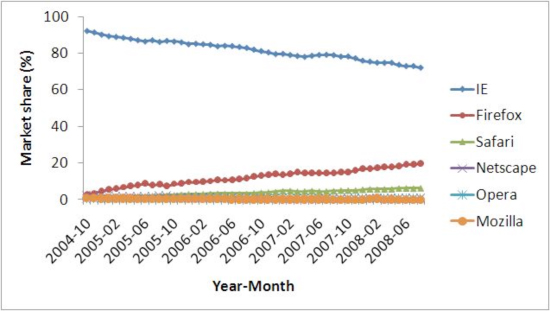
Internet Explorer 6 was by far the most dominant web browser on the market in those days. Firefox was there with its share of enthusiasts promoting it, sure, and there were other options like Seamonkey (which felt dated even for the time, as it was based off Netscape), Opera (back when it was still quirky and cool), and a few others. Despite the handful of alternatives, IE was the juggernaut. Its marketshare was over 90%, which meant that around 9 out of 10 people used IE at any given time for browsing.
Despite its utter lack of features and reliability, nobody seemed to mind or care because it was just there. For starters, IE 6 was outrageously insecure. Any drive-by trojan online could easily hijack it and change your homepage to a search engine you didn’t want or some sort of message urging you to buy a fake antivirus program. As for features, IE 6 didn’t even so much as have tabbed browsing, although Microsoft (allegedly) claimed they weren’t interesting in adding the feature because they expected people to find it confusing.
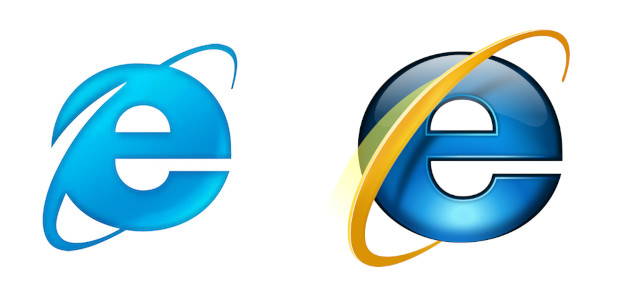
But whether or not that was true, Microsoft played catch-up and we eventually saw tabbed browsing come to IE 7, which had a shinier, deeper blue logo and a golden ring around it. It’s like Microsoft wanted to indirectly tell us that they were getting serious, that they were going to actually make their increasingly-maligned browser better.
Thankfully, I wasn’t using IE by this point. I was a Firefox faithful thanks to my friends. We abandoned IE before it was cool! I even remembered a few of us carrying Firefox on flash drives for times we had to browse on public computers.
Firefox Felt Stagnant
While I was a full-time Firefox user as Chrome arrived and ate IE’s lunch, I grew bored and increasingly annoyed with the direction Mozilla was taking the browser. Throughout the early and mid-2010s, we lost complete themes (extensive themes with full icon sets and skeuomorphic design cues) in favor of flat and boring “Personas.” As somebody who adored the custom icons and the personality they would bring to my browsing experience, I abhorred this.
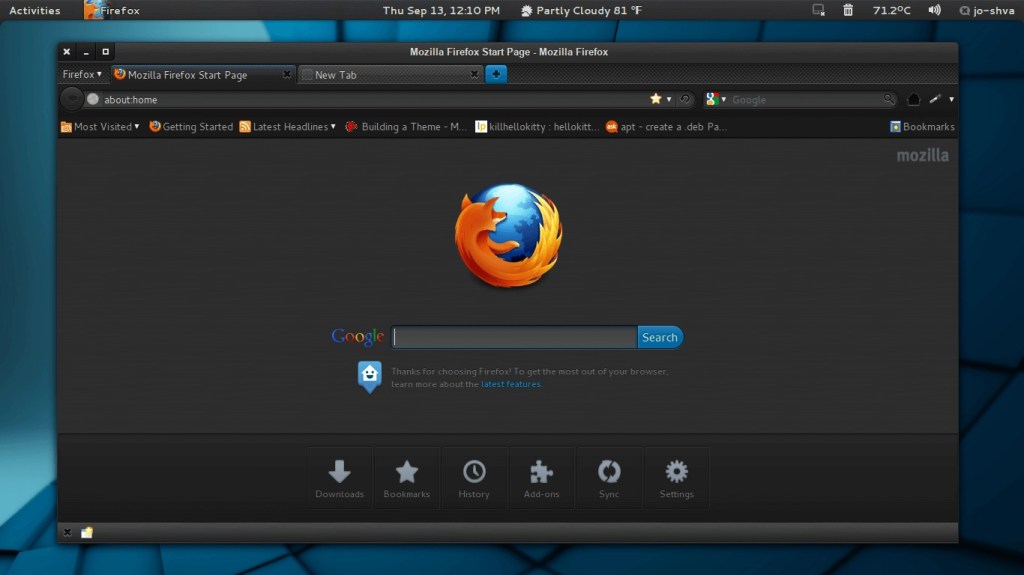
There was also the matter of Pocket becoming a firm part of the browser. While I had dabbled with Pocket before then, I didn’t like that it was default now. I also didn’t like seeing the recommended stories and everything on a fresh launch of the browser.
I know I could at least hide Pocket as much as possible, and I knew I could disable the recommended links and other bloat, but then we saw the redesign of Firefox Aurora. After a good look at it, I was convinced I didn’t want to use the browser anymore.
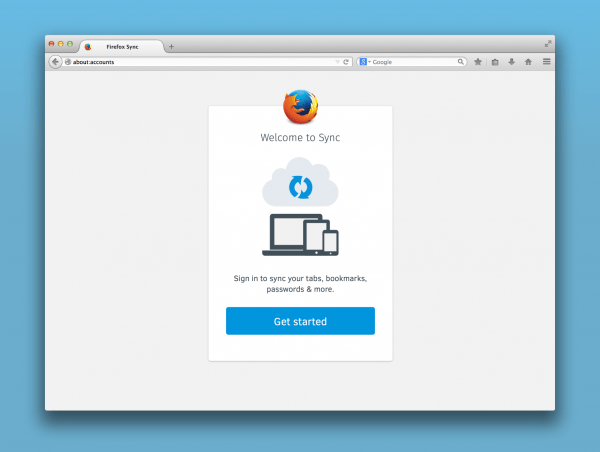
Sure, it was at least a little skeuomorphic still, but I had gotten the impression at the time that Mozilla just wanted to copy Chrome’s success by making a UI that looked more like theirs. Even the tabs had that same slanted look to them as Chrome; it was so blatant. If I wanted a browser that looked like Chrome, I thought to myself, what would stop me from simply using Chrome?
So around 2014 and 2015, that was exactly what I did for a short while: I used plain Google Chrome as my default browser.
So How Was Chrome?
It was… unremarkable, to say the least. I mean, yes, everything worked just fine, but that was mostly it. I did find a nice theme that looked like old-school Chrome with the trapezoid-shaped tabs and the solid blue accents. I guess its toy-like appearance in the late-aughts hearkened back to Windows XP for me.
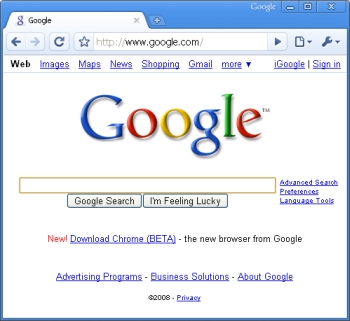
Other than that, I was at least pleasantly surprised with how easy it was to make the jump. The only extension I had on Firefox that I missed was NoScript, which I eventually got used to not having. I would say Chrome and Firefox are just about even when it comes to extension parity, so there’s always that.
Music to My Ears: I Found Vivaldi
Around late 2016, I decided to check out the Vivaldi Browser. I wasn’t sure how I first heard about Vivaldi or stumbled across it, but I soon fell in love with its array of features and couldn’t imagine leaving it ever again.
Vivaldi had everything I wanted from a browser:
- More extensible theme control instead of relying on flat or overly-simple themes.
- A strong library of extensions thanks to Chrome’s Web Store.
- Built-in sync that I could count on.
- Extensible keyboard shortcuts. (It’s no secret that I’m a huge fan of keyboard shortcuts.)
- So. Many. Settings.
It was the browser of my dreams. All I needed to really make it perfect would be to have it be based off Mozilla Firefox instead of Chromium, but it’s still outstanding as a whole.
So… Why Did I Leave Vivaldi At All?
It’s a fair question to ask: If I liked Vivaldi so much, why did I even bother switching back to Firefox in the first place?
While I do like Vivaldi as it is, I’m not such a big fan of how much market share Chromium-based browsers have these days. That was something I didn’t settle with too well. However, it didn’t really bother me all that much until 2022. I began to hear more and more about Manifest V3, Google’s big update behind Chrome that was shaping to ruin the capabilities of ad blockers.
Now, I don’t mind ads on sites I care about; I even go out of my way to whitelist sites I want to support. If sites or creators I like have a means of donating to them through Patreon pledges or tips on Buy Me A Coffee, I opt to throw a few bucks their way just to help with more content. I even pay for YouTube Premium membership just to support some of my favorite creators on the platform.
I even make sure to have ads that aren’t intrusive on this blog, but I understand that I can’t force anybody to look at them. But the unfortunate truth is that ads on so many websites tend to be extremely intrusive or aggravating, especially on video hosting sites and recipe blogs (seriously, why so many autoplay videos?), so having the option of an ad blocker is appealing in some cases.
What I don’t like is how Google is going about it with Manifest V3, which would give a massive advantage to Google in terms of controlling content and extensions.
That’s an oversimplified way of putting the Manifest V3 situation, I know (the nitty-gritty behind how it works is beyond the scope of this blog post), but the point was I wanted to switch back to Firefox because I thought Google had too much control of the browser market. Chrome started off as the spunky new hero on the block who dethroned Internet Explorer, but now lived long enough to become the very same villain.
Why Did I Go Back Vivaldi?
Despite the time I used Firefox being reasonably good, I started to wonder what was going on with Vivaldi. It had been several months since I last used it, but I was just curious how it was doing with the recent updates.
Vivaldi 6.0 had launched somewhat recently and, even better, came with a couple of new features that really caught my attention:
- Workspaces to separate tabs more easily outside of just tab stacking. They can even be combined with tab stacking to really organize tabs!
- More importantly: icon support for Vivaldi themes!
An awesome user by the name of Jugami created a handful of nice themes using this icon feature. Two that caught my attention were based on the classic Opera interface (back when it was based on the Presto engine instead of being another Chromium-based browser). They came in both a light and dark variant with similar-looking icons hearkening back to that look and feel.
But another theme by said user was Xperience.
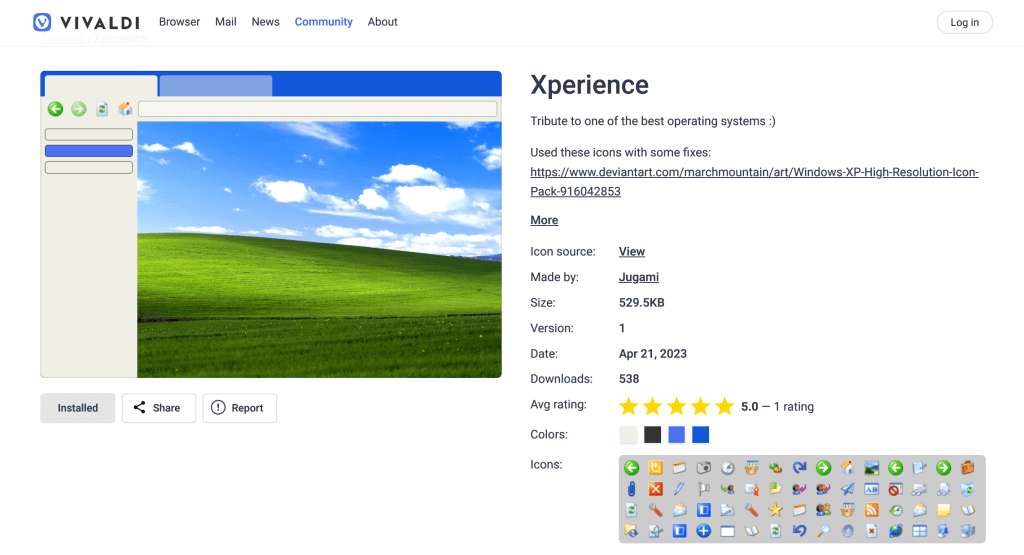
This hearkens back to the glory days of Firefox in the late aughts. To think it was the capability of adding icons that drove me back, but I feel no shame in admitting it. I know what I want from a browser even if a big deal of it comes down to cosmetics.
You Know Manifest V3 Is Still A Problem, Right?
Well, yes, that is true, but upon searching up how Vivaldi was acknowledging the whole threat of Manifest V3 on the Chromium engine, I felt assured when I read this blog post from their team.
The quote towards the very end made me feel valued as a Vivaldi user:
As Vivaldi is built on the Chromium code, how we tackle the API change depends on how Google implements the restriction. The assurance is, whatever restrictions Google adds, in the end, we’ll look into removing them.
Our mission will always be to ensure that you have the choice.
Julien Picalausa
Whether the Vivaldi team is ultimately able to make good on their stance remains to be seen, but the fact that they acknowledged this makes me feel a little more at ease using the browser.
Aside from that, the Manifest V3 rollout was at least delayed somewhat, which makes me feel I would rather get whatever time I can out of Vivaldi instead of giving up on it so soon. I have Firefox with my settings and other extensions all synced and set up, so should I ever need to leave Vivaldi, it would be quite easy to go back to Firefox. Hopefully, that doesn’t have to happen, but only time will tell.
While I do like and enjoy Firefox, Vivaldi has those quality of life options and choices that make me strongly favor it for the time being. And I’ll be perfectly blunt: I love customization and want to be able to easily have all the options and colors I like. Give me the icon sets, give me the color selections, and give me the skeuomorphism should I want it.
What do you use as your default browser? Is it something Chromium or Mozilla-based? Or perhaps you use something else? What do you think of the browser you’re using now? Or did you really think about it before?
 Sudo Science
2 responses to “Revisiting (and Returning To) Vivaldi Browser”
[…] it still uses Chromium for rendering sites, I use Brave as my default browser, previously using Vivaldi for years before, Google Chrome before that, and Firefox for many years […]
LikeLike
[…] and used it for casual browsing on what is now my Mac mini server. Still, I eventually found myself missing Vivaldi too much and switched back before I knew […]
LikeLike