

I’ve been meaning to write this for a long time now, especially since I’ve had the past few years at this point to reflect on how everything has been since then. In fact, I could argue that writing this personal retrospective now makes me more objective than if I had just switched back to an Android device.
In 2020, a certain issue led to us having to stay at home for extended periods of time. As a result, I didn’t really get out much and would opt to work from home. The few times I did get out, I would wear a mask and try to stay six feet away from others at all times. You know, just like most other people around then.
But it was around that time I saw a video from IMNC, a tech YouTuber who was excited about the release of the then-new iPhone 12 mini, a small model of the iPhone.
I never used an iPhone as my personal phone before in my whole life, having used Android fairly regularly since 2010 and at some points giving Windows Phone or BlackBerry OS 10 a shot.
But the idea of the iPhone 12 mini intrigued me compared to its standard-sized or “Max” counterparts. I liked the idea of carrying a smaller smartphone in my pocket around that time, and the overall footprint of the iPhone 12 mini was actually smaller than the HTC M7, a smartphone I adored using in 2013 before screen sizes ballooned in the following years. I suppose my nostalgia towards the M7, unexpectedly, drove me to feel it was worth switching to iPhone just this one time.

I’m not someone who’s really been hooked on using a smartphone much, especially these days. I did like smartphones so much more the early-2010s when the technology was still so novel and promising, but their commonplace nature has made them less compelling to the point that I take them for granted. However, I do like having some tools and modern conveniences with a smartphone as well. I’m not quite a digital minimalist to the point where I can fully switch to a dumbphone-like device or anything (though that hasn’t stopped me from trying twice)! But still, I liked the idea of a smaller device that would be less tempting to consume media and distractions on, and I especially liked the idea of reclaiming physical space in my pocket.
So around that time in the fall of 2020, having just seen the aforementioned YouTube video, I took the plunge and bought my first iPhone. I paid all at once on Apple’s website and had it shipped right to my front door.
Switching as a Longtime Android User
I was adequately happy with Android up to this point, in all honesty. In fact, I would say the keyword is “adequately,” as in I wasn’t feeling so strongly about it either way. But despite that, I felt like the excitement from when Android was new in the early 2010s was largely gone. The desire to root an Android device and install a modified version on the hardware didn’t feel like a need anymore, as Android had come such a long way.
Moreover, Apple took their sweet time to finally add widgets to iOS around this time. Hearing that news around the time made me think that iOS and Android were both so heavily entrenched and ubiquitous that both experiences would be extremely comparable. It wasn’t like a decade ago when I would see a huge difference between the two.
I was not wrong in the slightest. My experience was exactly as I thought it would be. There were some pros and cons, sure, although I feel like they’re rather nitpicky and specific if I had to isolate them at all.
I’ll Try Anyway!

First, I’ll start with the good things I noticed when I first switched. The immediate advantage iPhone has is the consistency of hardware quality, but that’s understandable because Apple is the only company that is supposed to make iPhones in general. There’s no other competing model of iPhone from an alternative company to compare it with. It would be one thing if I didn’t like the hardware or thought it was garbage quality, but Apple does well enough with presentation that they make most customers feel they got what they paid for. The feel of the hardware, the glassy and metal textures in hand, made the device feel premium in a way that almost competes with how BlackBerry’s new phones felt back in the day. Couple that with how I specifically wanted the mini model, and I was smitten upon unboxing at first. I also think there has to be something about how Apple’s displays look with their rich AMOLED screens that makes people want to keep using them as often as possible.
Speaking of the hardware, Apple’s ubiquity gives them some advantage here. I was finally able to have a much wider choice of accessories to customize my device. I could install a tempered glass screen protector for the first time since 2016 because iPhones are much more common, and I had plenty of protective cases to choose from in all sorts of colors, styles, and features. I kept it simple and got a rubberized case in yellow, but the point is I actually had options. I still remember how disappointing it was years back to shop around for a case and not find anywhere near as many options to protect my device. If you have a remotely quirky phone, you usually have few or no choices for cases.
Third, and this is probably the biggest advantage I saw switching from Android compared to other (now-defunct) platforms like Windows and BlackBerry: App availability. Not only did I still have my usual choices, but I actually gained more! I had access to apps that were either inferior on Android or just not available on Google’s platform at all. For instance, I could synchronize my novel with the Scrivener iOS app anywhere I was instead of depending solely on my MacBook. (Quick Aside: Scrivener is the literal only reason I still have any Mac hardware at all. If a fully-featured Scrivener came to Linux with zero compromises, I would ditch all my remaining Apple devices in a heartbeat.)
I also had access to CARROT, the snarky weather app. I thought it seemed like a strange or weird gimmick at first, but I soon grew to love checking the forecast regularly with this app. While CARROT has been on Android for a long time, the Android version lagged behind in terms of features and design. It even got to the point where I could check CARROT on iPhone and it would make a remark like, “It could be worse. You could be checking the weather on Android.” Granted, the Android version of CARROT updated eventually, but it was unfair seeing both versions of the app side-by-side for a while and feeling like the Android offering was a second-class citizen.
Several other aspects of the iPhone mini experience were nice as well. For instance, I could finally see what the big deal about iMessage was, although it seemed like the only real advantage was how easily I could open iMessage on a Mac computer and respond from a real keyboard to what would otherwise be regular SMS messages. In fact, this is what led me to sign up for Beeper in the first place, although it took me so long to get off the wait list that I had already been on Android again for ages by that point. If anybody couldn’t tell, by the way, my biggest impetus to sign up for Beeper was to be able to reply to iMessage texts from a non-Mac computer, and Linux is still my daily driver.
On a slightly-related side note, I’ve always found the whole “blue vs. green bubbles” elitism petty at best and outrageously stupid at worst. I still recalled seeing screencapped Tweets and rants from people over a decade ago telling people with green bubbles to never text them again, as if anybody who matters would want to speak with these insignificant people in the first place. In fact, this was part of why I put off trying an iPhone for so long.
Still, the device was rather solid overall. I had little to complain about (although I still had a handful of issues here and there), but everything was fine for the most part.
Why Did I Go Back to Android?
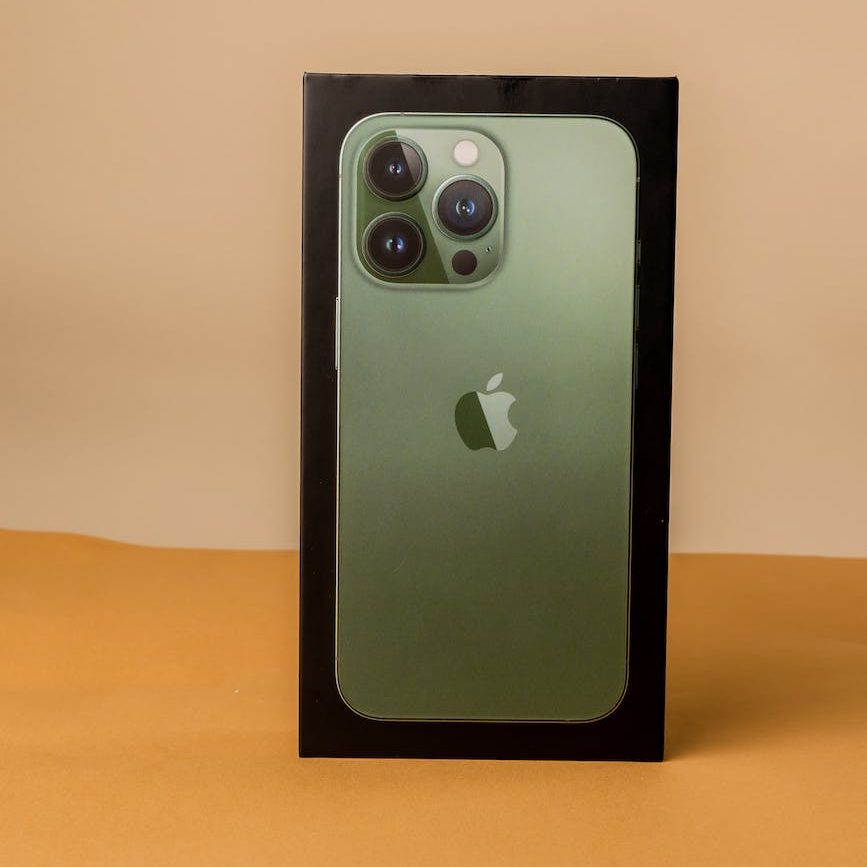
After roughly a year of using the iPhone 12 mini and having a rather solid experience, I made the decision to go back to Android in late 2021.
The biggest issue was the screen size of my iPhone 12 mini. While I loved the size of the device and everything at first, it started to bother me more around the fall of 2021. Around that time, I had started taking guitar lessons from instructors. (I still play to this day, but I could certainly be better.) They directed me to tabs I could open on my phone. Turning my iPhone 12 mini sideways, it became clear that I could have seriously benefited from a bigger screen. The more I kept practicing and trying to load tabs, the more often I wished I had a bigger device. This one was painful, as the very reason I purchased the iPhone 12 mini in the first place now became one of the biggest reasons I wanted a different phone.
Secondly, the mini had a smaller battery for obvious reasons. I guess it made sense that a smaller device can only have a battery of a given size, but I started to notice as time went on that the battery didn’t last quite as long as it used to. I wasn’t a heavy user or anything, but I soon felt like I didn’t have as much charge as I should’ve had by the end of the day.

There’s also the fact that I found Signal useless on the iOS platform overall. While it’s not the case anymore, Signal on Android used to offer the option of acting as the default SMS app. I could consolidate my regular texts along with my Signal contacts, and this was nice because trying to convince my regular friends to switch to Signal from WhatsApp always seemed like a herculean task (the struggle is REAL). However, the iOS app never offered this functionality at all, so I only ever talked to two people on Signal through iOS while talking to everybody else through iMessage.
Additionally, my default browser of choice at that time was Vivaldi. It’s only very recently that Vivaldi finally offered an iOS app, but I’ve already moved on. The convenience of syncing my bookmarks, passwords, and other browser data was just not a thing with my iPhone. I mean sure, I could have given Safari a shot on my Mac device, but… eww. The bittersweet irony is that I now use Brave as my default browser, and that’s been an iOS option for an extremely long time by now.
Aside from that, I felt notification features were largely limited on iOS. I could change some notification sounds, but not all of them depending on what apps they were. I was also somewhat limited in what customizations I could make. Well, I could’ve jailbroken the device, sure, but that always seemed difficult because of the auto-update features on iOS being enabled by default. Apple has always played the cat-and-mouse game with jailbreakers too. Anytime I thought about jailbreaking the device, I would do some searching online and find out I was too late to avoid an upgrade and that my version of iOS would not work. I would have no choice but to hope that my iOS version would become jailbreak-able in due time, but I usually forgot to disable automatic updates. (I suppose one could argue this is my fault, but still.)
But speaking of customization, I wasn’t crazy about how I couldn’t switch some default apps. No switching my messaging client from iMessage, no switching my default launcher, and so on.
Despite how I was doing with my iPhone and the iOS apps I had used, none of them were major enough to force me to stay on iOS. I had used Android for years and could easily switch back whenever I wanted.
That’s exactly what I did.
Exactly one year after I switched to an iPhone, in the fall of 2021, I went shopping around for a Moto RAZR 5G (the 2020 model) and snagged one at a good discount, and I fell in love. I could have a smaller footprint in my pocket without sacrificing screen size! Thus, my one year of using iOS was over and I was finally back on Android.
Would I Go Back to iOS Again?

It’s much harder for me to say now in 2023 and onward if I would switch back again, especially since Apple has since discontinued the ‘mini’ variants of their iPhones starting with the iPhone 14. The small size without sacrificing flagship performance was the overall reason I bothered with a 12 mini in the first place, although I feel like a possibility would be picking up a used or cheap 13 mini, but that seems like a serious hassle, especially since the iPhone 15 models are the latest and greatest at the time I write this.
Still, I’m not really in a rush to switch. I’ve dug up my RAZR 5G and gotten the screen fixed a few months ago because I really missed the experience of using it. (The screen is damaged again in a different way, but I honestly don’t mind after everything I went through trying to fix it; I’m likely going to use this phone until it really stops working.)
Outside of that, I still love using Before Launcher on my Android phone, and I really treasure how well it does in keeping my notifications suppressed in order to let me concentrate more on what really matters. I can’t imagine having that on iOS without disabling notifications on individual apps.
Sure, there are a few guides out there on how to make an iPhone a quasi-dumbphone by enabling monochrome display at all times while reducing the number of available apps, but I think I can just use what I already have for that sort of thing.
What About You?
What platform do you use, Android or iOS? Or perhaps you successfully made the jump to a dumbphone after all? What has your experience been like? Additionally, have you ever tried switching from one platform to the other? If so, what was that like?
 Sudo Science
5 responses to “An Android User Switched to His First iPhone for a Year”
[…] An Android User Switched to His First iPhone for a Year […]
LikeLike
[…] An Android User Switched to His First iPhone for a Year […]
LikeLike
[…] Still, I needed a new device, and fast. My ever aging BlackBerry Passport wasn’t going to cut it in today’s world, so I had no choice but to visit a local T-Mobile and upgrade. After a lot of deliberation, I thought a Pixel 9 seemed nice considering its size and form factor was “pocketable” and close enough in size to the iPhone 12 mini I used in 2020. […]
LikeLike
[…] days of typing on a hardware keyboard. It appealed to me, sure, but I had already moved on from my brief stint as an iPhone user by the time he announced this product, so I just shrugged it off and moved along with my […]
LikeLike
[…] But speaking of lost causes, I heard the awful news for Android in 2026. We will start losing our ability to sideload apps, making more private and alternative storefronts or means of loading apps a thing of the past. I never thought it would reach this point with Android, but should this come to pass, I might seriously give Graphene a second shot in the future if sideloading is still possible there. Either that, or I could reconsider switching back to the iPhone after my 1 year experience using an iPhone 12 mini. […]
LikeLike