

This post is part one of a two-part series discussing also-ran competitors to the ever-dominant iOS and Android. You can read the second part on BlackBerry here.
It’s no secret that smartphones have taken over the mobile and computing world. While some of us are still old enough to remember when pagers, PDAs, and phones with antennas were still a thing, the mobile landscape has only advanced through the 2000s and onward. While BlackBerry was most notable for giving the world an early taste of how addicting and smartphone could be in the 2000s (and birthing the neologism “CrackBerry“), it was in 2007 when Apple changed the market. Steve Jobs presented the world with the first iPhone, and the rest is history.
A couple of years later, HTC and Google developed the first ever Android phone in 2009, giving rise to a serious competitor to contend with Apple in this modern mobile market. When 2010 rolled around, the market was rapidly picking up steam, and it became clearer by the day that this battle would be fought with two titans: Apple and Android.
But what about a third party?
It’s not that nobody ever thought about a third option; they certainly existed. There was webOS, which looked quite promising just before 2010, and the market still had BlackBerry’s legacy OS on the market, and we still had Windows Mobile 6.1 devices available. For years, I even carried a Windows Mobile device, the HTC Touch on Sprint.
But when I first tried the HTC Evo 4G in the summer of 2010, I was smitten. I couldn’t imagine returning to my HTC Touch after that point. It truly made the Windows Mobile look antiquated and obsolete.
But Windows is backed by Microsoft, a multi-billion dollar company with plenty of resources at its disposal. Surely, they wouldn’t just roll over and die while Apple and Android had all the fun, right?
Windows Phone
Of course not. Microsoft saw where the market was going, and they wanted in on the action. They created a new platform known then as Windows Phone 7, and it looked promising for the time.

Although I had owned an Android device for roughly half a year already, the concept of a Windows Phone looked rather appealing to me for several reasons.
- The interface looked so clean and smooth, which had better performance than most Android phones did at the time.
- The platform featured an OS that looked and ran the same on any device you purchased it on, which eliminated the fragmentation of getting an Android phone from one manufacturer or another.
- While software remained consistent like the iPhone, you actually had some choice in hardware from different manufacturers, unlike every iPhone obviously being made by only Apple.
- Apps ran a similar-feeling interface to the Metro UI, so a lot of menus were beautiful white text on black backgrounds, and everything was extremely responsive.
I could go on, but the main takeaway was that Windows Phone tried to offer the best of both worlds: the freedom of selecting unique hardware while having a platform that ran everything the same way across the board. It was pretty appealing to me at the time, especially as somebody who hadn’t become completely alienated by Microsoft yet.

While it’s easy to sit here and act like Microsoft just fumbled everything with how they handled the Windows Phone platform in hindsight, it is important to recognize that they did do several things right with their phones.
- Microsoft purchased Nokia to turn them into a first-party Windows Phone manufacturer. This led to the manufacture of some of the best Windows Phones we ever saw, including the Lumia 920 and 1020 phones.
- Initial Lumia handsets were outrageously durable and well-built while actually looking aesthetically pleasing, unlike most “rugged” phones we see these days coated in unappealing rubberized protrusions.
- Microsoft got HTC onboard with making more Windows Phone devices, including the amazing HTC M8, which came in variants that ran Windows Phone 8 as well as Android.
- The early 2010s indicated there would be a possible convergence between phones, tablets, and computers, leading Microsoft to try and make the Windows experience feel more consistent between platforms. While I would argue that the live tiles made zero sense on a PC, they were an absolute delight on Windows Phone.
- On the Lumia devices at least, optimization was top-notch. Your Windows Phone would have tremendous performance and battery life.
- Windows Phones would work perfectly with Microsoft’s ecosystem. Xbox Live, Office, and more worked flawlessly on these devices by design.
- Windows Phone 8 handsets would get free updates relatively faster and more reliably than Android contemporaries in the early 2010s. If you got a random Android phone from Samsung or HTC back in those days, you were very likely stuck on that Android version unless the OEM actually felt like releasing the update. Meanwhile, upgrading a Lumia 920 from Windows Phone 8 to 8.1 was relatively painless.
- Microsoft went big with their latter Windows 10 Mobile models (why didn’t they just call it Windows Phone 10?), adding better convergence and sync features than ever. You could even buy a hardware dock to turn your Windows 10 Mobile handset into a Windows 10 desktop.
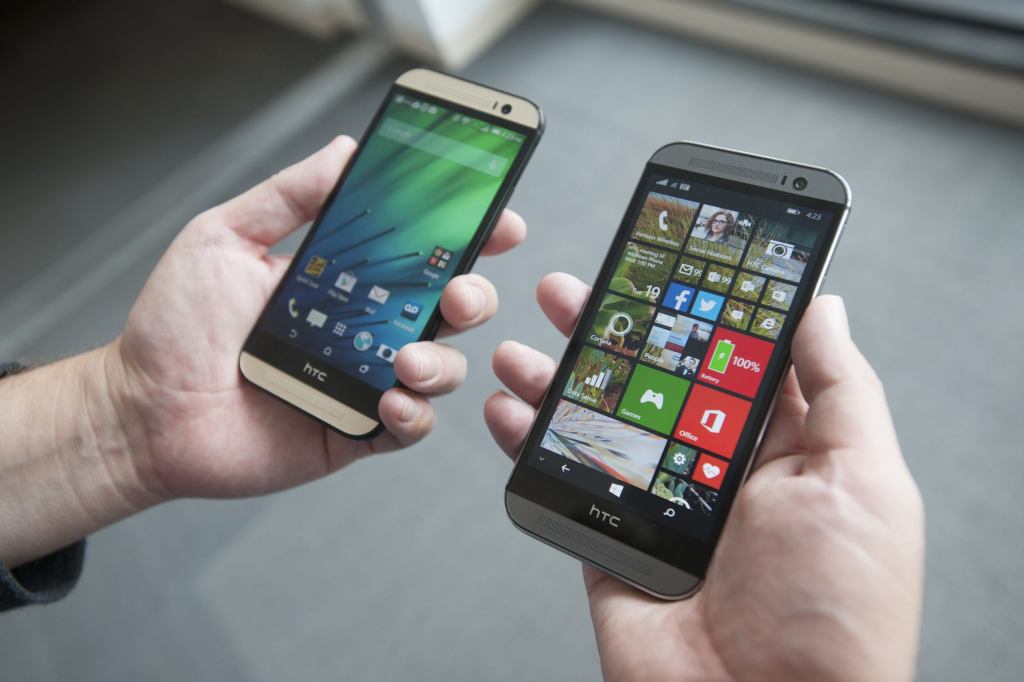
Complaints early on in the platform’s life cycle claimed that Windows Phone didn’t have a copy paste feature and that it wouldn’t be ready until 2011, which seems bizarre in retrospect. From my speculation, it tells me that Microsoft knew the mobile market was going in the direction paved by Apple and Android, and they wanted to have something to contend right away, so they released Windows Phone sooner rather than later.
Still, considering how radically and quickly the market was changing, I guess it’s hard to blame them (unless you actually bought a Microsoft Kin). It could be argued, however, that Microsoft was already late for the party when Windows Phone 7 first released, as Microsoft initially underestimated the paradigm shift in the mobile phone space. Why change anything when Windows Mobile 6.1 still seemed good enough? It was even still possible to buy the HTC HD2, a phone capable of running both Android and Windows Mobile 6.1, back in 2009. If Android released that same year, who’s to say how much different things could’ve been had Microsoft had Windows Phone 7 ready that same year or earlier?
My Experience Using Windows Phone
It may be hard to believe, but at some point in 2013, I decided to pick up a Lumia 920 after seeing a glowing review for it.
I was blown away by how wonderfully the hardware and construction held up at the time. Holding my Lumia in the hand felt dense and confident, and the screen’s design was a joy to look at and use. Nokia really knew how to make these things look inviting and fun without sacrificing durability, especially in a world that was strongly lacking in fun color options. Back in those days, the iPhone only came in two or three colors, and it isn’t like today where limited edition colors get released whenever Apple pleases. (Seriously, why did Apple wait this long to release a yellow iPhone that wasn’t the 5C?)

On the bright side, the keyboard was phenomenal from what I remember. While it feels like a fleeting memory to me some ten years later, I did recall being so impressed with the keyboard that I felt no need to go look for a third-party solution like I would on an Android device. This was also before Microsoft had purchased SwiftKey.
What About Apps?
Something that mostly get pointed out, of course, also deals with the relative lack of apps and support. But speaking honestly, as somebody who also happened to use a BlackBerry OS 10 device around the mid-2010s (I was a glutton for punishment), Windows Phone’s app selection wasn’t too bad unless you really couldn’t get by without certain apps. For instance, my bank around that time didn’t have a Windows Phone app, so I had to keep my old Android phone at home for depositing occasional checks.
It also meant that popular hardware that would easily see support on Android or iPhone would usually get an unofficial third-party solution if we were lucky. For instance, I owned a Pebble smartwatch around the time, but I recalled my stark disappointment at how limited it felt to use an unpolished, unofficial app just to get some features compared to using it on my previous Android phone.
But speaking of Google’s operating system, Microsoft made a big mistake around the early 2010s that may have helped accelerate the demise of Windows Phone: The Scroogled campaign, Microsoft’s attempt around 2012 to 2014 released to smear Google’s products and privacy practices.
While it’s easy to make a joke about the pot calling the kettle black, that’s not really the point here; the point is that Google noticed and just so happened to not release any of their official flagship apps on Windows Phone.
While I’m not saying that the Scroogled campaign was 100% the definite reason why there were no official and 100% Google-approved Gmail, YouTube, Google Calendar, or Google Maps apps on Windows Phone, I am saying the very same apps were (and still are) freely available on iPhone, another non-Android platform. I seriously doubt that Google refused to support the platform because they feared Windows Phone would threaten their dominance.
There was no other reason for Google to not actually launch the apps on Windows Phone, as Google could still reap the benefits of user data all the same, but as I said, this is mostly speculation on my part. Take it with a grain of salt if necessary.
Still, the point I was trying to make deals with the lack of Google apps and support on the platform. I got my Google Calendar to eventually sync inside of the bundled-in Calendar app, but it involved a lot of workarounds and strange steps to get results.

But app selection was only somewhat paltry in hindsight rather than completely lacking. Some major apps did make appearances on Windows Phone, including the likes of Spotify, Netflix, Pandora, Wunderlist, and many more. Unfortunately, this wasn’t enough to save the platform from looking as if it lacked apps. I recalled constant complaints over how Instagram never made an official Windows Phone app, though that didn’t stop countless third-party apps from popping up in the Windows Phone store. Other apps did start coming throughout the 2010s when Windows 10 Mobile was out, including Telegram and Messenger, but it was too late.
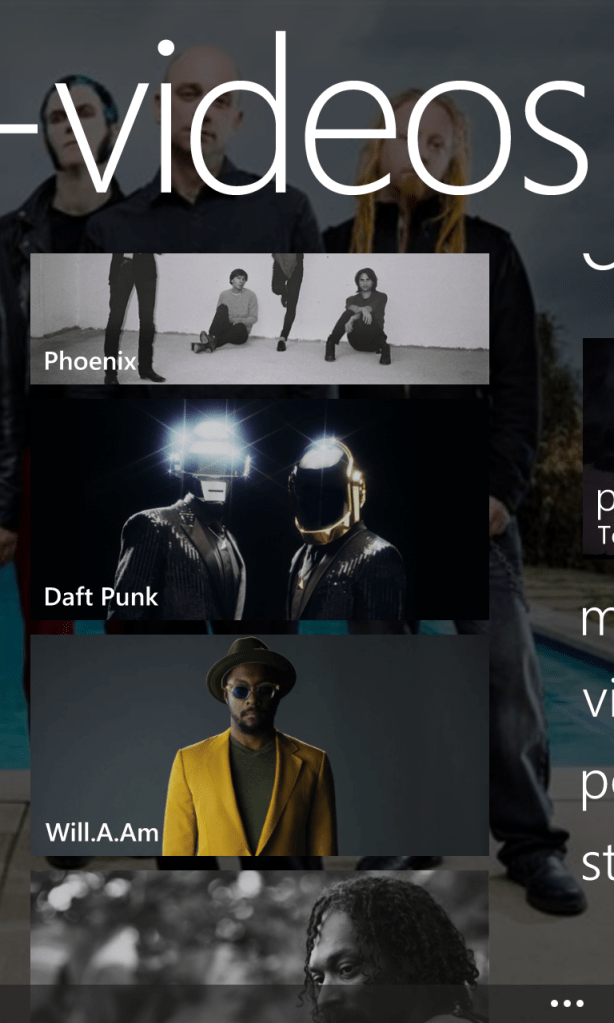
What’s a shame, by the way, is how nice the Metro UI felt in the apps built for it. While one could easily install an alternate launcher on Android these days to try and recapture that home screen with live tiles and all, it’s another matter entirely to use an app that features that Metro UI. Most apps featured white text on simple backgrounds and swipes getting you everywhere you needed to go, which I’m amazed still hasn’t been copied by anybody else.
The funniest part to me now is that I’m very different from how I was 10 years ago, when I didn’t care that much about the Metro UI, I would have wanted a smartwatch, I needed Google Calendar sync, and I 100% needed a specific banking app for depositing checks. I think if the platform were still supported today, I would have a much easier time using it day-to-day compared to a decade ago. It’s funny how having an appreciation for a different interface, an old-school watch (never obsolete!), a bullet journal, and a different bank can change your priorities.

Unfortunately, the platform has been dead for several years now. I had a hard time finding the exact date Windows Phone support ended, but I estimate it to be sometime between 2019 and 2022. Details were mixed because one date was for Windows 10 Mobile, another was for Windows 8.1, and so on.
Speaking of That, What About Windows 10 Mobile?
I never actually used that version of Windows Phone. I know it was the logical next step around the time Windows 10 launched, but I didn’t hear very good things about running Windows 10 Mobile on older hardware like the Lumia 920, and the form factor for that phone was flawless. The latter Lumia devices, while they were still excellent phones in their own right, were still lacking compared to those first Nokia Lumia phones around a decade ago. As such, my experience using Windows Phone ended with 8.1 before I moved on.
Did you ever use Windows Phone back in the day? What did you largely think of it? What device did you have? If you didn’t use Windows Phone, what phone were you using roughly a decade ago? Do you think Microsoft could have handled the project differently? Feel free to comment below with your thoughts. I’d love to know what you think or if I overlooked anything important.
Further Reading
The Fight for 3rd Place (Part 2): A BlackBerry 10 Retrospective
 Sudo Science
One response to “The Fight for 3rd Place: A Windows Phone Retrospective”
[…] I had Windows Phone 8.1 nostalgia on my mind again lately, this was tempting. Sure, I am a skeptic when it comes to Microsoft’s desktop operating […]
LikeLike