

I saw some of the recent news about Ubuntu 23.04’s release, Lunar Lobster, looking a little more favorable, or at least that was the impression I got from this video by DistroTube.
Honestly, I haven’t really touched Ubuntu in the longest time and all, but this release, at least according to DT’s impressions, looks more solid than most Ubuntu releases tend to look these days. I was even curious enough to give 23.04 a spin in a VM on my Arch machine a few days ago.
Ignoring how oddly abstract it feels to have Nautilus 44 on Ubuntu 23.04 and Fedora 38 while still being stuck with Nautilus 43 on Arch at the time I write this (I really want that tree view on my main system), it reminded me of something I did almost 3 years ago to this day when I started to get back into using Linux:
I took my very first Ubuntu, 8.04 Hardy Heron, for a spin on a VM for the first time in years. It’s even more fitting as it is roughly the 15-year anniversary of when Ubuntu 8.04 was first released.

When I First Tried Ubuntu
Not only was this the first time I ever tried Ubuntu, but it was also the first time I ever ran Linux.
It started when I had gotten a cheap laptop at Best Buy, my very first laptop that was mine and mine alone. Since it was late 2007 at the time, the system had Windows Vista preinstalled.
Vista was a nightmare to run on such limited hardware. I tried all of the usual workarounds of disabling Aero effects and limiting the number of startup programs, but it only did so much to fix such a slow boot time, slow program launching, and generally poor performance.
It made me miss the comfort of Windows XP, a tried and true OS that remains my favorite Windows of all time. Unfortunately, “upgrading” to a copy of XP would have been too expensive. I would have had to shill out $99 for the privilege of a comfortable computing experience on the hardware I had, and I would still need to go hunt down the drivers to make the hardware work properly on XP. What a hassle.
But I don’t remember how or when (how I wish I did), but someone somewhere had suggested trying Linux. After all, it was just as fast (if not, faster) than Windows XP and came at the low, low price of free. Feeling I had nothing to really lose, I went to the Ubuntu website for the first time, downloaded 8.04, burned it to a CD, and gave it a spin.

Seeing this screen was magical; it was truly the beginning of a paradigm shift for a young Mr. Hyde. I watched the skeuomorphic orange bar fill up as the system started, and soon, I was greeted with a desktop UI unlike anything I had seen before. That was when I first got a glimpse of the Linux experience.
“To me, Ubuntu felt like the way Linux should have been.”
The Linux Experience
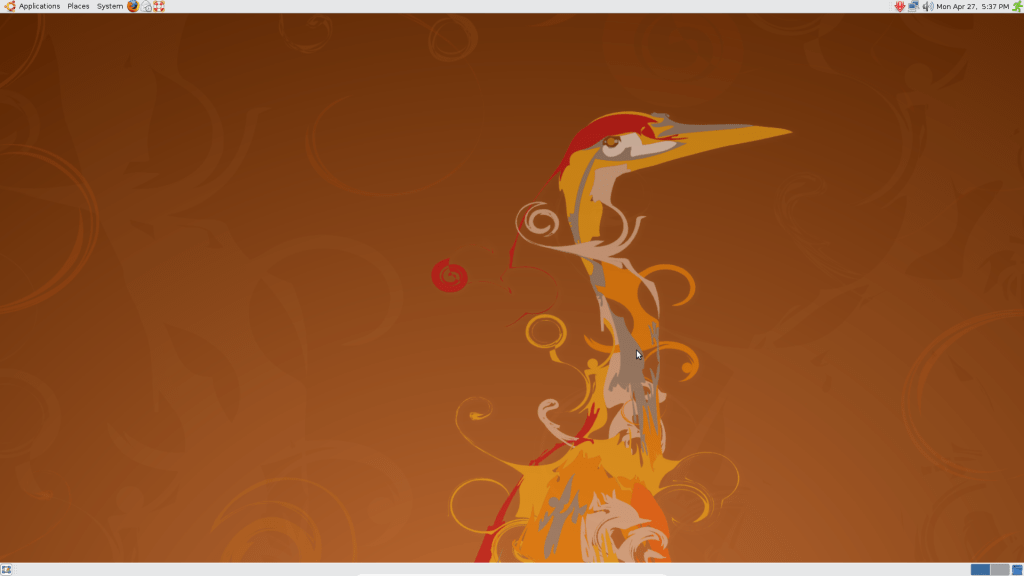
I recalled falling in love with how fun, fast, and easy it was to use Ubuntu with Hardy Heron. While I did distro hop as a Linux newbie a few times (my longest non-Ubuntu stint being with openSUSE for a couple of weeks), I would always eventually find my way back to Ubuntu’s comfort and familiarity.
To me, Ubuntu felt like the way Linux should have been. I recognize how humorous that is in hindsight, as I know a lot more about Linux now than I did back then.
While I still held a fondness for Windows XP, my desire to buy a registration key (or risk my privacy with a cracked version) was long gone. I didn’t use Linux forever, as I had stopped in 2010 after building my first powerful gaming PC and the limitations of a laptop’s specs didn’t encumber me. Still, I did continue upgrading through Ubuntu releases until then.
I’ll always recall how magical Hardy Heron was for me, despite the hiccups and hurdles I had with just about any version of Ubuntu back in the day.
Not All Was Perfect
Despite how much I liked Ubuntu at the time, it certainly wasn’t perfect. However, I liked the experience so much that it didn’t bother me trying to get around most of its shortcomings back then. Off the top of my head:
- Attempting to uninstall certain packages would cause the apt package manager to threaten to remove the entire
ubuntu-desktopitself. It felt as if I didn’t have 100% control of my system and had to deal with some unwanted programs taking up space. - Some packages were old due to Ubuntu’s Debian base, meaning I would be stuck on an older version of Firefox (or other software) compared to users on other distros.
- Getting more up-to-date software or third party apps meant I had to wrangle with annoying PPAs. So many things weren’t in apt, so this was common.
- Specifically in my case, Ubuntu didn’t recognize my internal wireless card for the longest time. I had to follow a clunky tutorial on how to set up the drivers for it while on a wired connection until later iterations of Ubuntu eventually solved this and detected it.
- Asking for help on the Ubuntu forums seemed annoying if I ran into issues. I’m not sure how the forums are now, but they didn’t seem all that nice way back from what I can remember. (Of course, there was always the chance I needed to just solve my own problems.)
In fact, these shortcomings coupled with how I didn’t understand how Linux worked might have been why I left Linux in the first place.
Indulging My Nostalgia
Regardless, I still had a lot of fun taking Hardy Heron for a spin again on a VM. Considering I last took a look at it almost 3 years ago, as I mentioned previously, this is like opening a time capsule, as I had taken screenshots.
Quick Aside: Upon booting up this VM, I changed a few settings to the way I liked having things back when I ran Hardy Heron. This included changing the GTK theme to the included Clearlooks as well as using a different icon set.
Firefox

It was such a joy to not only install Ubuntu for the first time, but to recall how surprised and excited I was to find that Firefox was the default browser. No having to deal with an unwanted Internet Explorer or Safari taking up space on the system; I got my default browser of choice from Windows already bundled in with Linux.
I also realize how much I miss when Firefox looked like this. It was skeuomorphic, it looked simple, and it got the job done.
OpenOffice.org

A wistful note I wrote to myself to give OpenOffice a spin. This was back in the day when OpenOffice was still a thing and LibreOffice didn’t exist yet. I had used it as a word processor on my Windows system prior to this point, but, again, having it preinstalled was great to see.
Rhythmbox (and Many Other Music Players)

Rhythmbox was another app I would usually use, although I found myself media player-hopping rather often on Linux. One week, it was Rhythmbox. The next, it was Banshee. Then the next, it was Exaile. Then after that, Amarok, and so on in that fashion. Despite how great the apps I used were in their own rights, I always found myself wanting to use one app or another to listen to my ballooning MP3 collection.
Pidgin

This Swiss army knife of a messaging app was so handy back in the mid to late-2000s. I loved how easy it was to add all of my AIM contacts and chat with my friends on Google Talk all at the same time. I could even hop into some IRC servers and have a chat, and I could do all of this within the same app. After I had gone back to Windows during the 2010s, Pidgin stayed with me as long as its style of no-frills instant messaging was still relevant.
The app even supported dozens of other protocols that I either never used (MySpaceIM, Yahoo, ICQ) or had never heard of before that point (GroupWise, Bonjour, Zephyr). It’s also sad to know a few of the once-major protocols like AIM and MSN are shut down forever.
Tomboy Notes
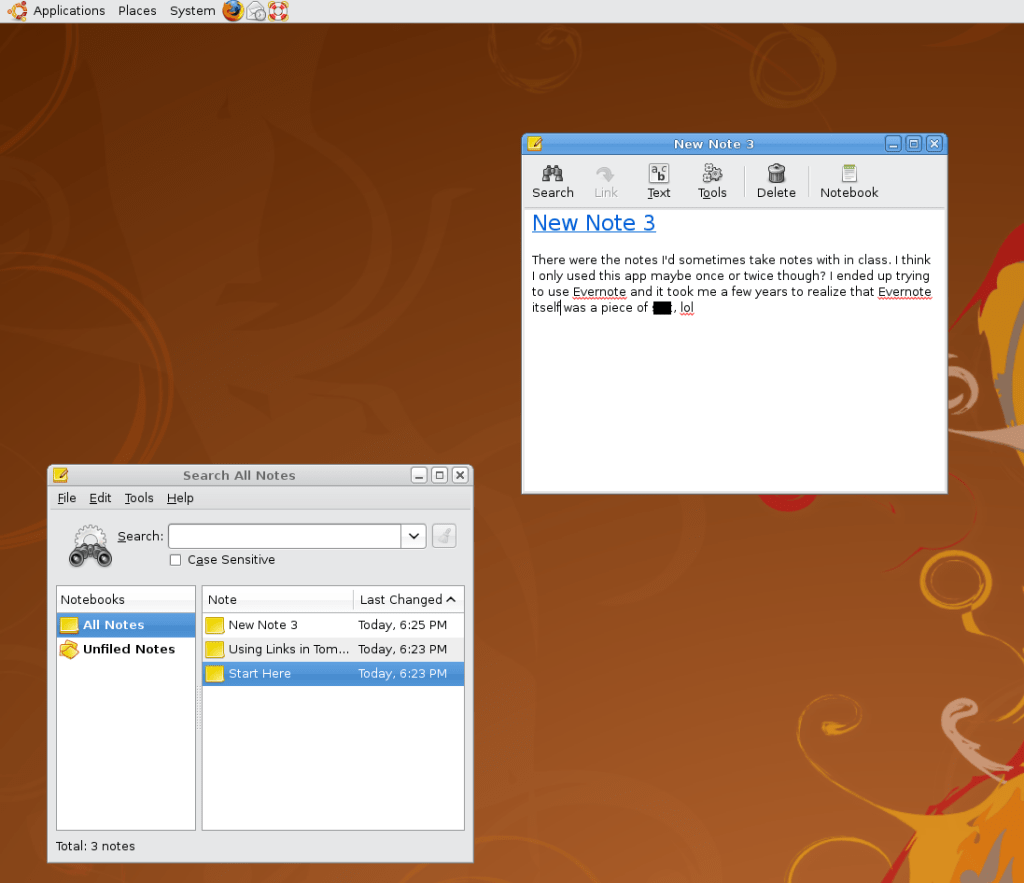
Upon looking at this again, I recall having a lot of my old college notes saved within Tomboy. It was a great app despite its apparent simplicity, as it would do enough to let you save notes while staying out of your way.
As I detailed somewhat harshly in my note, I had later switched to Evernote, but it took me a little longer than it should have for me to realize that Evernote gave me unnecessary friction trying to get things saved and filed away, whereas Tomboy was such a fast and simple app that it managed to stay out of my way.
Humorously enough, I think Tomboy in this old-school state would be a perfect solution for starting a simple Second Brain using the PARA system as detailed by Tiago Forte.
GIMP
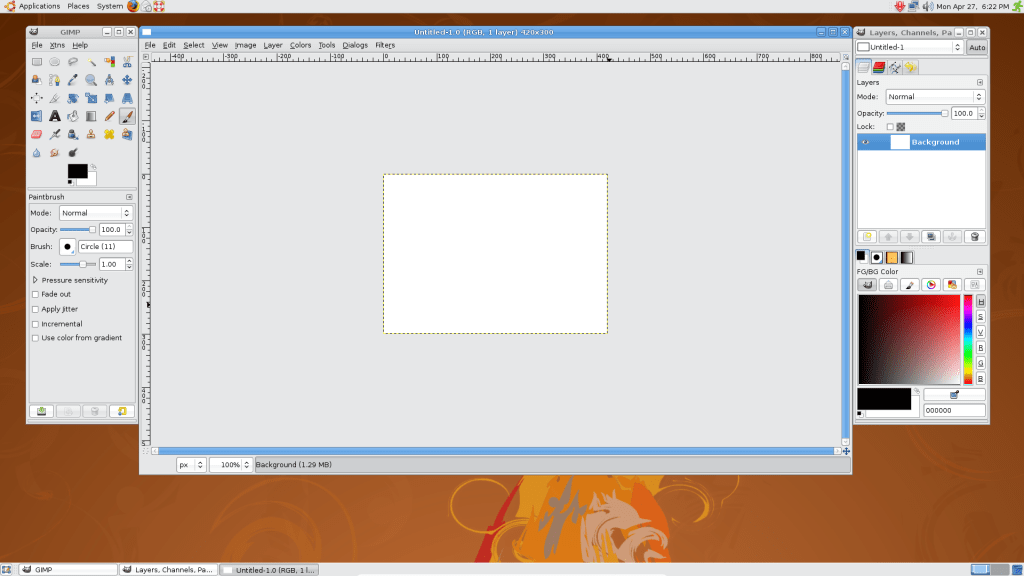
I’ll admit I was never the biggest fan of GIMP in general. I was already so used to Adobe Photoshop, its commands, and its overall workflow, although I have a somewhat nicer relationship with it these days thanks to PhotoGIMP.
Something I really disliked about GIMP back in these days, however, was how it always had to open up in these three separate windows. It felt clunky and antiquated even for its time, like using an old word processor on an early-90s version of Mac OS.
“I wonder what the next 15 years of Ubuntu will hold in store for us?”
You Forgot [APP NAME HERE]!
I know I didn’t even take a look at any of the included card games, the bubble popping game (I feel more nostalgia toward the same game on Windows Mobile 6.1), the old Evolution email client, or even how the settings and menus looked.
Still, this was a real trip for me, as I not only got to see what I first enjoyed about Linux way back when, but how much Linux in general has changed over the years as well.
When I Distro Hopped
Around that time, I did try to distro hop to Kubuntu, which I didn’t quite realize at that time was the same as Ubuntu but with a different desktop environment. Despite how KDE around this time was clunky, I always loved how it looked to boot up with its equally skeuomorphic splash screen.

I would never stay on Kubuntu for very long around that time, as Ubuntu’s GTK look and the GNOME 2 feel were perfectly suitable for me, and I would find KDE around the time a bit buggy for my taste. Needless to say, I didn’t feel anywhere near the same level of nostalgia toward Kubuntu 8.04 as I did to Ubuntu.
I wonder what the next 15 years of Ubuntu will hold in store for us? Who knows. At some point, maybe I’ll even switch back to it on one of my systems.
What was your first Linux distribution? When did you first run it? What was it like? Do you have any particular sense of nostalgia attached to that experience or not?
 Sudo Science
One response to “Ubuntu 8.04 Hardy Heron 15 Years Later: A Retrospective”
[…] For those who have followed me long enough, you may know that I primarily grew up running Windows. I’d even say that’s part of why Windows XP is and always will be my favorite version of Windows of all time. I only actually started to become a Linux user for the first time in 2008, when I started college, and I got to try Ubuntu 8.04 Hardy Heron for the first time. […]
LikeLike